Optimising the Farm Life Sim Equation
Cultural Séances #2A lone witch stepped into her secluded hut deep in the forest, breathless from the mountain's long descent. Damp earth clung to her cloak... and a soft hum of bubbling liquid filled the air.
"At last," she murmured, "I have everything I need."
She reached into her weathered satchel, fingers brushing against the spoils of her journey. One by one, she placed the two precious ingredients in her palm, a triumphant smile forming on her lips.
Turning toward the wide steel cauldron at the heart of the room, she watched as the green liquid inside swirled, its surface shimmering with a faint, but mystical, glow.
The items had finally been gathered: farm life sims and 1990s shōjo anime.
She cast each element into the brew, and the potion began to shift... its deep emerald colour transformed into a soft pastel pink. Sparkles danced in the air. Flowers bloomed in the corners of the hut.
"It's… beautiful."
The magic took hold, radiating warmth and nostalgia. And with it, Fields of Mistria was born.
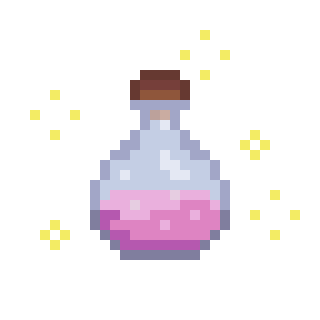
The resulting farm life sim-shōjo potion. (illustration by André Almo)
Of course, this story is just a metaphor. There is no witch, but instead, NPC Studio, an indie developer team based in Chicago, USA. A steel cauldron was never used; replace it with the game engine, GameMaker. The potion is just the perfect mix of art and code.
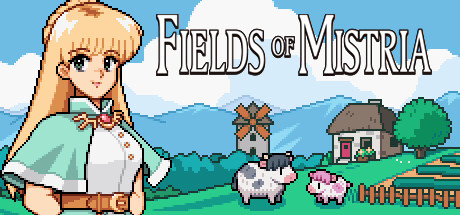
Fields of Mistria, the newly released game by NPC Studio.
This game was released in early access in August 2024. As other writers have noted, it builds upon previous staples in the farm life sim genre, such as Harvest Moon, Rune Factory, and Stardew Valley.
The other secret to its well-received formula, though, comes from another source: 90s shōjo anime. While this art direction helps set the game apart, it truly shines through its farm life sim mechanics.
The Main Ingredient — Farm Life Sims
Farm life sims are a specific subgenre, standing at a unique crossroads within the larger life simulation genre. They weave together farming, social, and dating simulation mechanics, creating a rich, multi-layered experience.
In these games, players manage a farm in a small town, which involves not only the more obvious work of growing crops and raising animals, but also cooking and crafting artisanal goods.
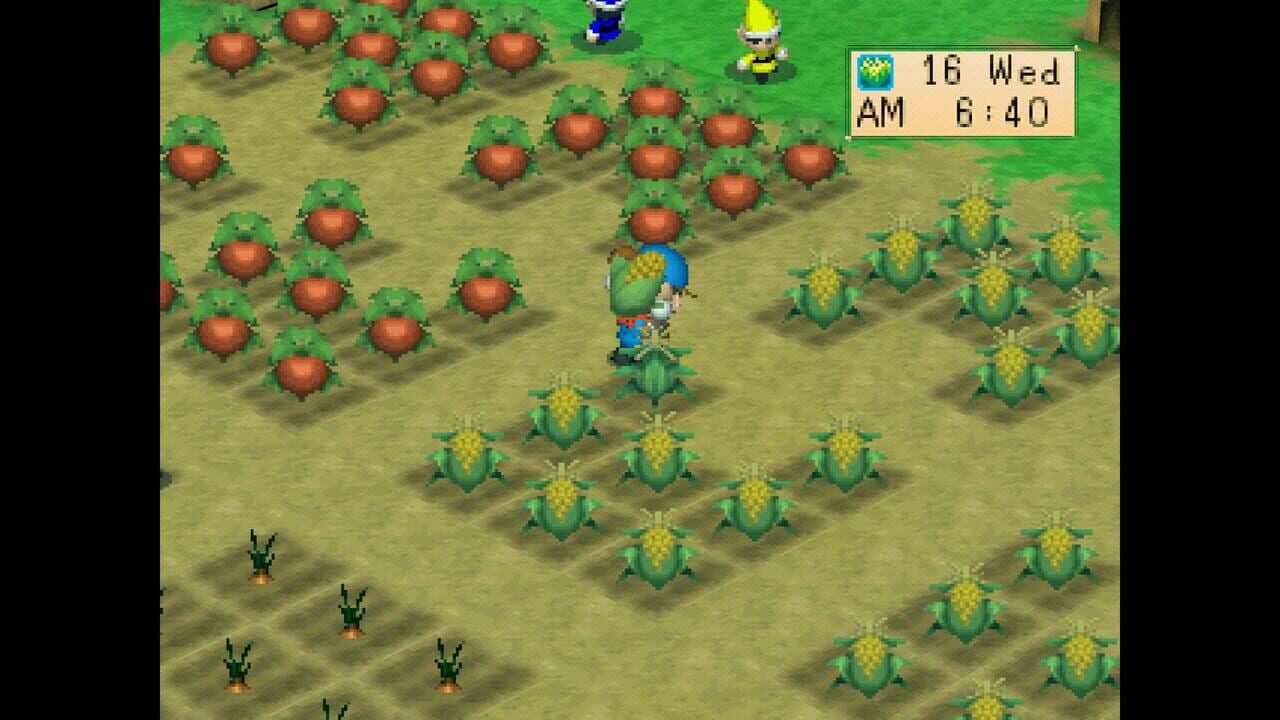
Farming in Harvest Moon: Back to Nature (1999).
Yet, life on the farm isn't just about hard work, right...? Well, I have never ACTUALLY worked on a farm (that wasn't digital). But I like to think it's also about the people you meet along the way.
This social background, stemming from social and dating simulators, is the true treasure you can find within these games. The town is inhabited by various non-player characters (NPCs), with whom the player can interact and build relationships.
Players start as strangers but can build friendships with the townspeople over time. While many villagers welcome you warmly, others are distant (or outright rude...) until you earn their trust. Through conversations and carefully chosen gifts, their attitude begins to soften.
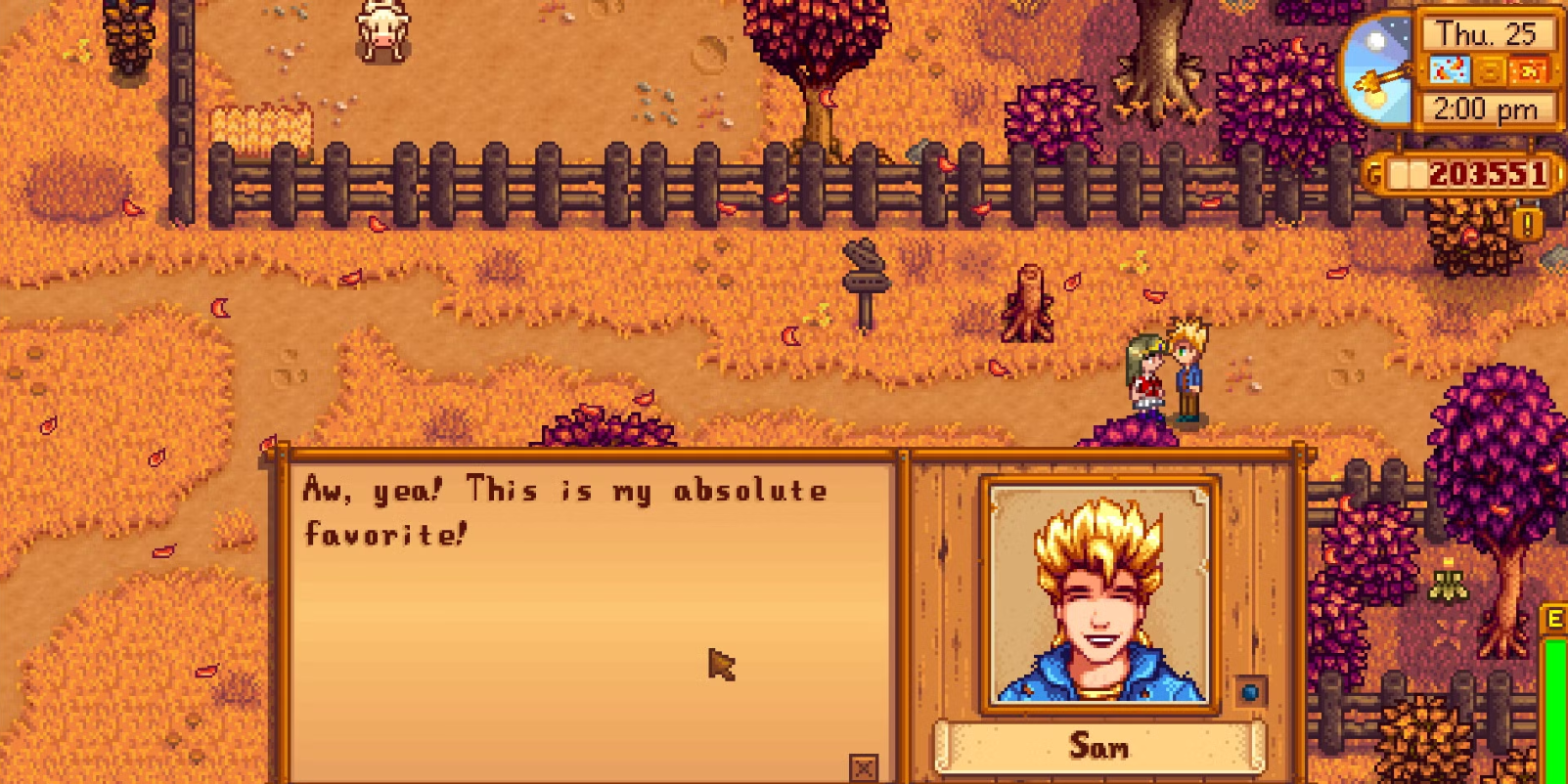
Sam receives a great gift in Stardew Valley (2016).
The varying degrees of friendship are conveyed through the game's interface, explicitly showing "friendship levels", but also through dialogue and specific scenes, which are triggered after a certain friendship level is reached.
Not all relationships are equal, though: a handful of the NPCs are also potential romantic interests. If love blossoms, it's possible to date, and eventually, even marry them. The couple can also start a family, bringing kids into the digital world.
It's impossible, however, to discuss farm life sims, and how previous titles influenced Fields of Mistria, without a brief history of the genre.
A Brief History of Farm Life Sims
Chapter 1: Harvest Moon
The story starts in 1996 Japan, with the release of Bokujō Monogatari — known in the West as Harvest Moon. This game, created by Yasuhiro Wada, was responsible for kickstarting the farm life sim subgenre, first introducing players to their fictional farms and the enveloping rural community.
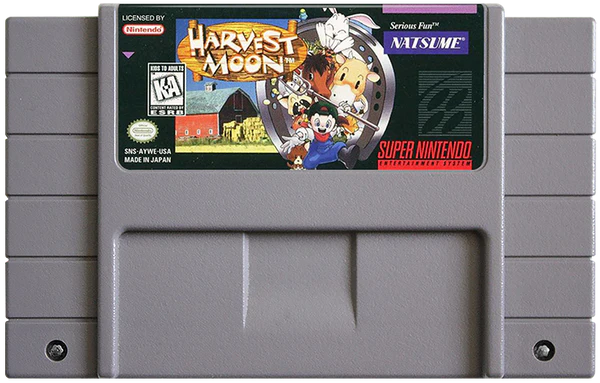
The cartridge for the very first Harvest Moon game.
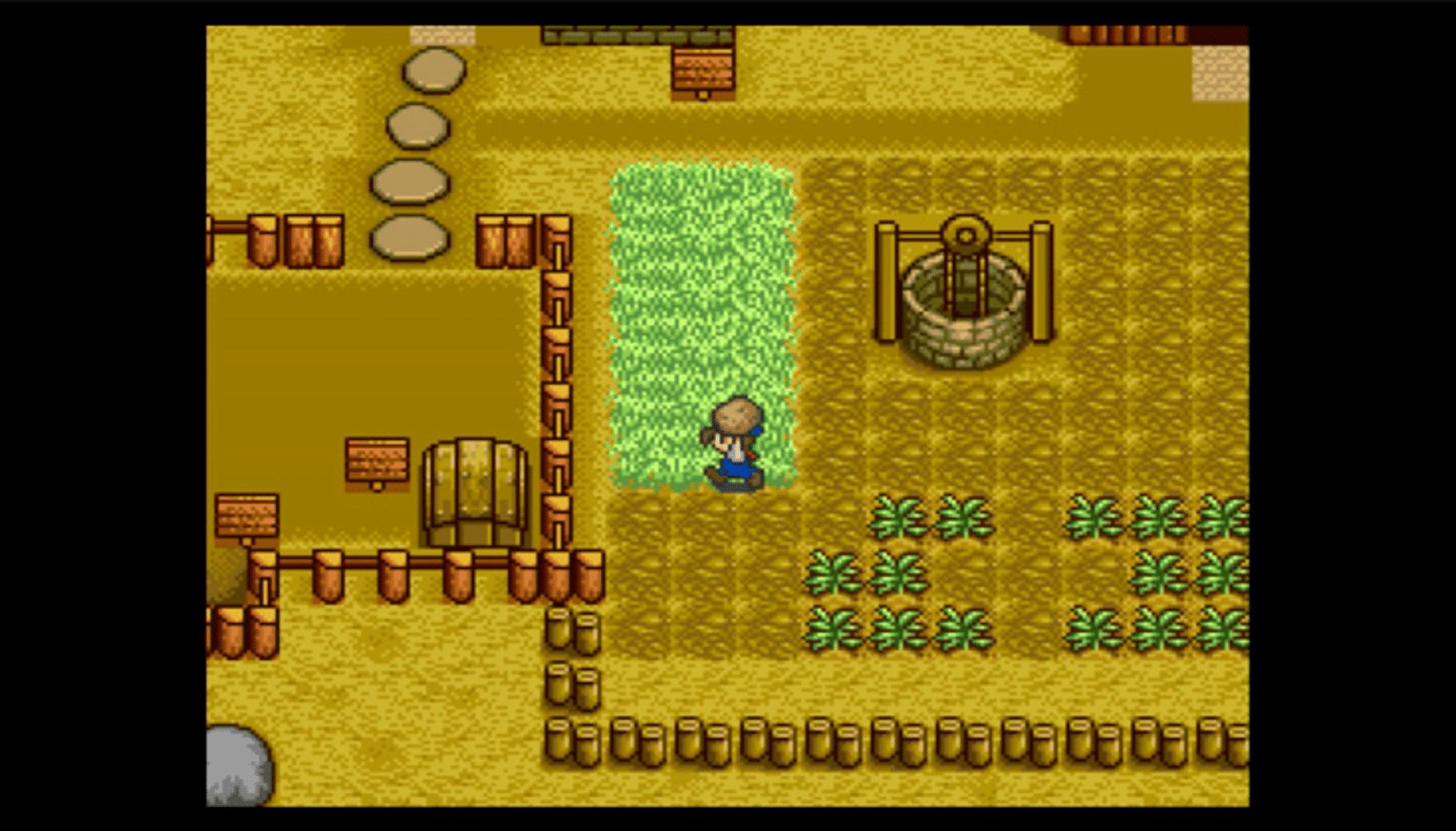
Harvest Moon (1996).
This was both the start of the genre and the Harvest Moon/Story of Seasons series, a staple and perhaps the most iconic farm life sim title, especially as its progenitor.
Much of the appeal of farm life sims comes from their unique take on world design. In most games — including RPGs —, the world seemed static. You could be a hero and travel around the realm, but the characters in each town usually stayed the same, doing the same activities.
Take the main line of Pokémon games, for instance. NPCs have quite limited dialogue, sometimes only one line, that gets repeated over and over again. This is true even for modern installments of the franchise: NPCs are largely static (and many look exactly the same).
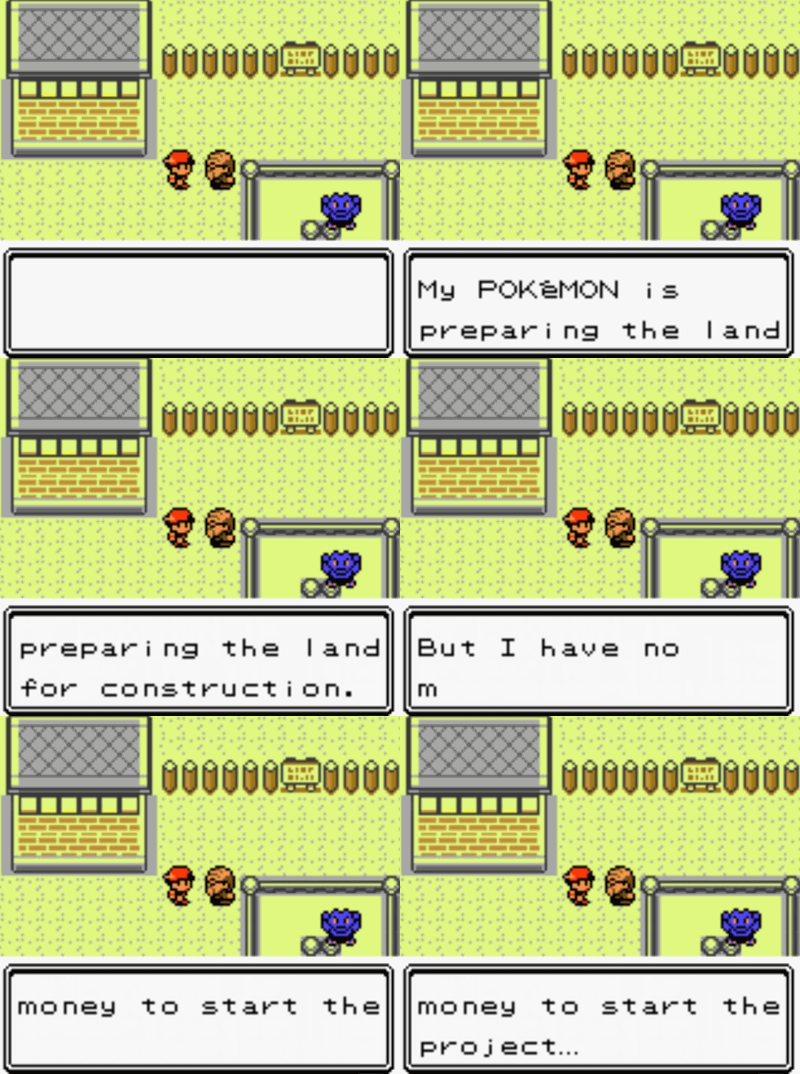
NPC dialogue from Pokémon Silver (2000).
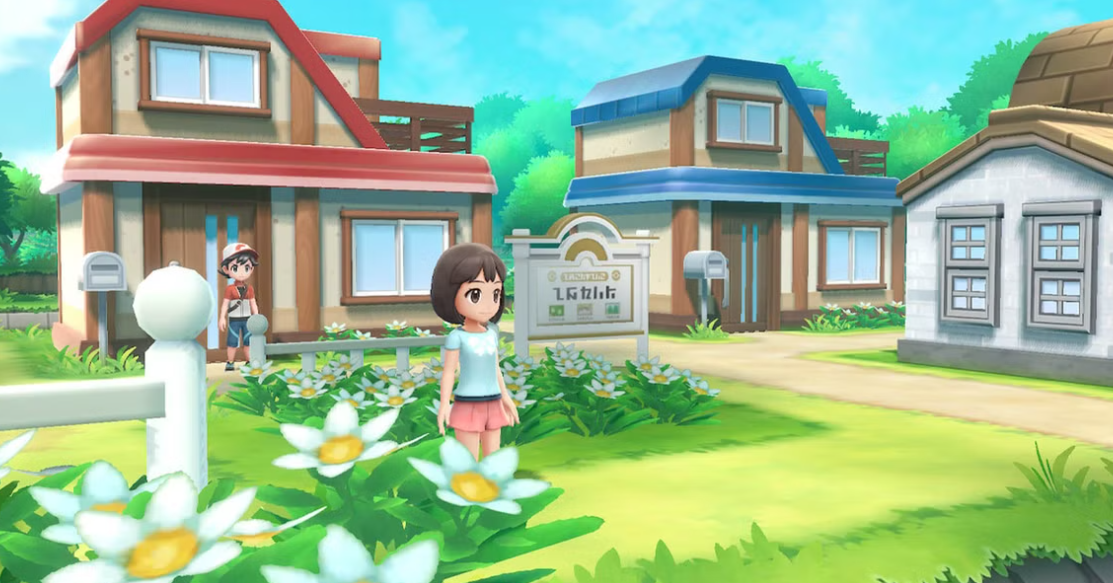
"Pallet Town is so great. These flowers, the sun… Imma just stay here for all eternity, yep. Just standing here." — probably the thoughts of this NPC from Pokémon: Let's Go, Pikachu! (2018).
This was not true for Harvest Moon. The game's world was much more convincing. Townsfolk have unique backstories, relationships with other NPCs, jobs, likes and dislikes.
Characters have a considerably wider range of dialogue, which changes depending on the weekday, season, and friendship level. As you get closer to them, you may also receive gifts and see special events, where you can choose between dialogue options that may lead to a stronger bond or a setback in the relationship.
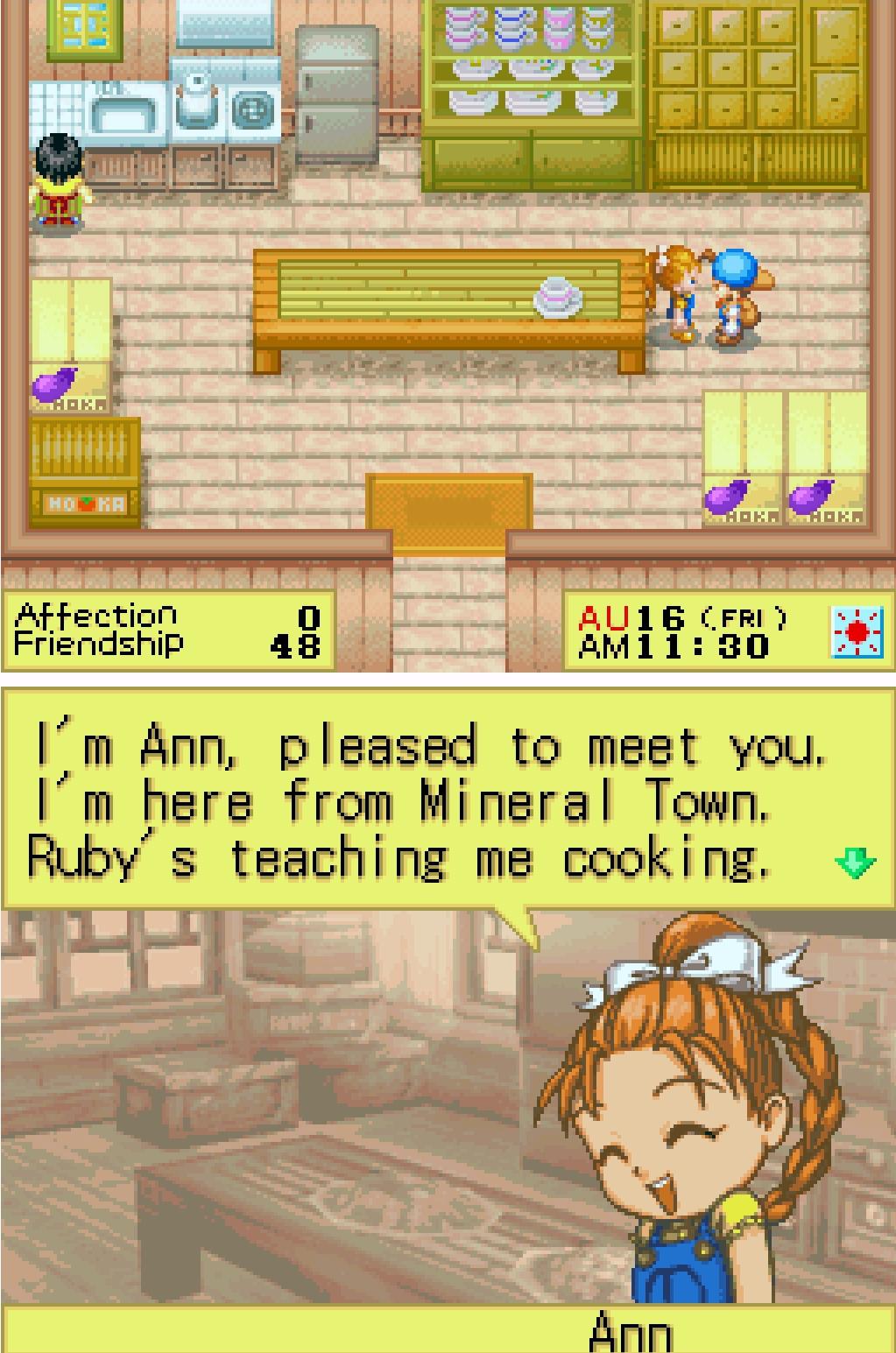
Meeting Ann in Harvest Moon DS (2005).
Villagers move through their daily routines: heading to work, visiting the beach, relaxing at the local pub, or taking a stroll through the forest.
Not only do the characters feel more like people, but the passing seasons add further dynamism to the world. Life begins anew with every season: new crops, new animals, new wild ingredients to forage. The place actually feels alive, changing throughout the year and keeping gameplay fresh.
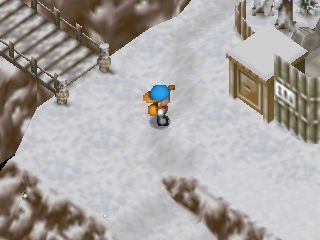
Winter in Harvest Moon: Back to Nature.
Most Harvest Moon games follow this similar recipe, not straying away from the core game loop of taking care of your farm, mining, and making friends. After the first title, many more followed; but perhaps the most famous were Harvest Moon: Back to Nature and its remake, Harvest Moon: Friends of Mineral Town.
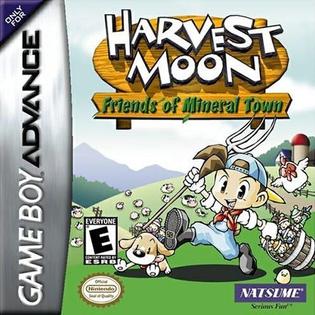
The cover for Harvest Moon: Friends of Mineral Town (2003).
However, the series has occasionally experimented with its formula, particularly in spin-offs.
One example is Innocent Life: A Futuristic Harvest Moon (2006), where players step into the role of an android boy working as a rancher on an island on the brink of collapse.
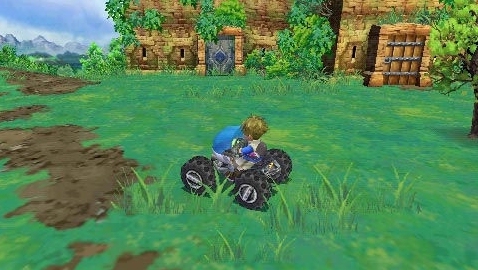
Innocent Life: A Futuristic Harvest Moon (2006).
But Harvest Moon's most popular spin-off is, by far, Rune Factory.
Though it began as a spin-off — Rune Factory: A Fantasy Harvest Moon (2006) — the series quickly evolved into its own standalone franchise. It soon disconnected itself from Harvest Moon, already in the second game of the series.
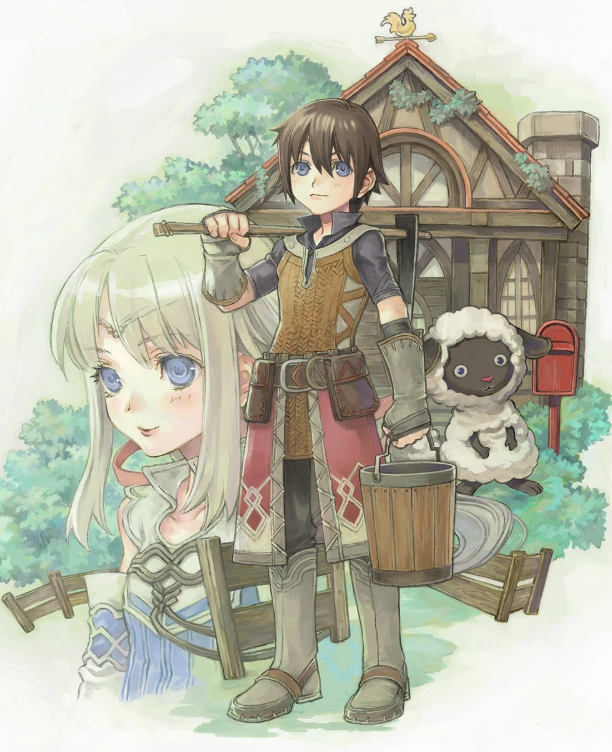
Official art for Rune Factory: A Fantasy Harvest Moon (2006).
While similar to Harvest Moon in bringing together farming, social, and dating sims, Rune Factory has a much more fantastic setting.
That doesn't mean that the Harvest Moon games were devoid of magic. Supernatural elements had always been woven into its world. For instance, the player could communicate with a Harvest Goddess, making offerings in exchange for blessings on their farm. In some titles, befriending and even marrying her was also an option.
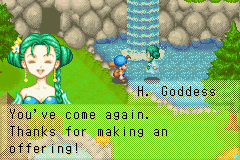
The Harvest Goddess in Harvest Moon: Friends of Mineral Town.
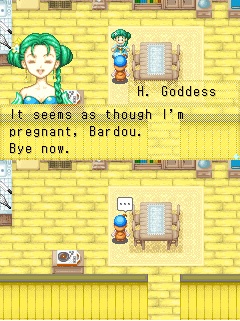
Well, I guess that's expected if you marry a deity.
But she was just one of many mystical beings. You could also interact with Harvest Sprites, tiny elf-like creatures with access to nature magic, usually connected to the Goddess.
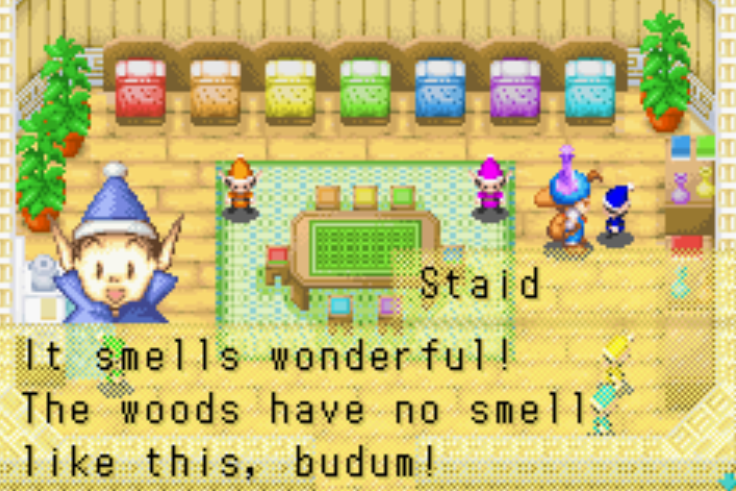
You can befriend the Harvest Sprites. Staid loves the perfume.
Witches and mermaids also made appearances in the series, and like the Harvest Goddess, they were sometimes eligible for marriage.
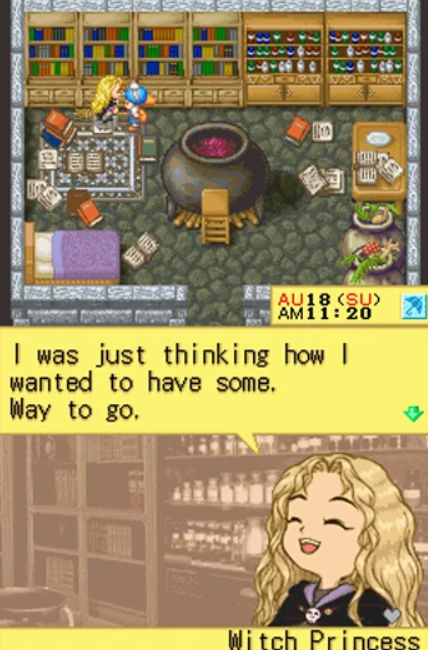
The Witch Princess in Harvest Moon DS.
Chapter 2: Rune Factory
Although Harvest Moon included supernatural elements, its world was usually much more grounded. Rune Factory turned it up a notch, introducing monsters, dungeon crawling, runes, spells, and battles.
Often described as "Harvest Moon meets RPG," Rune Factory was responsible for blending the farm life sim formula with classic medieval fantasy, adding yet another layer to the already multi-faceted subgenre. Players weren't just tending to their farms — they were also wielding swords, taming monsters, and delving into dangerous ruins.
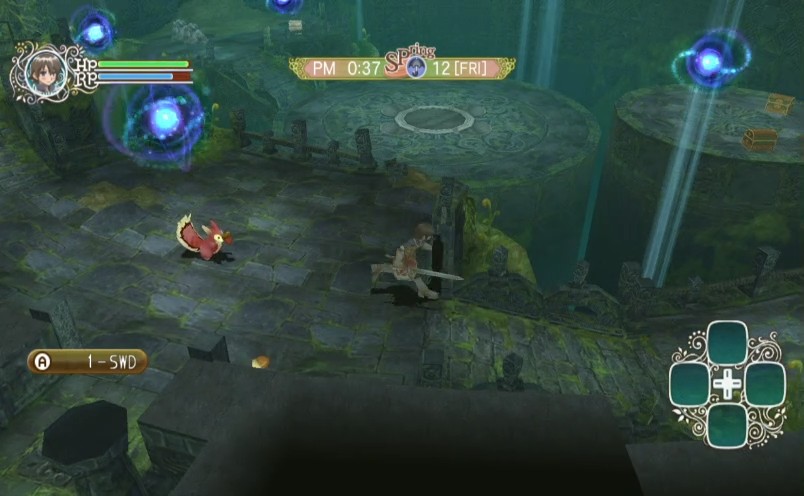
Dungeon crawling in Rune Factory: Frontier (2008).
At the heart of Rune Factory was a more action-oriented gameplay loop. Combat became a core mechanic, allowing players to fight and befriend monsters, which could then help with farm work or join them in battle.
Crafting also played a bigger role, with an expanded system for forging weapons, brewing potions, and cooking elaborate meals to aid in both farming and fighting.
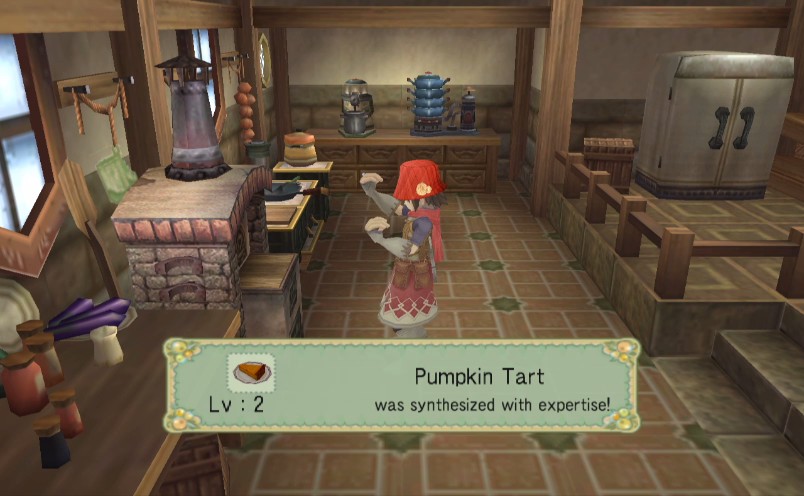
Cooking in Rune Factory: Frontier.
Narratively, Rune Factory often leaned into grander, more structured storytelling than its predecessor. While Harvest Moon games focused on slice-of-life rural experiences, Rune Factory featured protagonists with lost memories, mysterious royal lineages, and prophecies that tied them to the fate of their world.
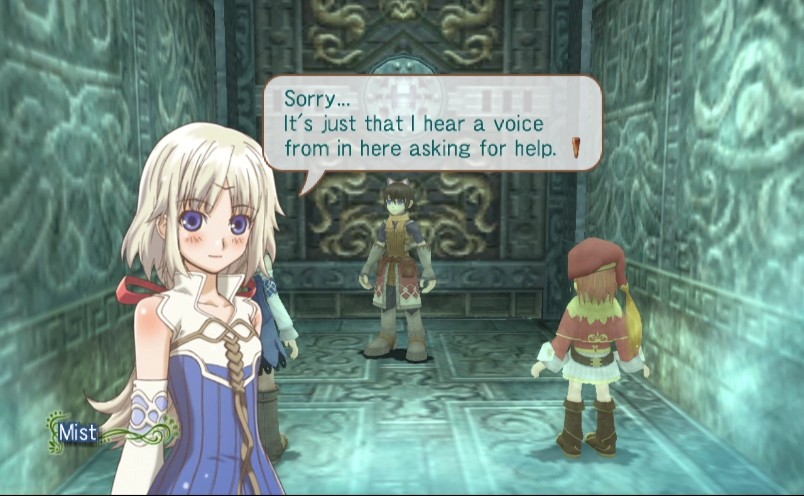
A scene from Rune Factory: Frontier.
Despite these changes, Rune Factory never abandoned its roots. Farming, relationships, and town life remained integral, meaning players could still woo villagers, start families, and build a peaceful farmstead — but with the added excitement of fending off monsters between harvests.
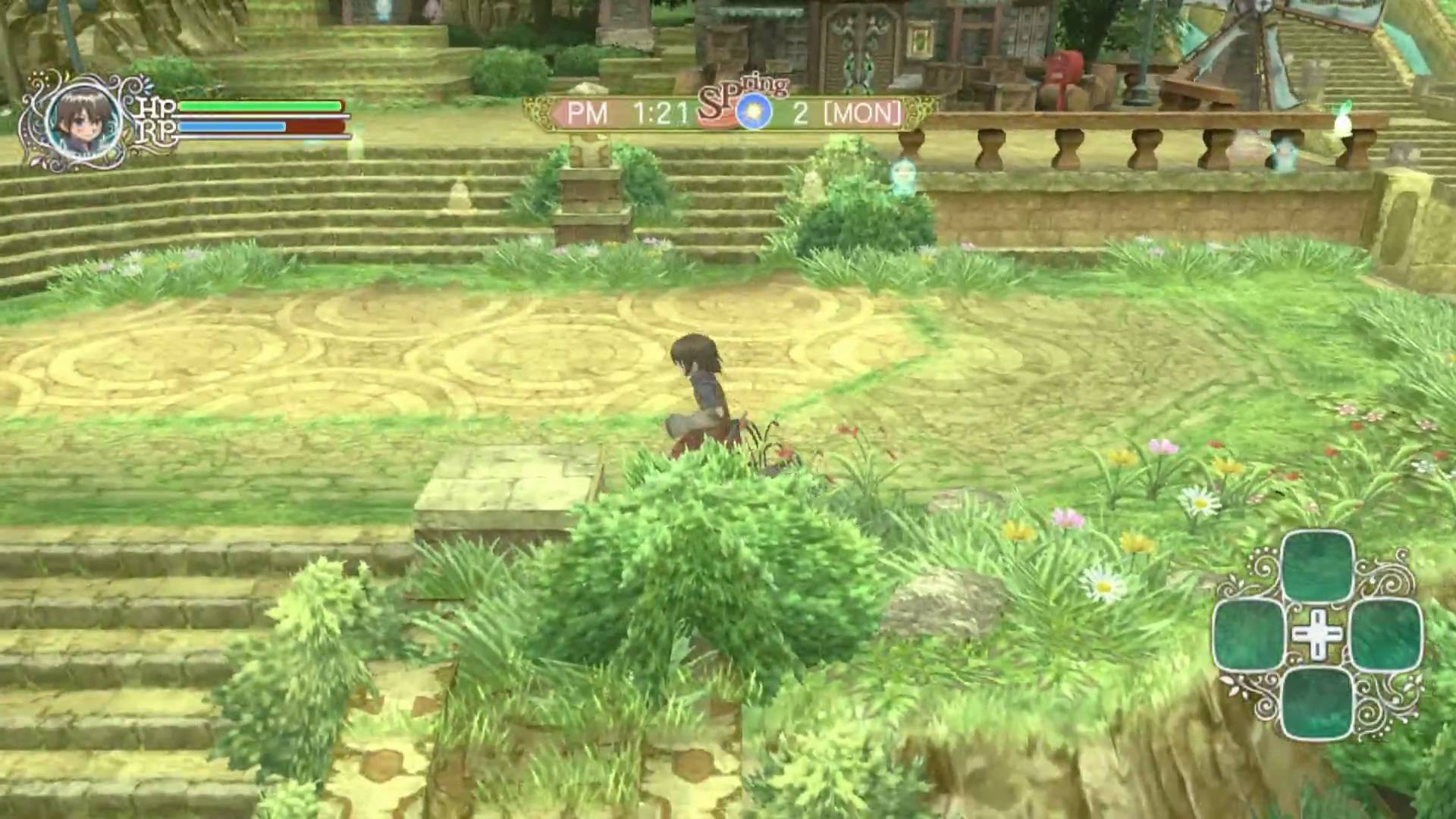
There are many other Rune Factory games, but for me, Frontier is still the prettiest.
Chapter 3: Stardew Valley
As I pointed out before, Rune Factory eventually detached itself from the Harvest Moon/Story of Seasons franchise. Meanwhile, the main Harvest Moon games largely stuck to their tried-and-true formula.
Over time, however, the series' resistance to change started hurting the franchise. While the games had once been groundbreaking, they grew stagnant. Each new installment offered incremental changes rather than meaningful innovations. Farming mechanics remained largely the same, character interactions followed familiar patterns, and the world, while still charming, lacked the depth modern audiences — including older Harvest Moon fans — craved.
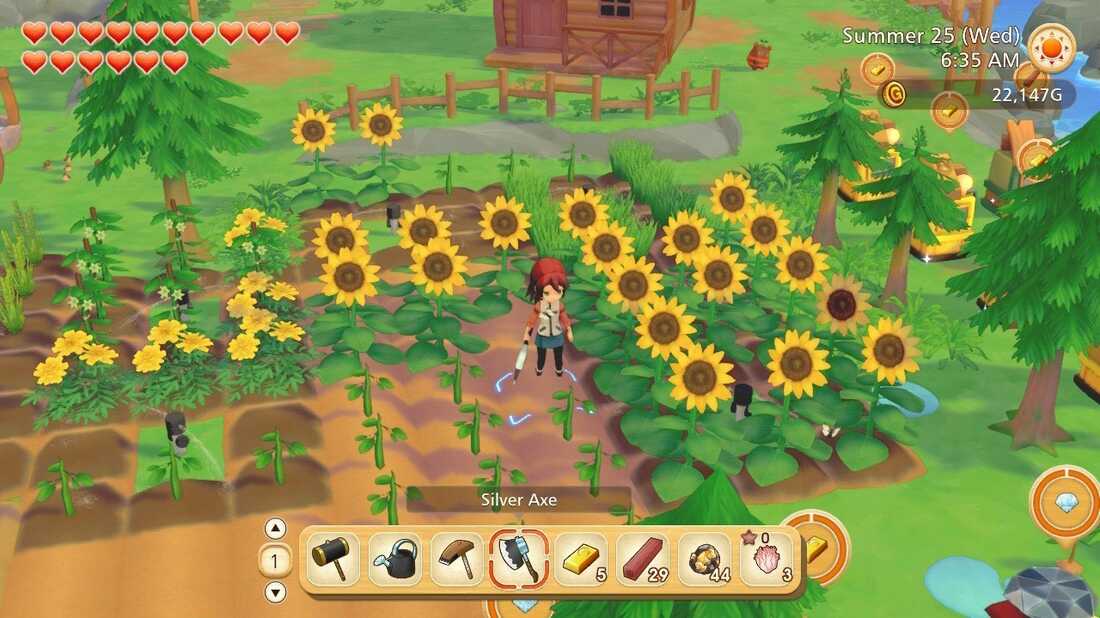
Harvest Moon: Pioneers of Olive Town (2021).
Players who had grown up with Harvest Moon still loved its cosy atmosphere, but many also wanted more: more narrative complexity, more engaging mechanics, and more reasons to keep playing.
And when the creators of Harvest Moon didn't step up, other developers did (thankfully).
And certainly, there is no better example than Stardew Valley.
Stardew Valley was created by the one-man development team of Eric Barone (known as ConcernedApe), an American millennial who played Harvest Moon as a kid. A lifelong fan, he cherished the games — especially due to their world's warmth and the intimate experience of connecting with the community — but he also recognised the franchise's flaws. Its lack of innovation, increasingly uninspired releases, and its failure to adapt to expectations.
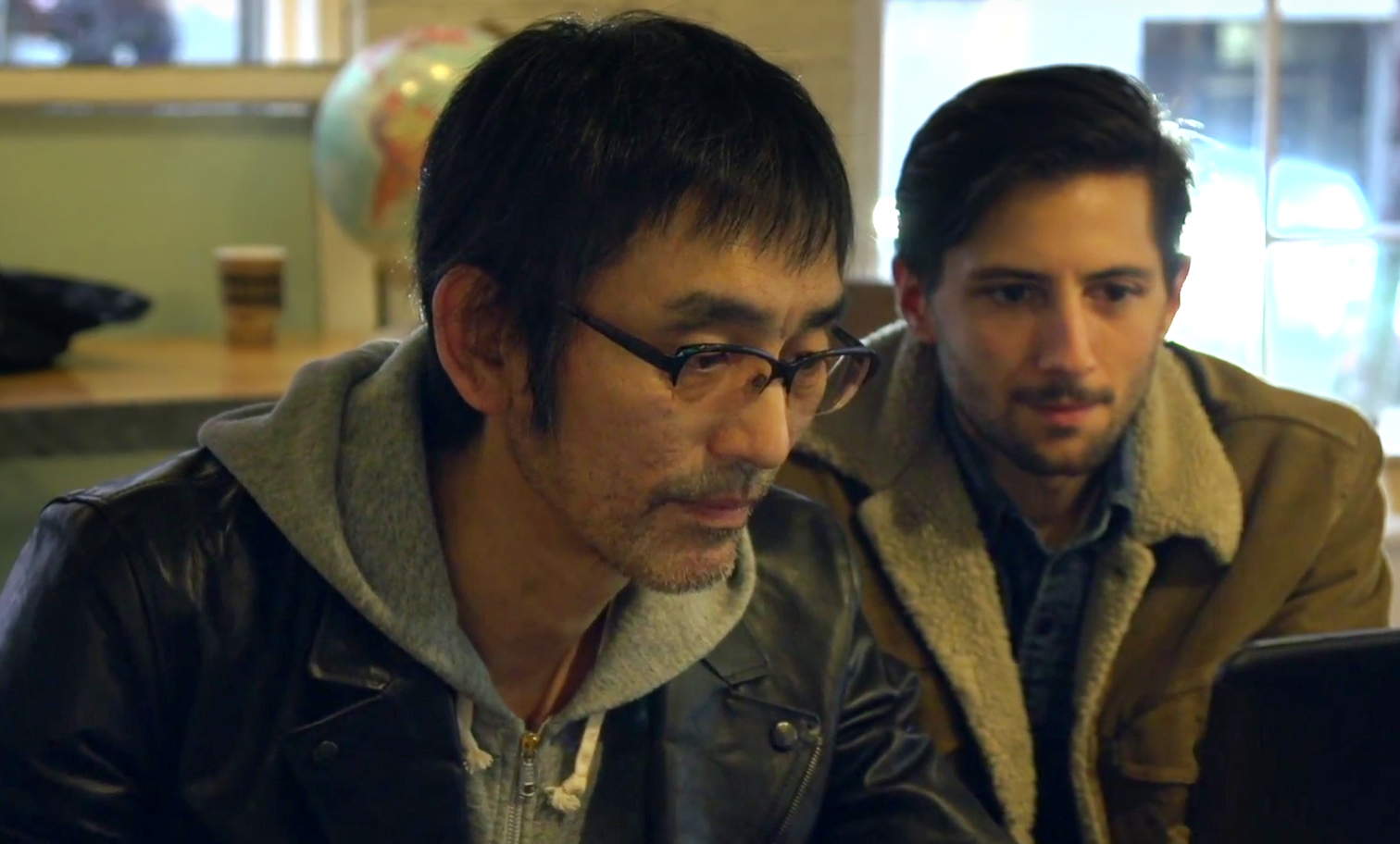
Yasuhiro Wada (left) and Eric Barone (right), the creators of Harvest Moon and Stardew Valley, respectively. Yes, they met! This is amazing.
Stardew Valley became more than just a love letter to Harvest Moon: it was an evolution in the genre.
Its narrative was much deeper than Harvest Moon's, bringing stronger societal themes, such as the strain predatory corporations put on small local businesses, the power of public community spaces, and more fleshed-out character development.
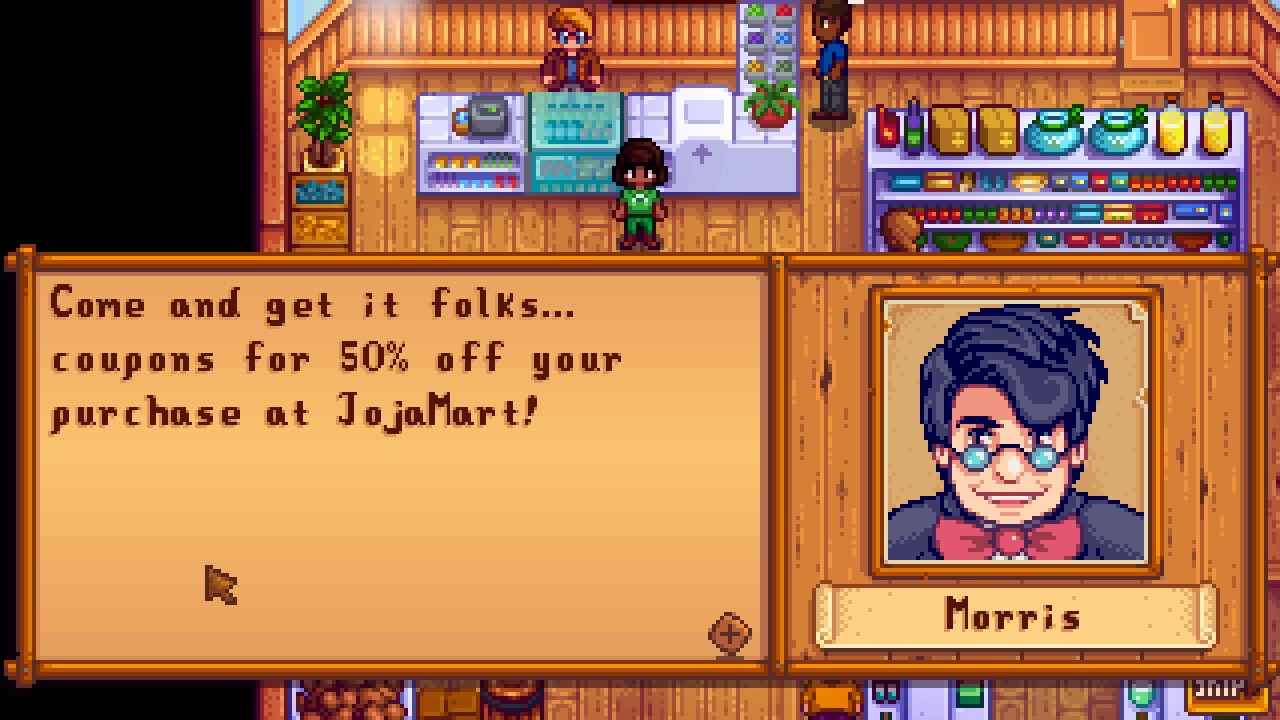
The Joja Corporation is trouble for the small local market.
As players built friendships, they uncovered rich character arcs with themes rarely explored in farm life sims: loneliness, self-discovery, toxic relationships, alcohol abuse and depression. While Harvest Moon had always been lighthearted (maybe due to a younger target audience?), Stardew Valley offered a more mature emotional experience without losing the genre's signature cosiness.
Stardew Valley was also far more inclusive than its spiritual ancestor. It included same-sex relationships, with all bachelors and bachelorettes available regardless of the player's gender. In some romantic events, this led to dialogue acknowledgement by the characters discovering their sexuality.
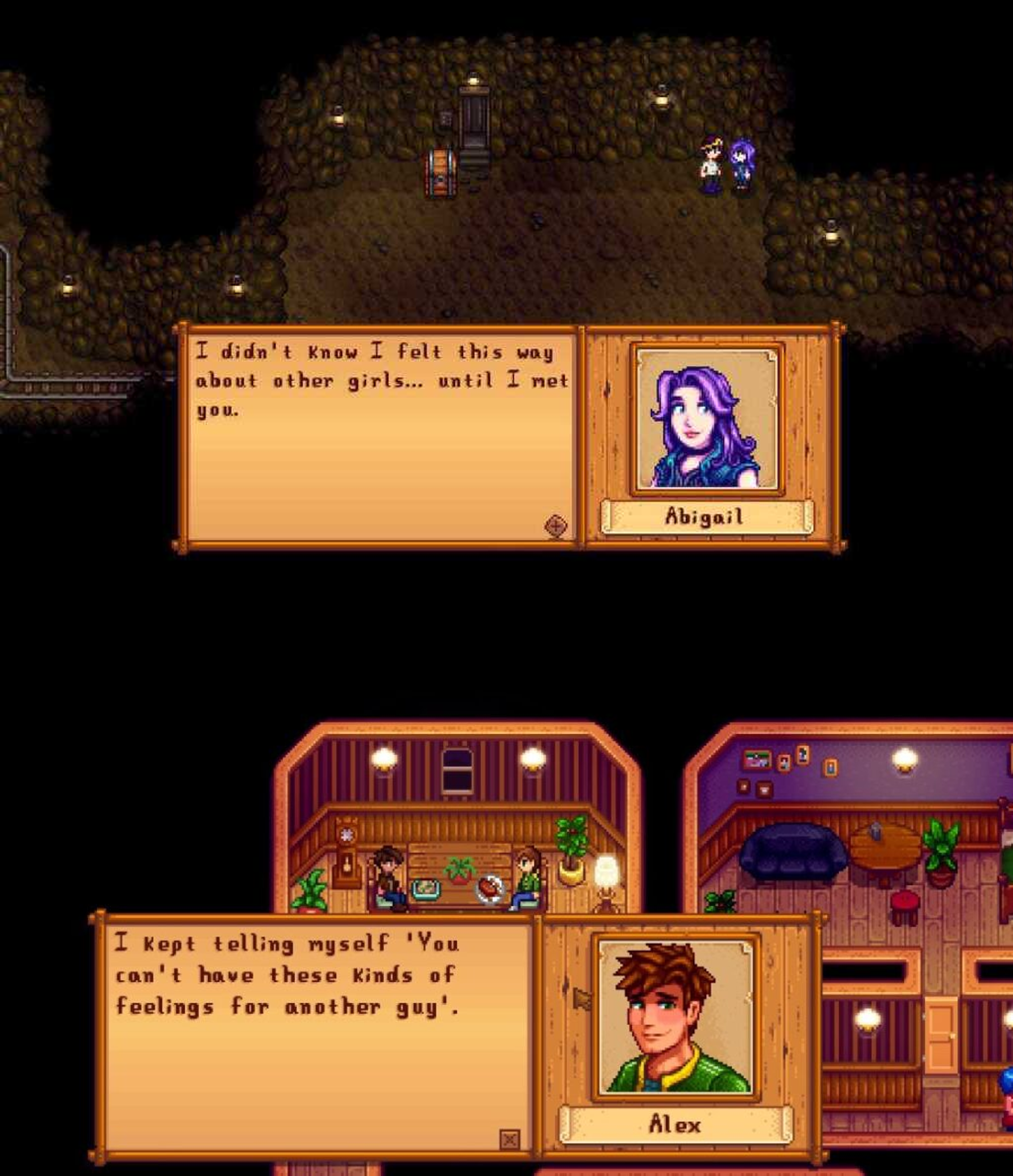
Abigail and Alex acknowledge their feelings and talk about their sexual orientation.
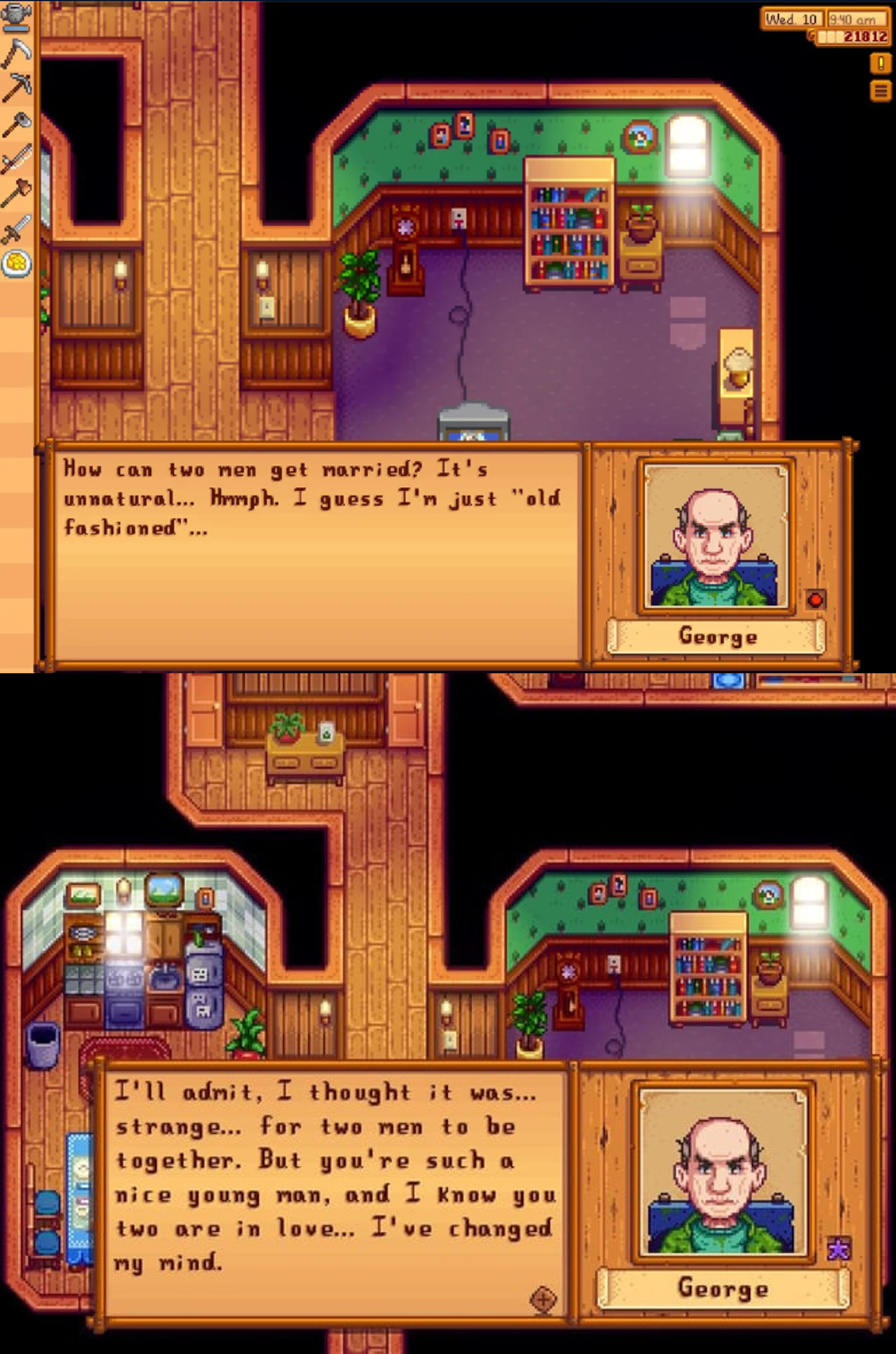
George's initial reaction to his grandson's same-sex marriage, and his eventual softened, more open attitude.
In comparison, Harvest Moon only included these relationships for the first time 3 years after Stardew Valley had been released.
Eric Barone spent 4 years crafting the game. What makes it all even more impressive is the fact that a single person created all of it: the game's story, music, sound effects, graphics, and coding.
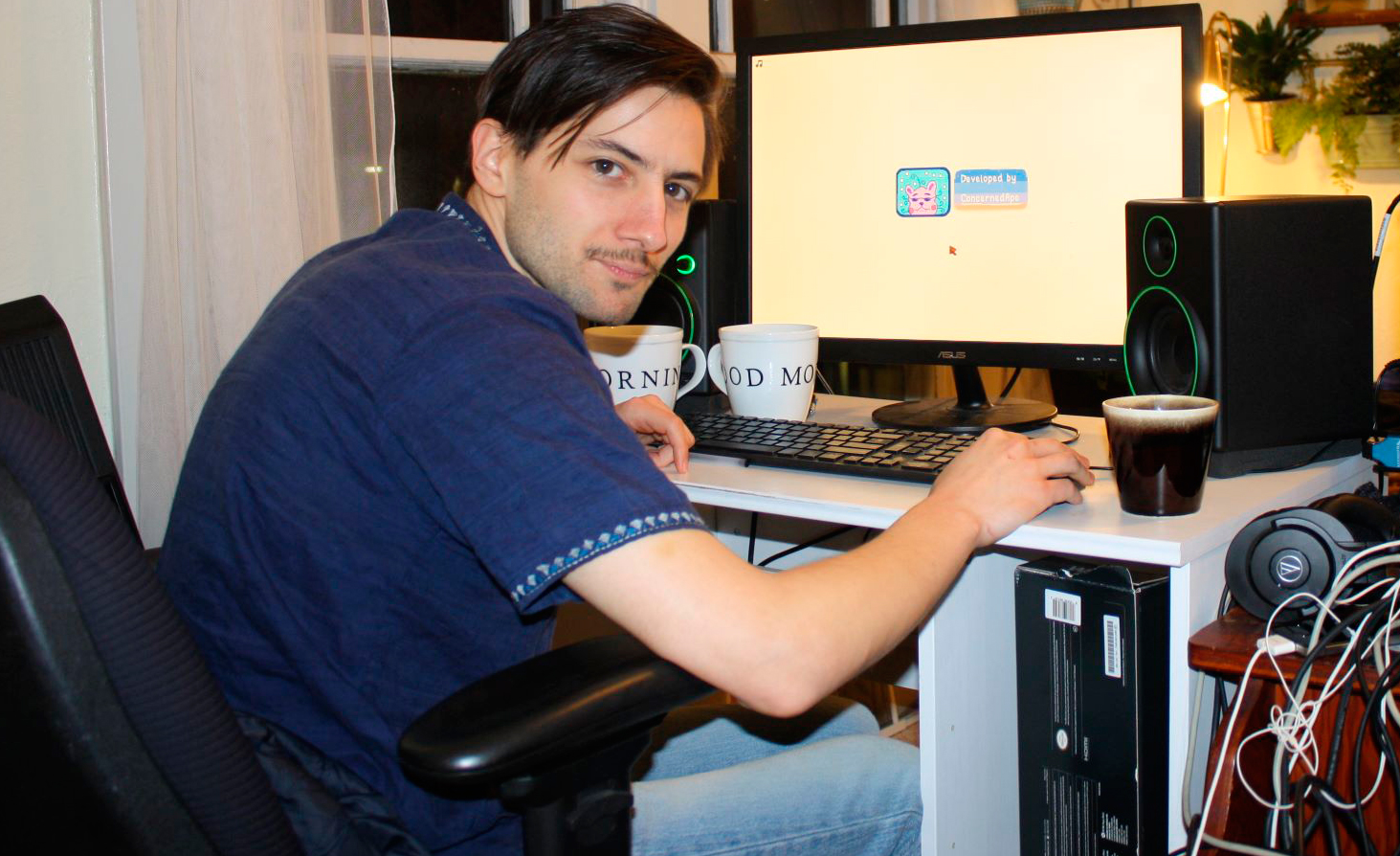
Eric Barone, the living legend.
And the dedication paid off. Stardew Valley became the most successful farm life sim of all time, appealing to a wide demographic of gamers. Although Eric Barone is now working on his next project (Haunted Chocolatier, to be released), Stardew Valley continues to grow with free updates and a recently-released board game.
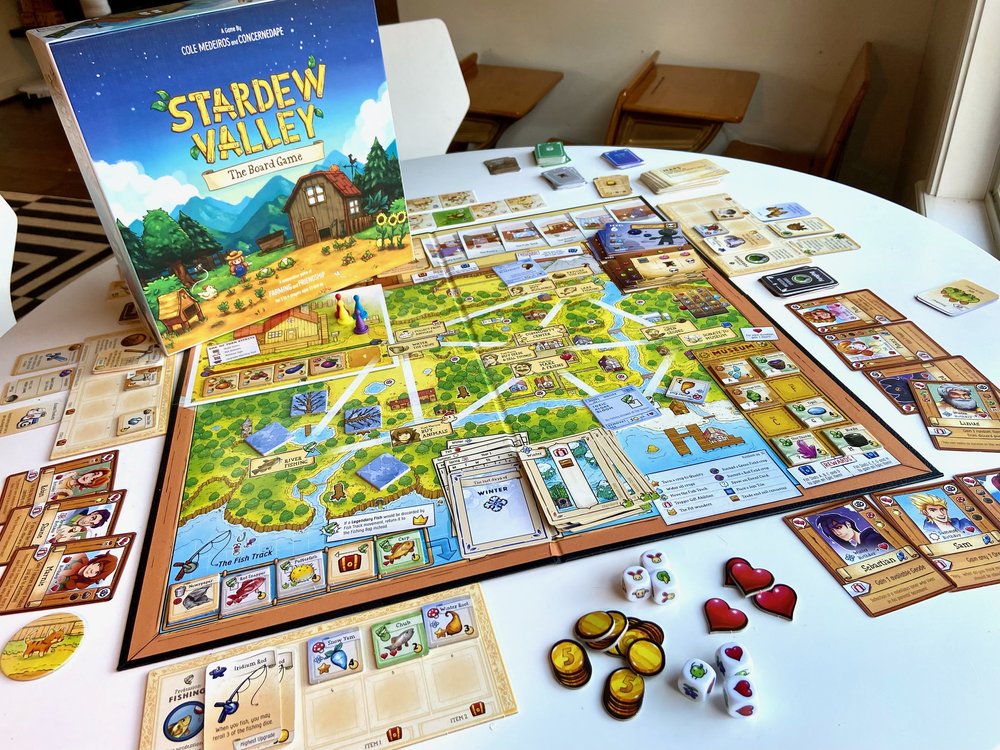
The Stardew Valley board game.
Stardew's cultural impact was so strong that it ushered in a renaissance of farm life sim games. Not only were games with this theme increasingly common, but it was also not unusual to see farming mechanics being added in games from other genres.
However, none of Stardew's successors quite captured its magic. Some introduced fresh ideas, unique art styles, or interesting mechanics, but none matched Stardew Valley's depth, polish, and emotional weight. As a result, while the farm sim genre flourished, Stardew Valley remained its undisputed masterpiece.
Optimising through magic: Fields of Mistria
At last, it's time to introduce the protagonist of this text. But believe me, the long build-up was necessary.
Fields of Mistria is a recently released, post-Stardew farm life sim. Since its development, it has been an eye-catcher, thanks to its striking 1990s shōjo anime aesthetics. While still on the farm life sim topic, though, let's go into why I believe this game finally represents progress in the subgenre, standing on the shoulders of giants and reaching higher.
A trailer for Fields of Mistria.
As expected, Fields of Mistria brings all the regular farm life sim bits and bobs: you can farm, forage, mine, befriend, and romance. The main reason for its success, though, is in how these are executed.
I'd say that, mainly, the game excels at the exact point Eric Barone mentioned when talking about Harvest Moon in a 2016 interview for Game Developer: "... you were living in a world that felt alive, time moved forward with or without your input. It was easy to imagine that the world was very much alive."
And in my opinion, Fields of Mistria does just that.
Walking around and completing the basic tasks of sowing seeds and breaking branches already shows how polished the game is. The animation is superb even for these small chores, a clear indication of the work the team has put into it.
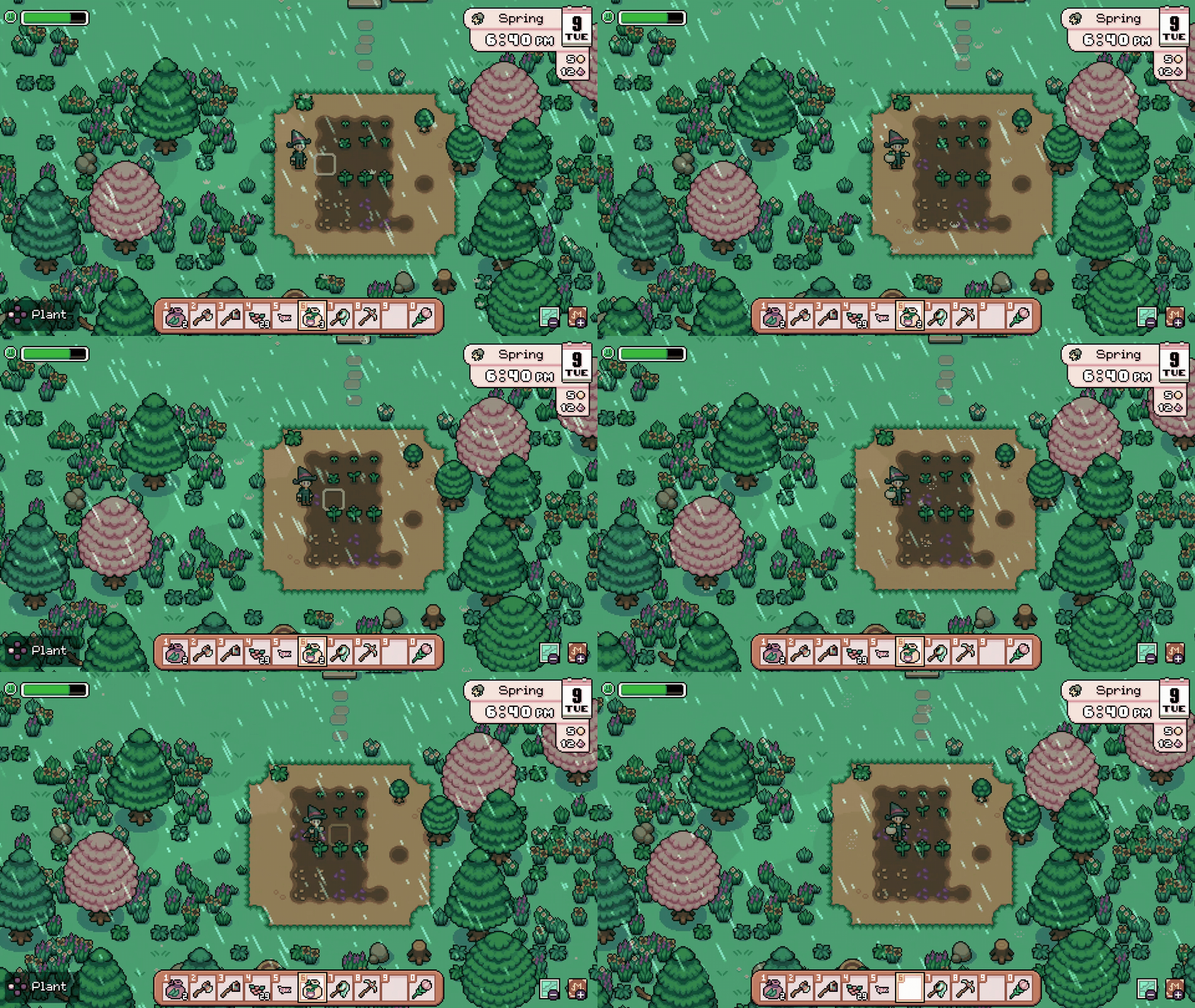
Pretty animations everywhere.
As you explore the town of Mistria, this work becomes more and more apparent. The number of ways you can interact with the world is numerous, and one step ahead of other farm life sims, to the best of my knowledge.
This starts with how the player moves around. Jumping is a missing element from Stardew, but not from Harvest Moon. Gladly, this mechanic makes a welcome return in Fields of Mistria, along with the addition of swimming.
But enough about walking around. Let's talk business. The most gratifying mechanic, for me, was the long-overdue ability to… pet animals. Of course, it's customary to stroke your own pets and livestock, but it always felt a little limiting to see other farm animals and not be able to approach them (Marnie's off-limits cows in Stardew Valley are a good example), something this game solves.
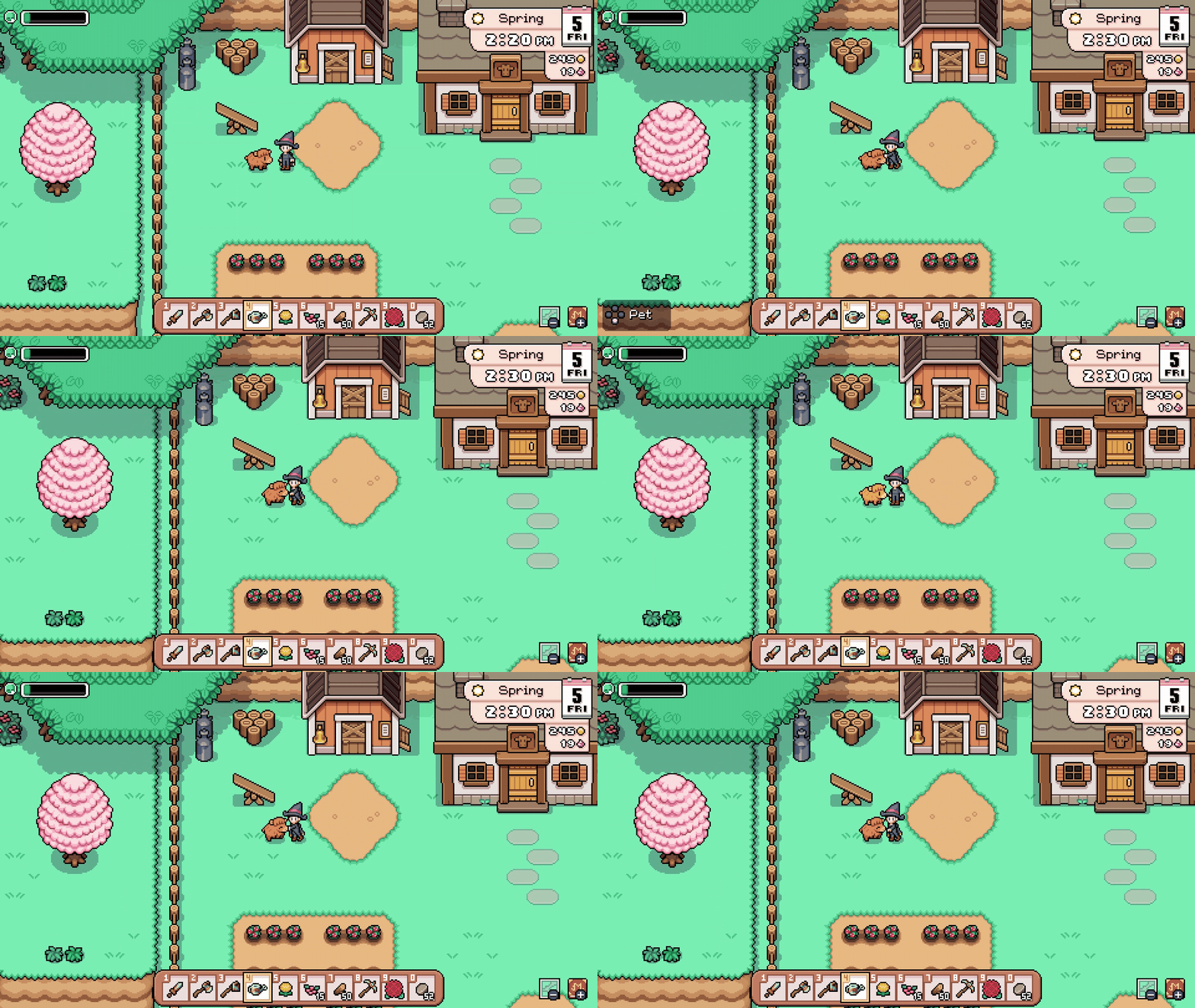
Interacting with livestock in Fields of Mistria.
Fields of Mistria takes this a step further, selecting a handful of creatures that deliver more complex interactions. You can befriend Henrietta, a prized chicken, and Dozy, a lovely dog and effectively the co-owner of the town's bathhouse. They are full-fledged characters whom you can gift and get closer to.
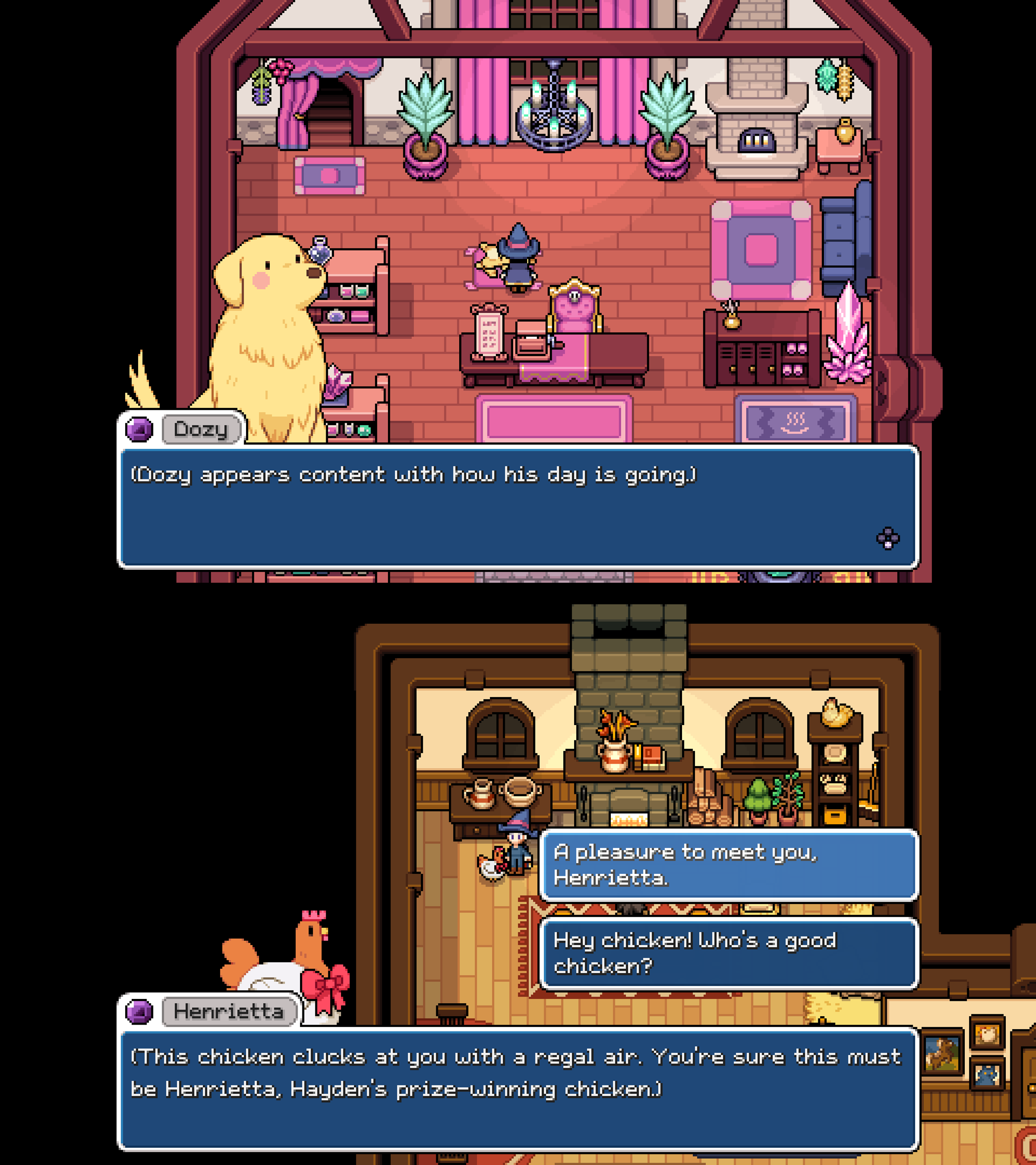
Interactions with Dozy and Henrietta, the game's best characters.
But the human element is not missing from the equation. Far from it; this is where this game shines.
I will echo many of Nate Hermanson's thoughts on his Fields of Mistria review for Video Games Are Good. Let's start with some much-needed criticism: most farm life sims — including Harvest Moon and Stardew Valley — give life to their NPCs through a fairly limited range of dialogue.
Daily interactions get old fairly quickly, and you're left in a loop of a handful of lines. These usually change as you befriend the characters, triggering events that deepen your relationship and unlock new conversations, which again, get stale in a few days.
This is only one symptom of a much larger issue. In Stardew Valley, for example, the exploitative Joja Corporation has started taking over Pelican Town, and the Community Centre is in ruins, well on its way to being turned into a Joja warehouse. The citizens seem passive to the world around them, as the player is the only one who actually does something to save the town.
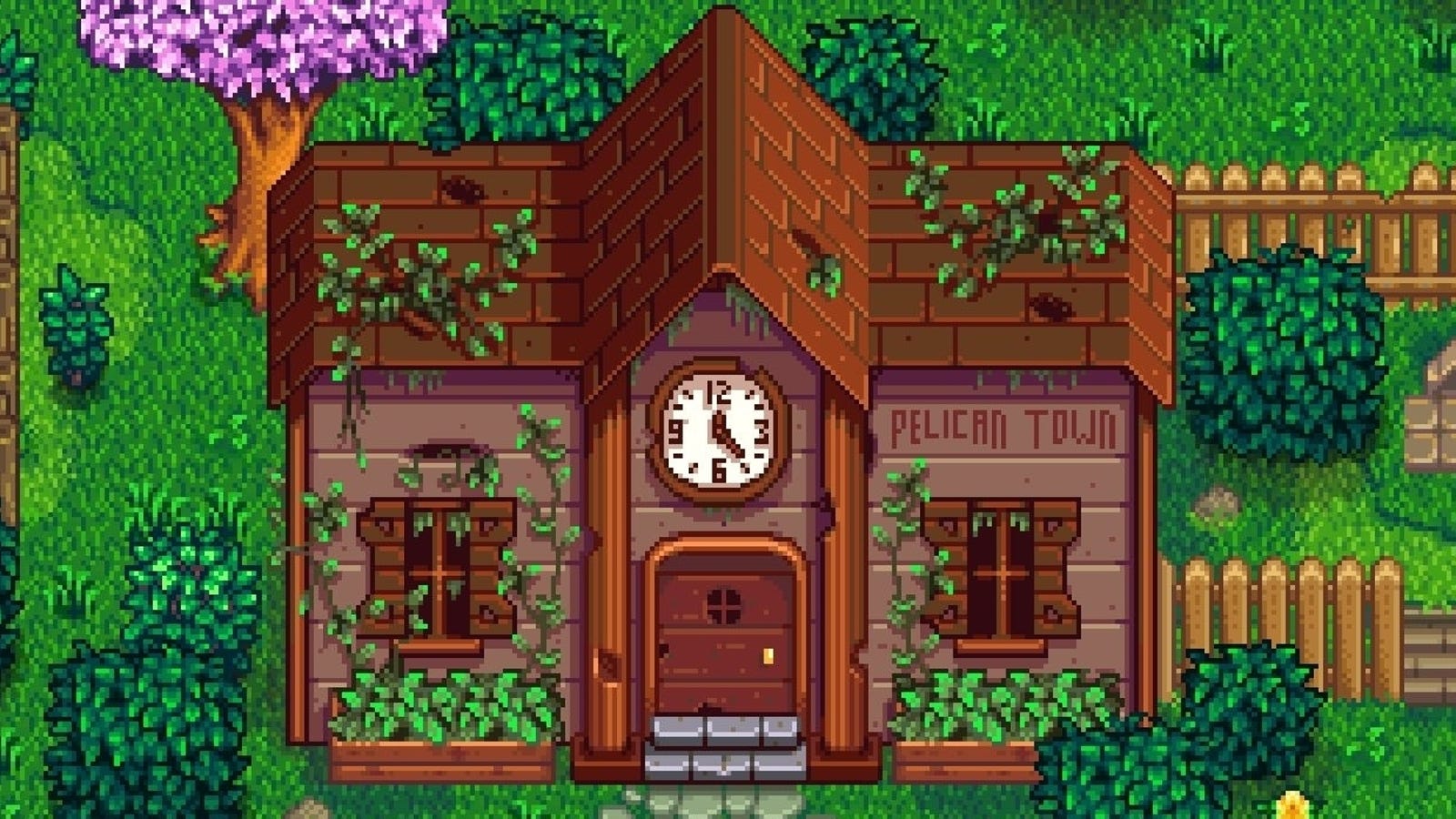
Pelican Town's rundown Community Centre in Stardew Valley.
Even when walking around the town, it's easy to see characters just standing for hours in a repetitive loop. Of course, NPCs in farm life sims are not nearly as bad as in Pokémon games (where many characters are perpetually frozen in a set place in the world).
However, the problem still stands: both Harvest Moon and Stardew Valley are guilty of trapping characters in tedious cycles. I know Alex loves football, but it's hard to believe that someone would stand up for hours tossing a ball up and down.
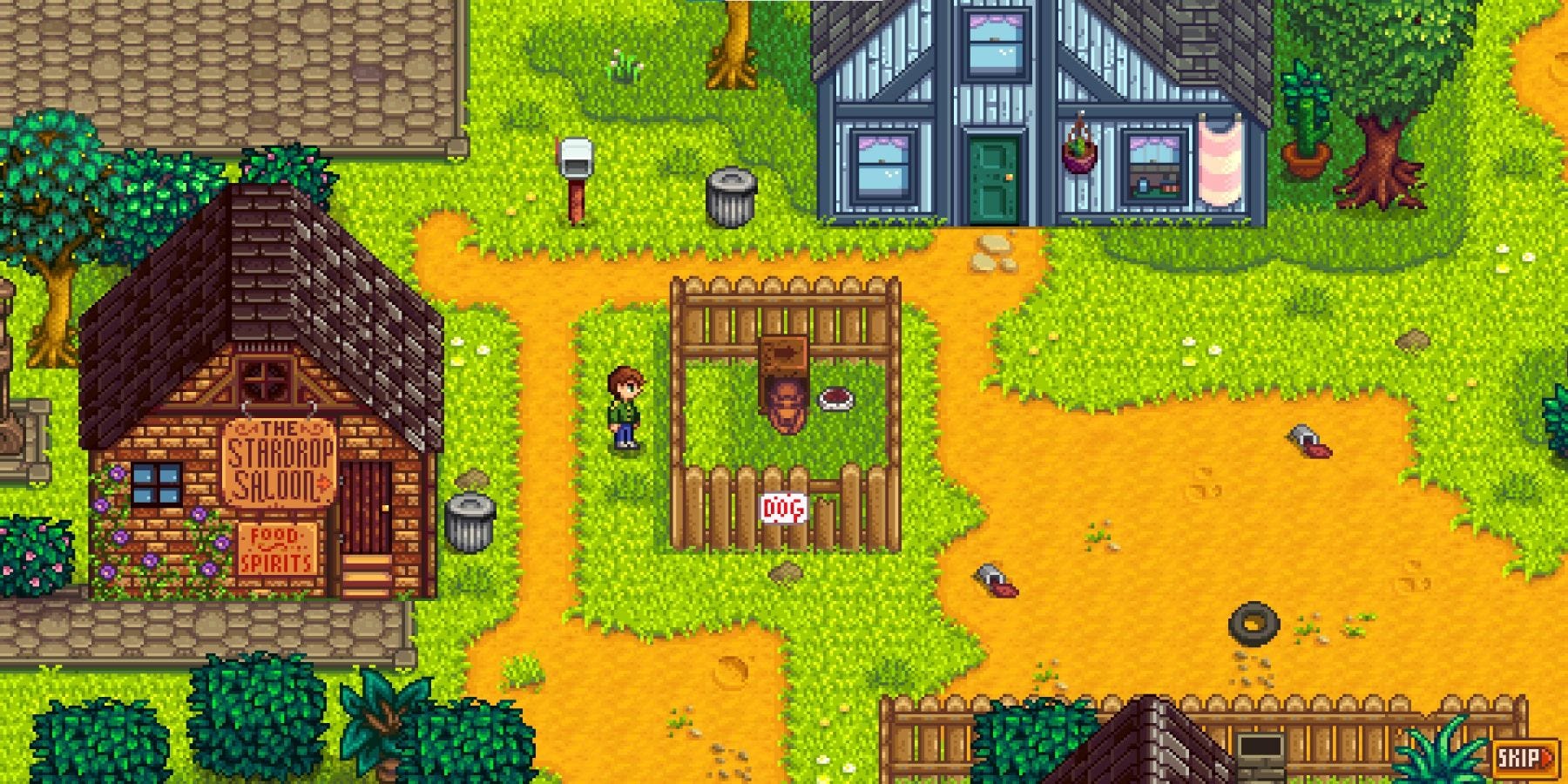
Believe me, this guy just stands there all day.
In Fields of Mistria, however, the world is much more dynamic. Characters have much more varied schedules, hopping around the town and engaging in distinct activities.
Even when the NPCs are busy with a single action for a longer time, it all just seems substantially more believable in Fields of Mistria. For instance, Celine will spend a bigger chunk of her day tending to her flowers, which is okay, considering that gardening is hard work.
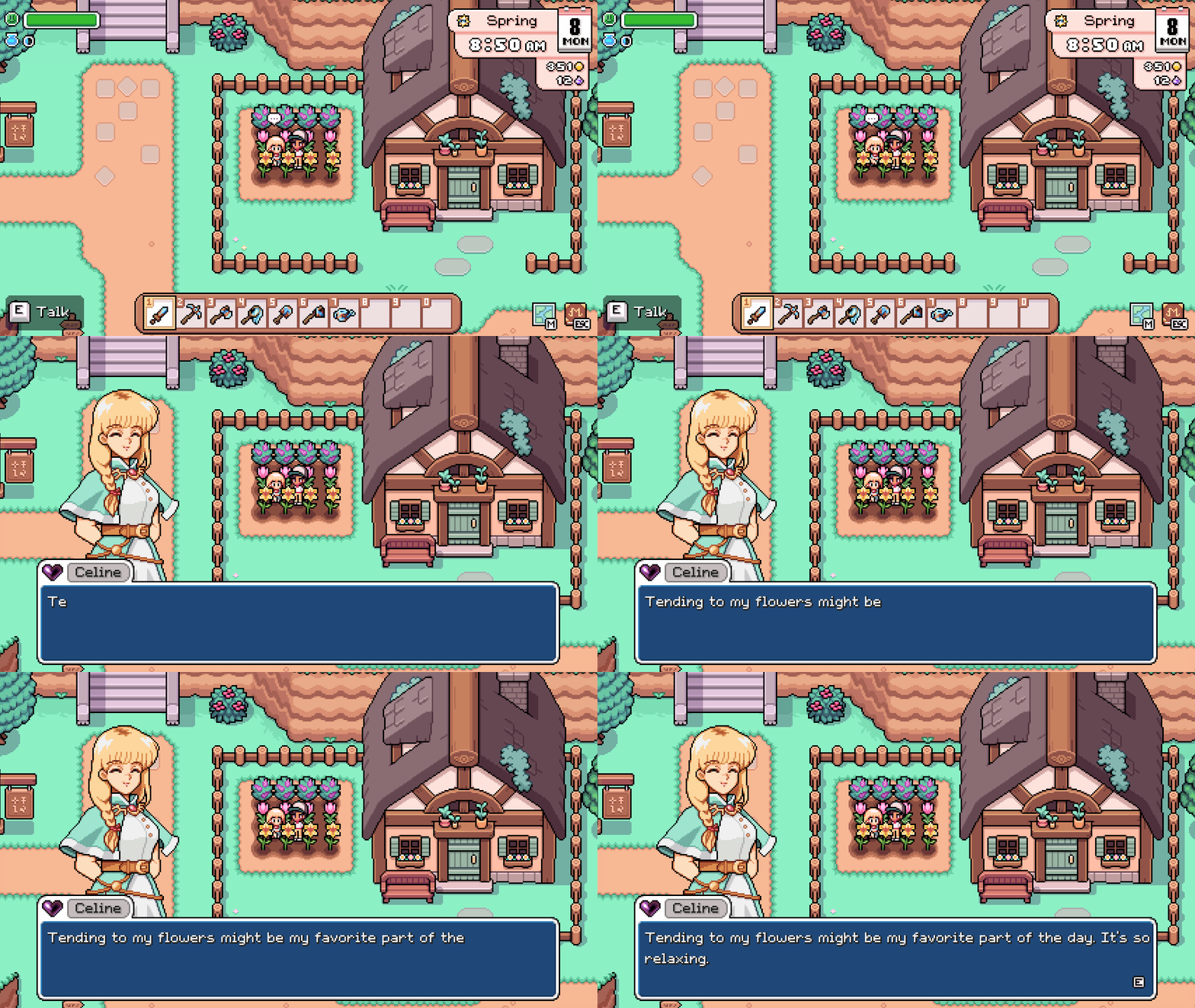
Celine spends a few hours gardening.
NPCs also interact more among themselves. They chat throughout the day, and you can eavesdrop to get some insights into their relationships, personalities, and lives. Sometimes, you are just a passerby and not the topic of the conversation; the world does not revolve around you.
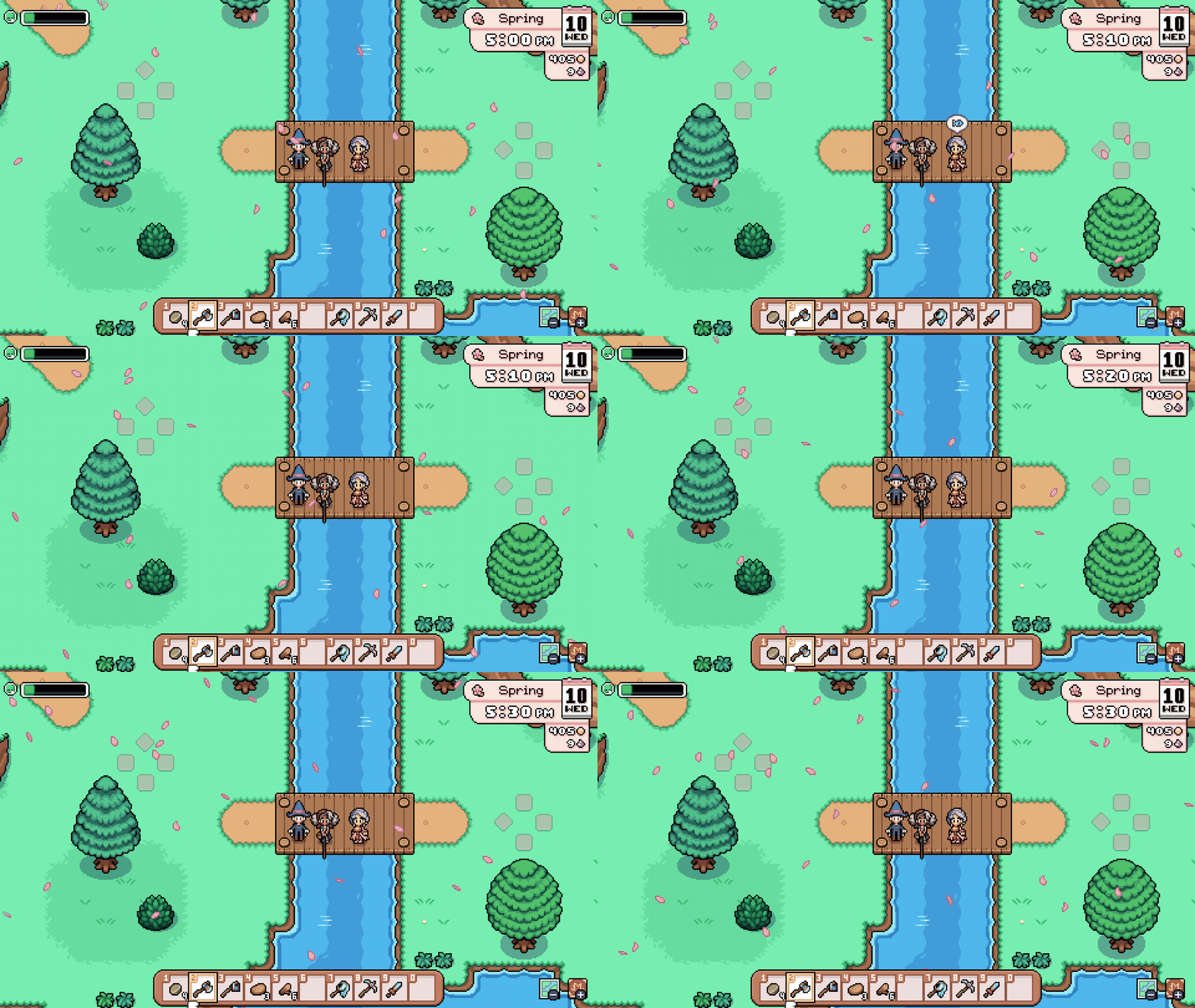
Elsie and Terithia chatting.
While some conversations are just passing chatter, some are connected to deeper, more elaborate storylines that continue for weeks, and sometimes for the entire season.
For instance, townsfolk gather every Friday at the local inn. This is a common feature in farm life sims, stemming from Harvest Moon and also present in Stardew Valley; however, as is the case in all other settings, the "bar talk" gets old, and the lines are repeated week after week.
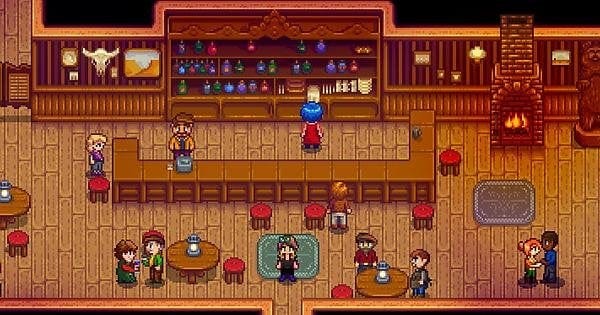
The Stardrop Saloon in Stardew Valley.
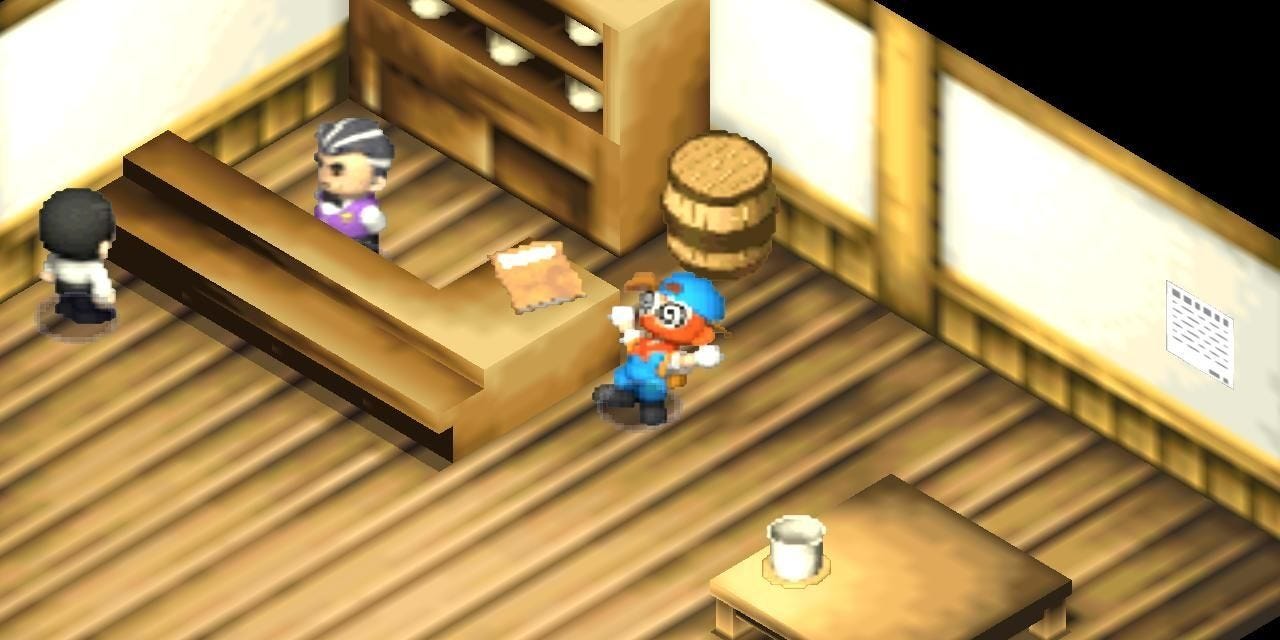
Having one too many in Harvest Moon: Back to Nature.
Quickly, you find yourself dreading conversations with the NPCs, and most of the time, you only interact with them in order to boost your friendship levels, as opposed to being genuinely interested in the characters and invested in their stories and personalities.
The bar gatherings gain new life in Fields of Mistria. The NPCs drink, have fun back-and-forth conversations that play out like an event, and play both cards and tabletop RPG. The town's kids plot complex schemes, like a silly heist to get into a locked room in the tavern. And all of these activities have lingering effects. For instance, the villagers will get excited about the RPG campaign and comment on it the day after, talking about their characters and adventures at the table.
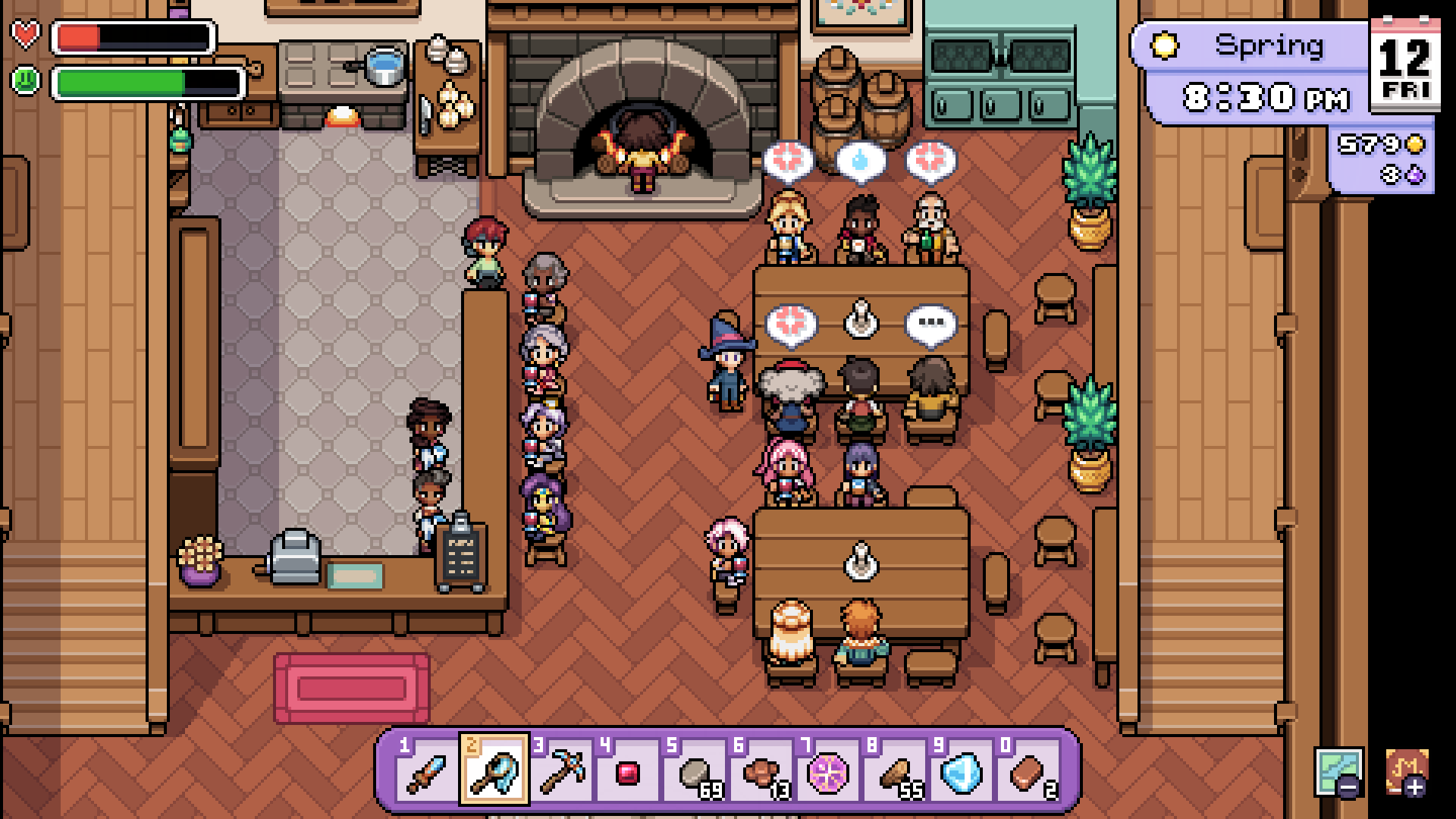
Emotions running high at the poker table; another Friday night at the Sleeping Dragon Inn.
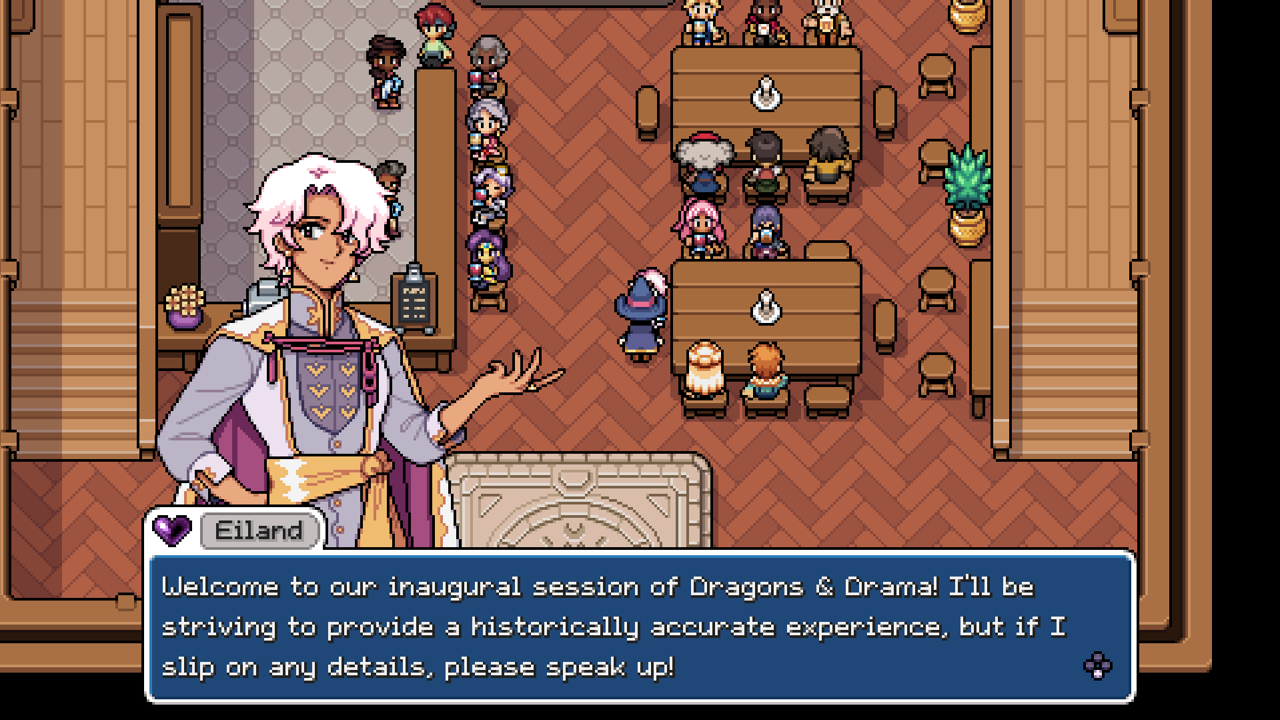
Mistria's D&D.
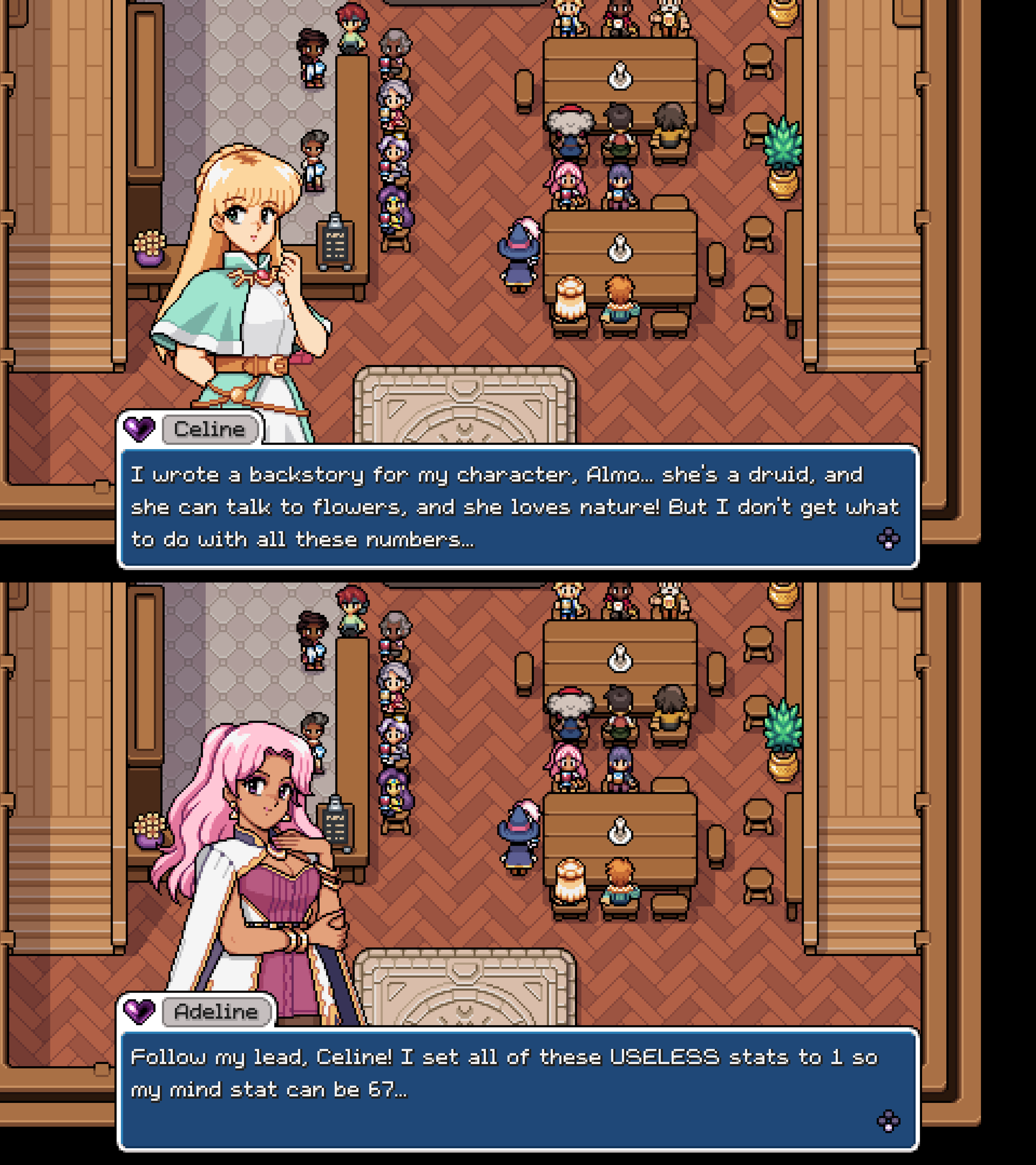
It's fun to see how the characters interact with the RPG campaign.
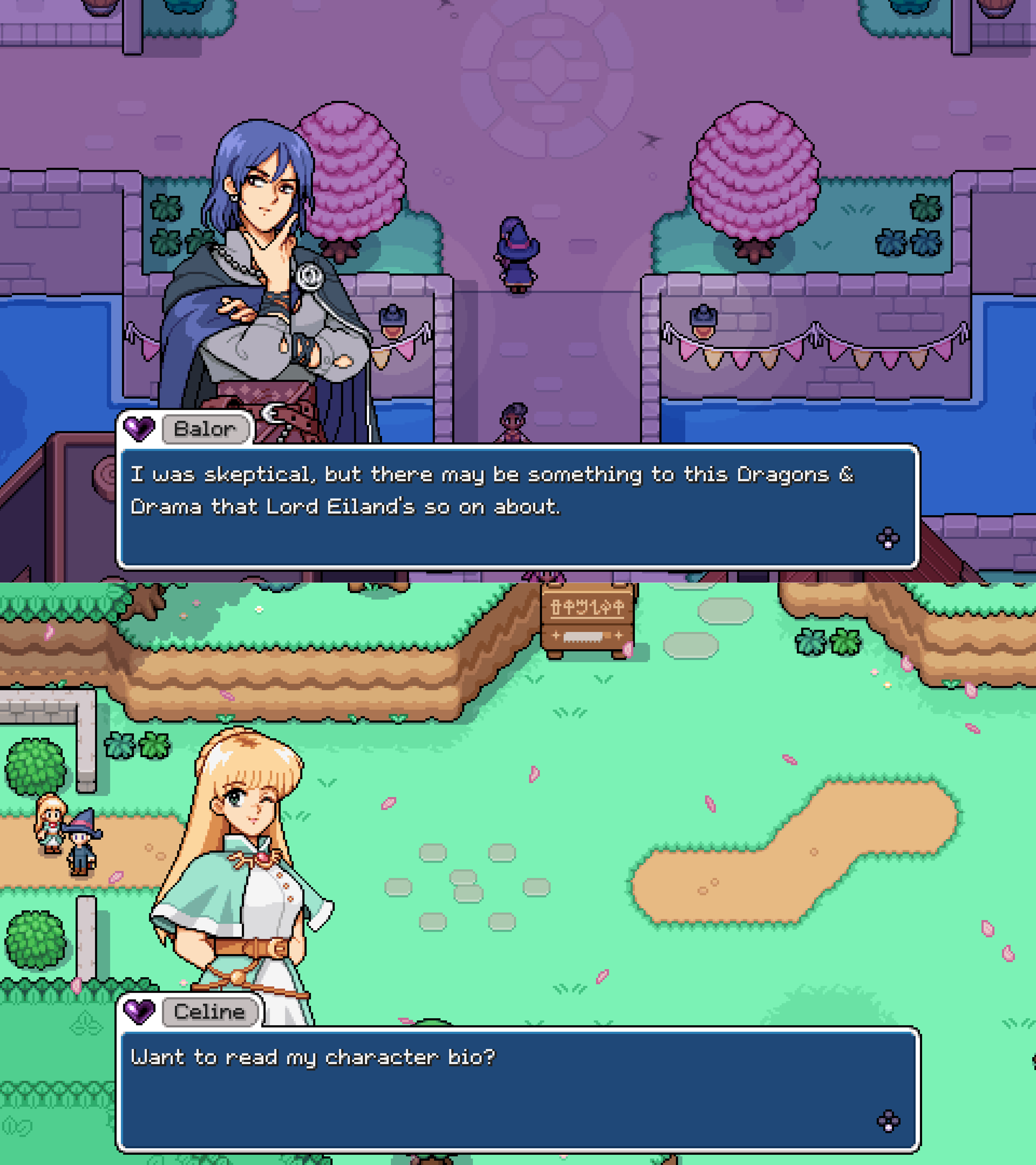
Characters are still talking about the RPG campaign days later.
Your actions — big and small — also have more lasting impacts, with characters commenting on your achievements, beneficial deeds and donations you've made to the town museum. Your contributions to Mistria seem more robust, and the player is more frequently valued.
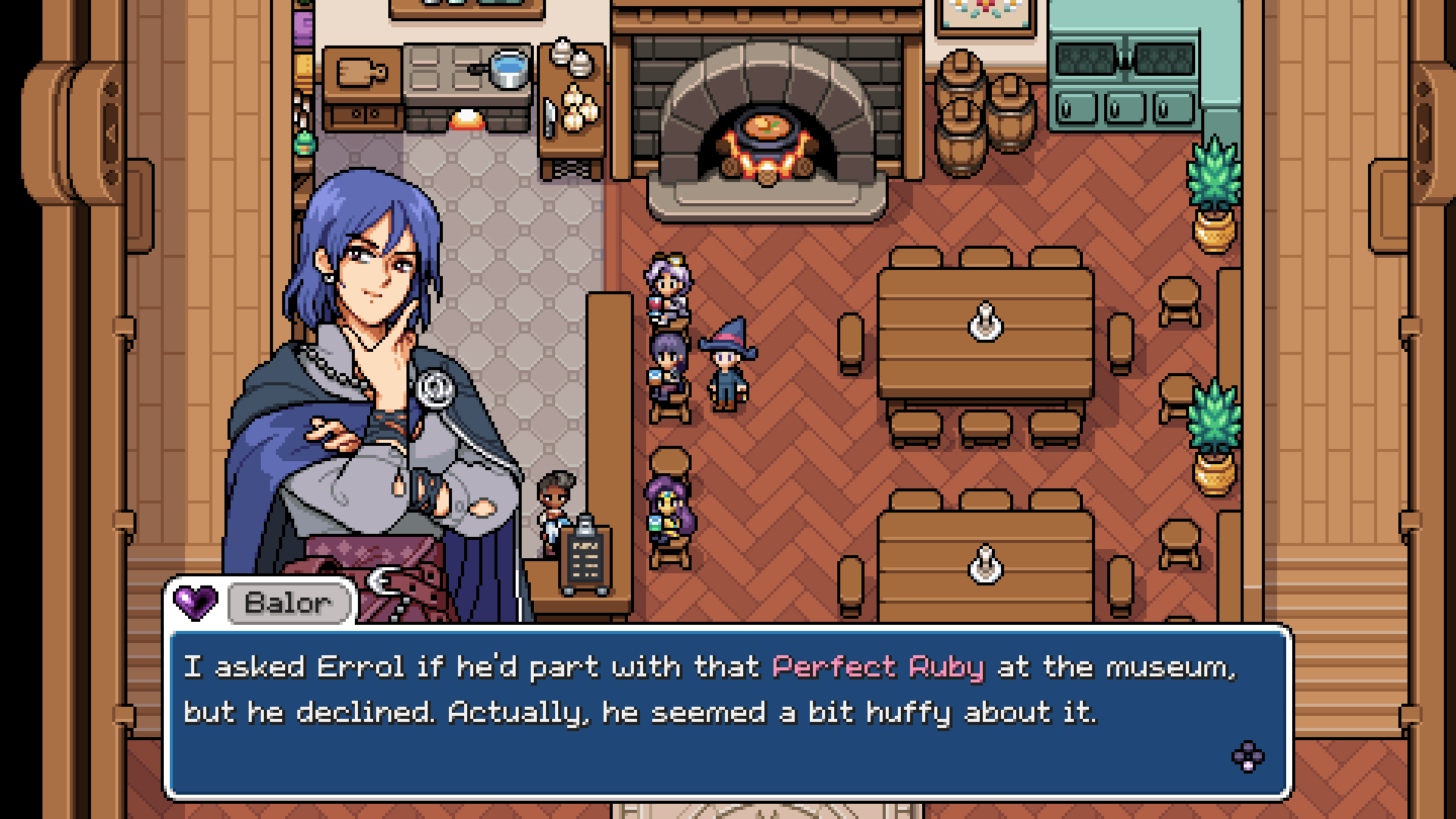
Errol comments about the perfect ruby the player has recently donated.
While on this topic, that's one more improvement brought by Fields of Mistria. The town's struggles and how its inhabitants rise to them are a huge step forward. Instead of just leaving it all to the player character, the NPCs contribute, sharing the work and doing their part, which is made clear by the game's story.
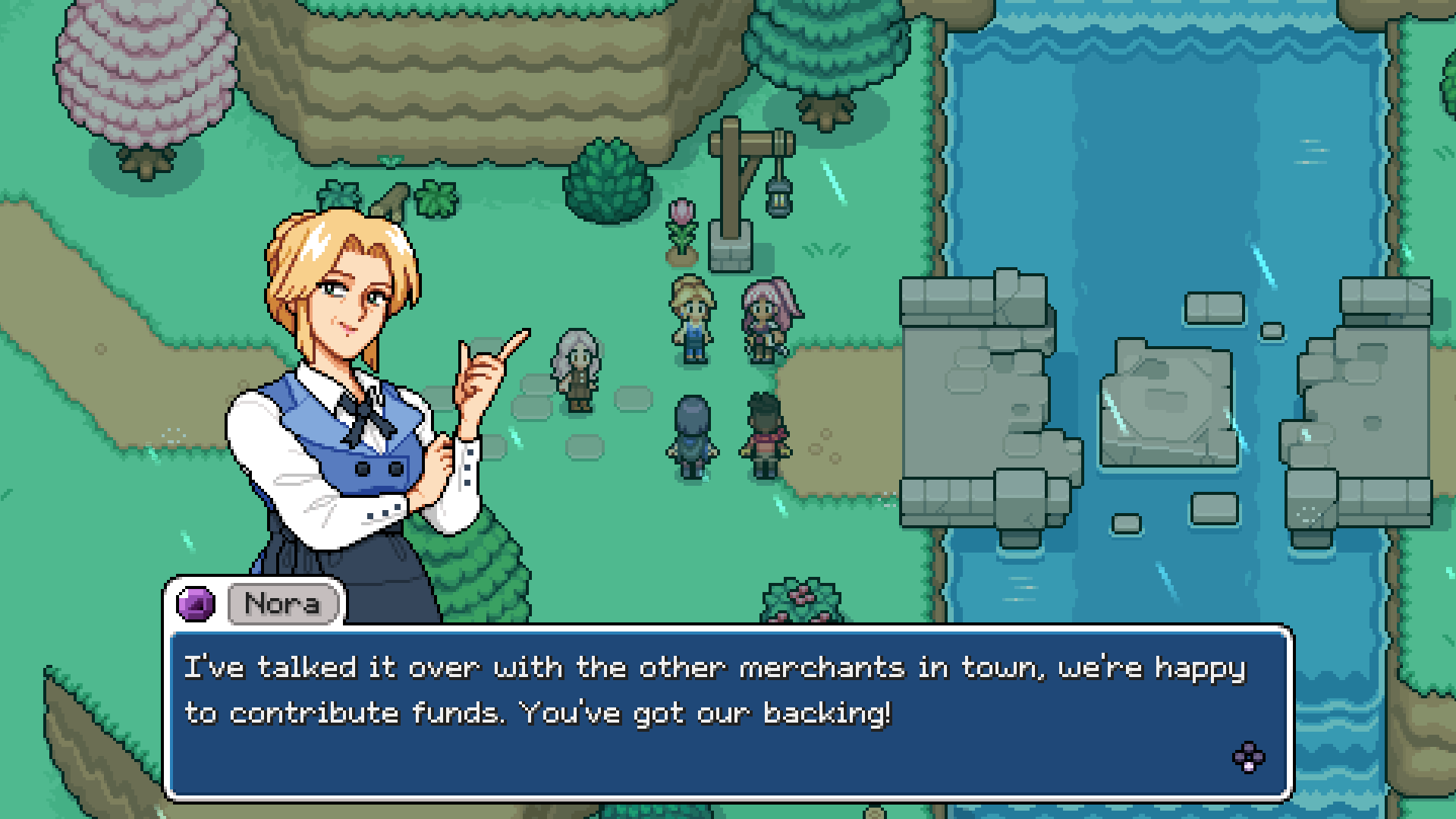
Nora steps in to pay for the town repairs.
Working on the town is a more engaging task in comparison to other farm life sims, thanks to the characters' involvement in improving it. The plans made by the town leader also seem more polished and thorough, counting with collaboration between the public government and local businesses.
Fields of Mistria also introduces a "town rank" system. This mechanic adds one more reason to complete quests and fulfill townsfolk's requests: as you improve Mistria, you earn quite a few rewards and unlock new activities.
Your character also progresses throughout the game. In Harvest Moon, you only ever leveled tools. In Rune Factory, the character can also level up, boosting their statistics related to both combat and farm work.
Stardew Valley is more specific: the character has separate levels for each skill: Farming, Fishing, Foraging, Mining, and Combat. As you level up, you gain new abilities, and sometimes may have to choose between one skill or another.
Fields of Mistria builds on top of that with a more fragmented skill tree system imbued with magic. On your farm, there is an ancient statue of a magical dragon, Caldarus, a guardian deity.
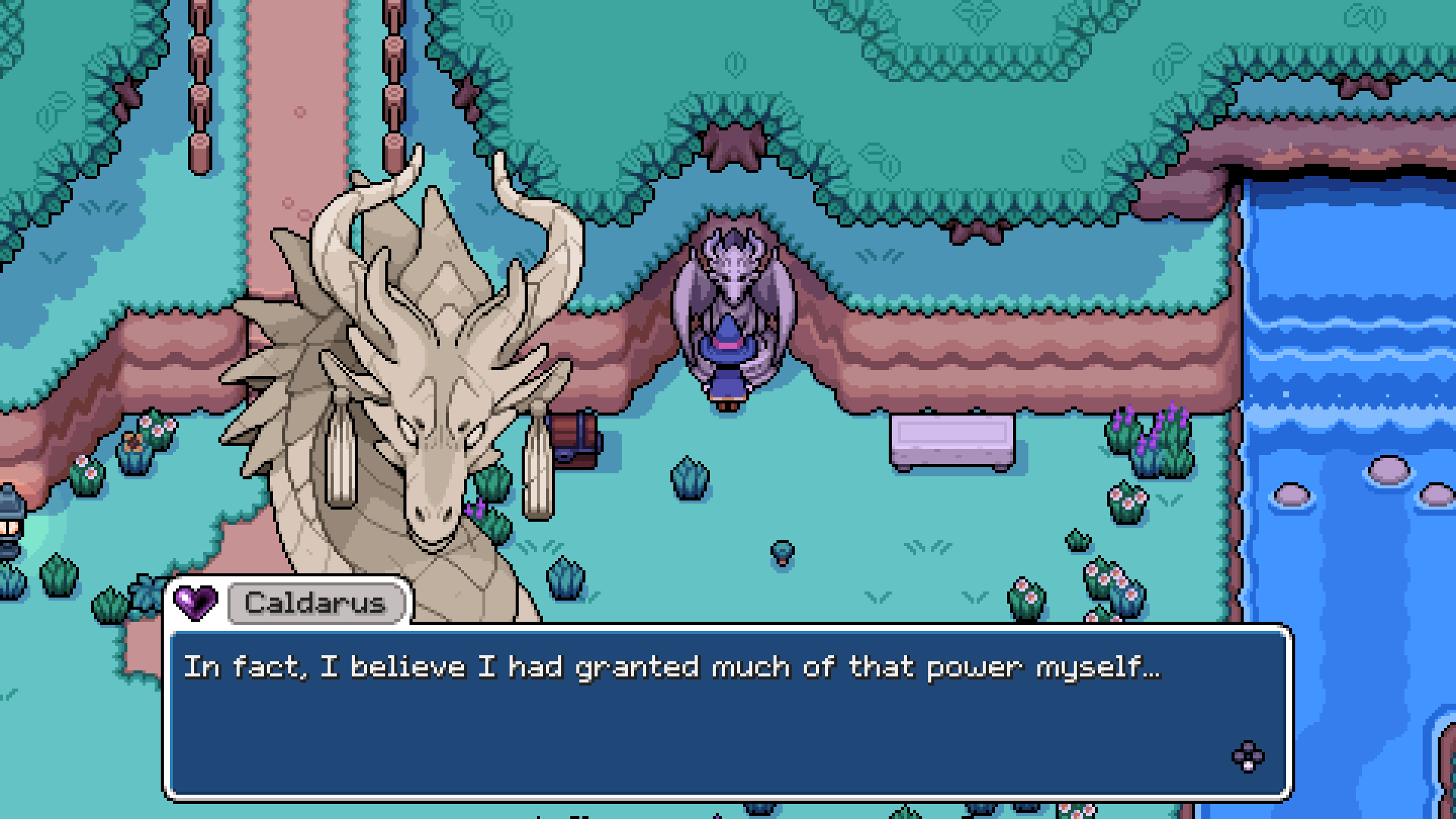
Conversation with Caldarus. Yes, you can romance him (he has a humanoid form).
While going about daily activities, like working on your farm or exploring the mines, the player collects Essence (a form of magic that functions as a kind of "mana currency") for Caldarus. It's impossible not to remember Rune Factory here.
In turn, the player can spend Essence to unlock different abilities in nine areas: Farming, Fishing, Archaeology, Cooking, Ranching, Crafting, Blacksmithing, Mining, and Combat.
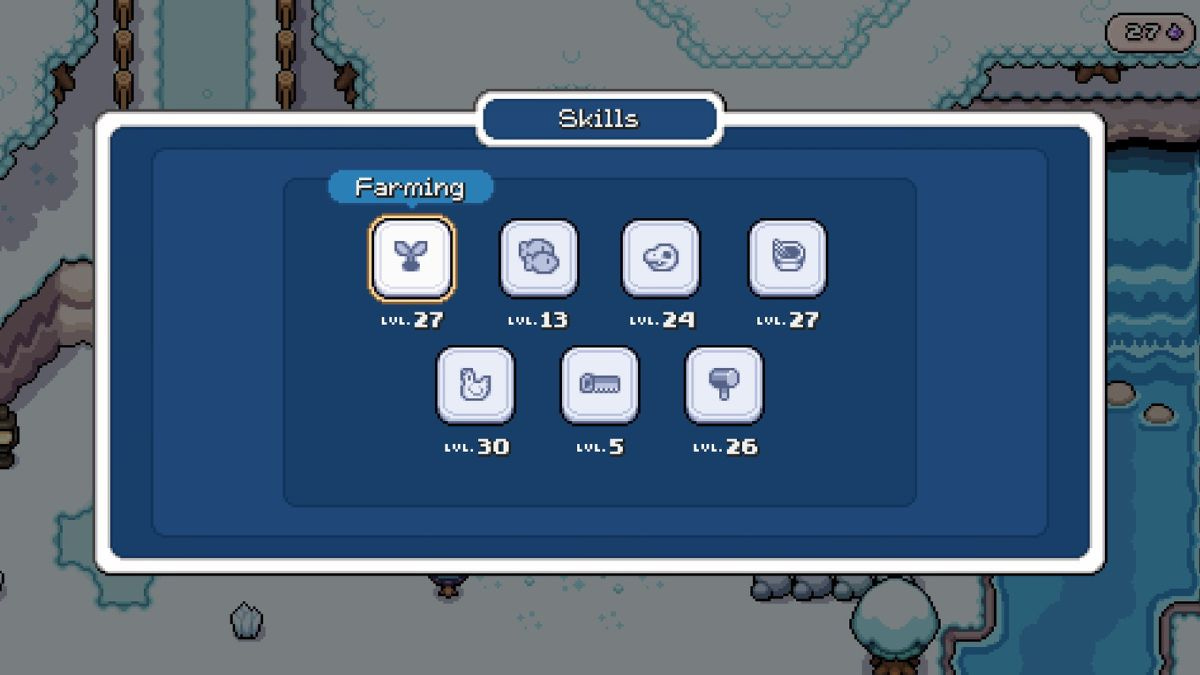
The skill menu in Fields of Mistria.
The perks unlocked by using Essence bring more magic into Fields of Mistria. One example is the "Well Watered" skill, which makes watered crops occasionally retain their humidity through the next day. Some of the abilities, when used, are even marked by specific sound and visual effects that evoke the idea of a spell being used.
I'd argue that Fields of Mistria refines the farm life sim formula through its attention to detail and just a little more magic (Rune Factory was always onto something).
What's next for farm life sims?
In many ways, I believe Fields of Mistria is well on its way to being considered the new standard for farm life sims. It is the first post-Stardew game to get me feeling like this, and I'm saying this as a diehard Stardew Valley fan. There are many additions in terms of story and mechanics that make it a strong title.
It may be good to remember, though, that not every game is a complete improvement, of course. For instance, there are still things I love from Harvest Moon, things that not even Stardew Valley quite nailed. Two specific mechanics come to mind: romance rivals and livestock deaths.
Characters eligible for marriage can be romanced by the protagonist. In Stardew Valley, rest assured; while the plot does nod towards some characters being attracted to one another, only the player character can get romantically involved with them. The other bachelors and bachelorettes are eternally frozen in time, never developing a romantic relationship with one another.
Harvest Moon, however, adds more drama to this. If you don't make your move quickly enough, other single characters start getting closer. For most bachelors/bachelorettes, there is a rival in love, eager to romance them before you. In time, the majority of the characters find their other half, which reinforces the idea of a moving world that exists without the player.
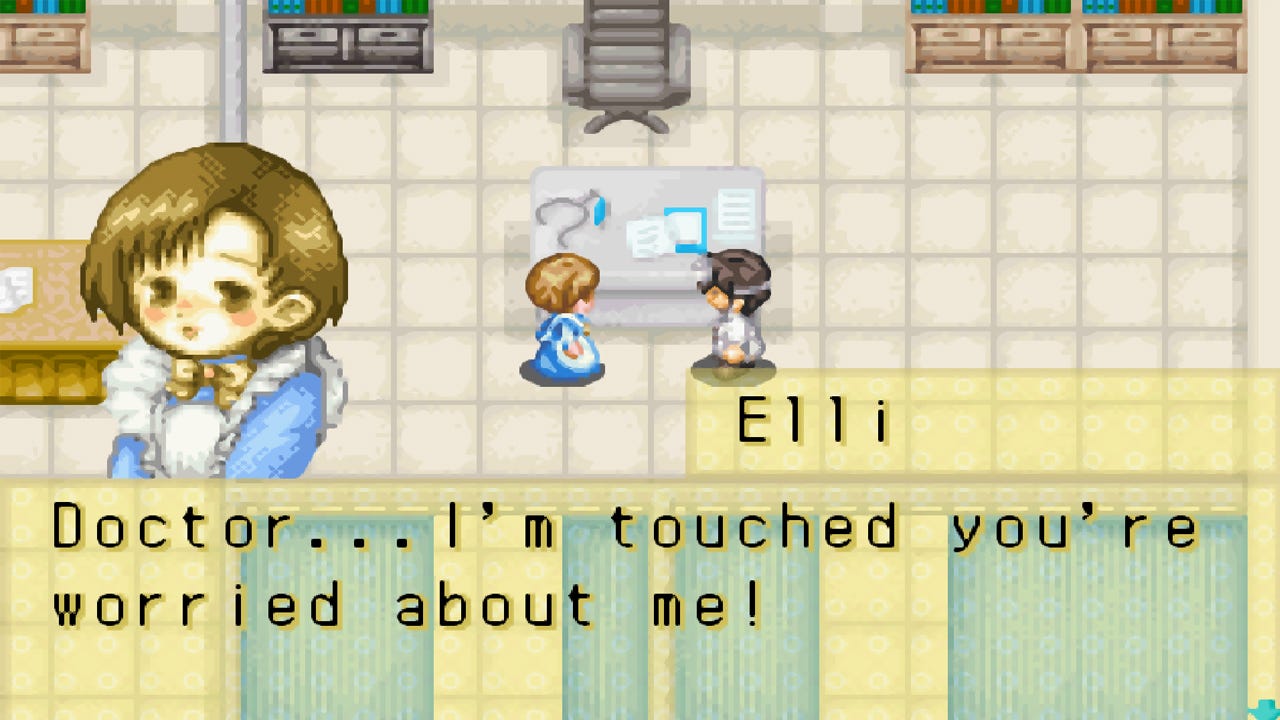
Elli and the Doctor in Harvest Moon: Friends of Mineral Town.
Another mechanic I appreciate from Harvest Moon is that you actually have to care for your farm animals. Not feeding them may lead to their deaths, and they may also pass away from environmental events like typhoons and blizzards. You can protect them by upgrading your barns and coops, making them resistant to these hazards. Even with your best efforts, though, time is unforgiving. After a few years, animals will die of old age.
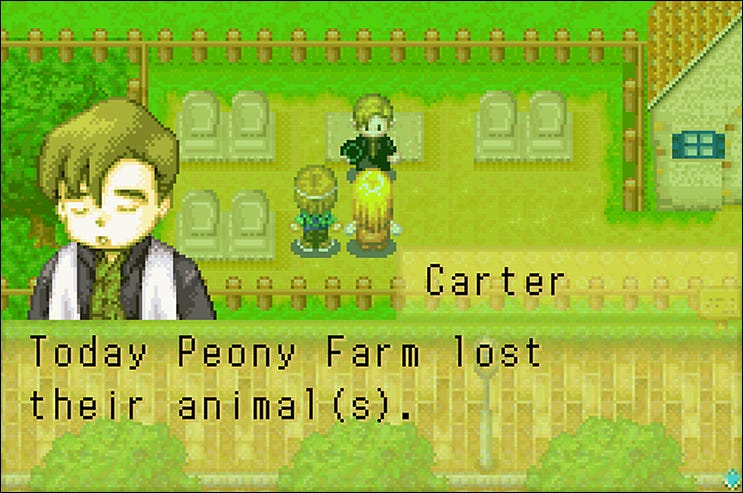
A funeral for a deceased animal in Harvest Moon: More Friends of Mineral Town (2003).
I remember being devastated about it as a kid, but I do think this feature adds another layer of complexity; you have to cherish your beloved animals and accept that life is finite. While sad, I think that helped make the game beautiful.
Fields of Mistria is still in early access. I don't know whether these mechanics are being added in later iterations, so there is still an opportunity for the game to further honour its commitment to creating an engaging, living world.
As for the visuals, the game has very much knocked it out of the farm (ba dum tss!).
The Secret Spice — shōjo Anime
It's time to finally move on to our second course: aesthetics. This will be a dessert, nowhere near as long as the main course, but still indispensable for a full meal.
Fields of Mistria's art direction is heavily inspired by 1990s shōjo anime, a group of anime known for its dreamy color palettes, expressive character designs, and intricate details.
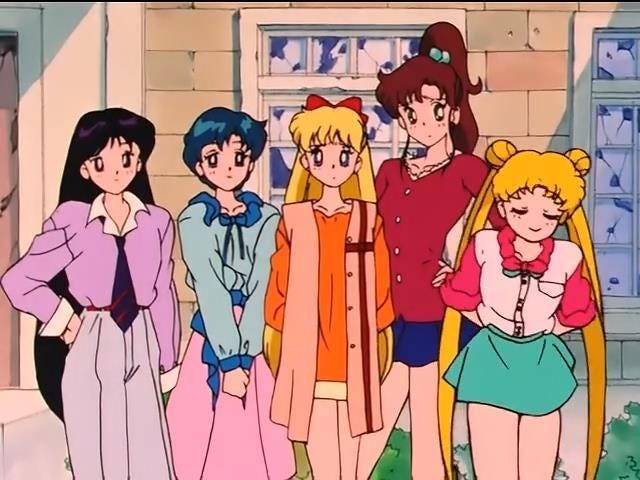
Pretty Soldier Sailor Moon (1992).
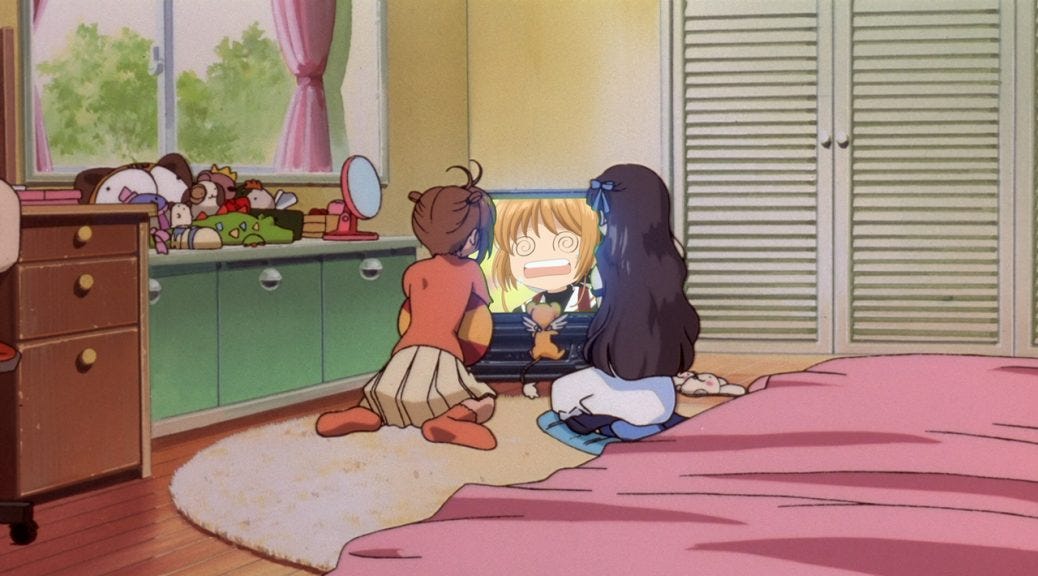
Cardcaptor Sakura (1998).
Shōjo (少女) is a Japanese word meaning "girl", although it is not commonly used to refer to girls; onna no ko (女の子) would be more common. Shōjo manga/anime are not a genre per se, but a target demographic: these works are aimed at adolescent girls and young adult women (although also consumed by men, such as your truly). Still, some aesthetic and narrative characteristics came to be associated with shōjo, due to their common use in these manga and anime.
Perhaps no other traits scream shōjo as big, detailed eyes, sparkles, magic, and a narrative focus on human relationships, with a deep dive into characters' emotions, friendships, and romance.
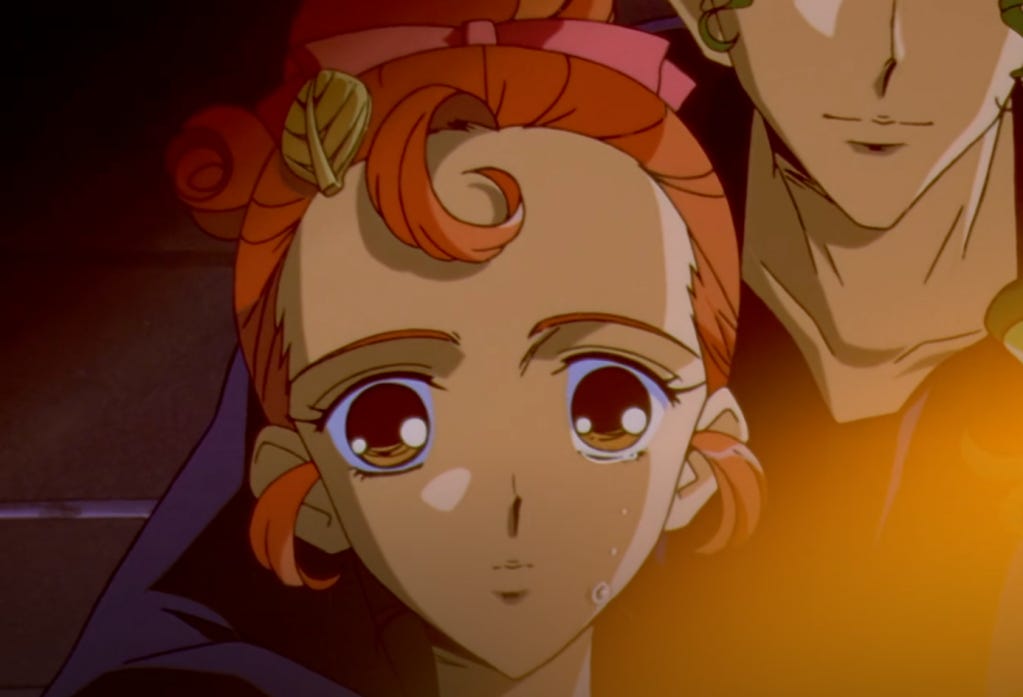
Revolutionary Girl Utena (1997).
This influence is visible in every pixel of Fields of Mistria, from the pastel hues of the landscapes to the smooth textures and rounded edges that soften the world's appearance, making it feel inviting and warm. Its dialogue and character storylines are also reminiscent of shōjo, but I'd say that's a given in farm life sims.
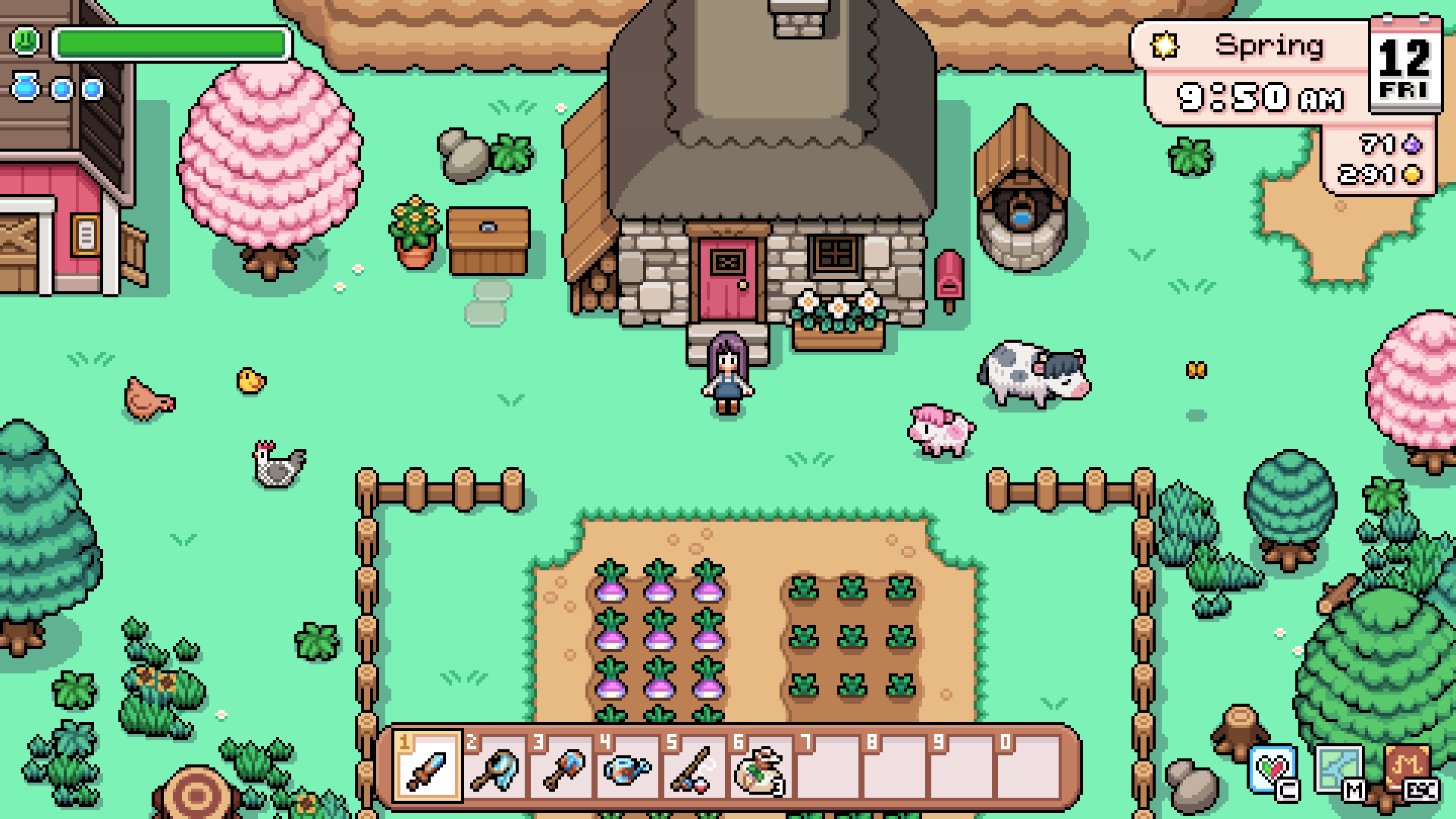
The player's farm in Fields of Mistria.
The game's character portraits are another nod to this aesthetic. NPCs are strikingly pretty, with large, emotive eyes, delicate linework, and stylish outfits that immediately communicate their personalities. Their expressions shift naturally in conversation, reinforcing the game's storytelling through subtle visual cues.
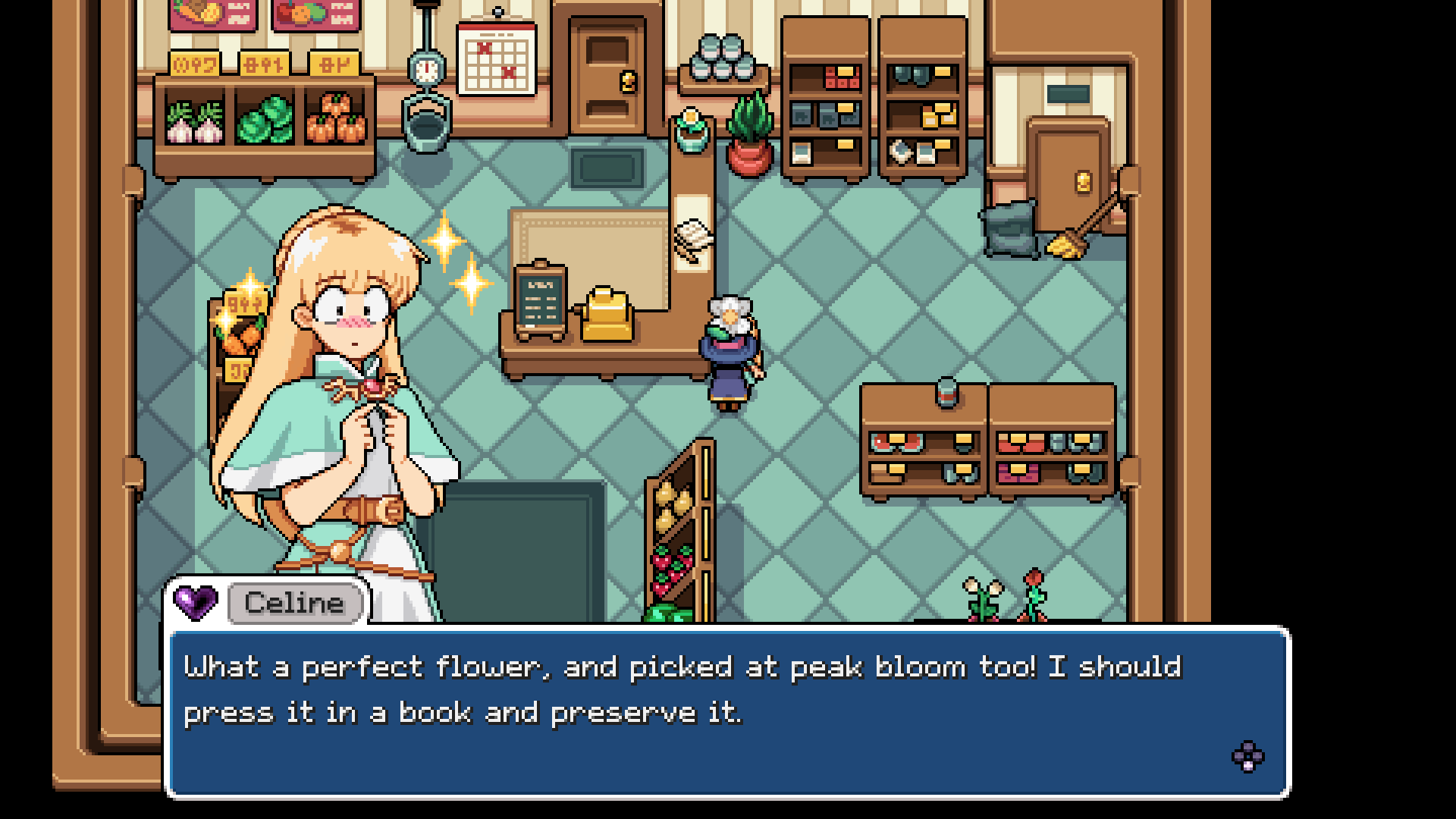
Character's reactions are full of life!
It's easy to glance at a character and recognise their archetype — whether it's the venturous traveller, the caring gardener, the gentle giant, or the grumpy-but-secretly-sweet (meaning: tsundere) type.
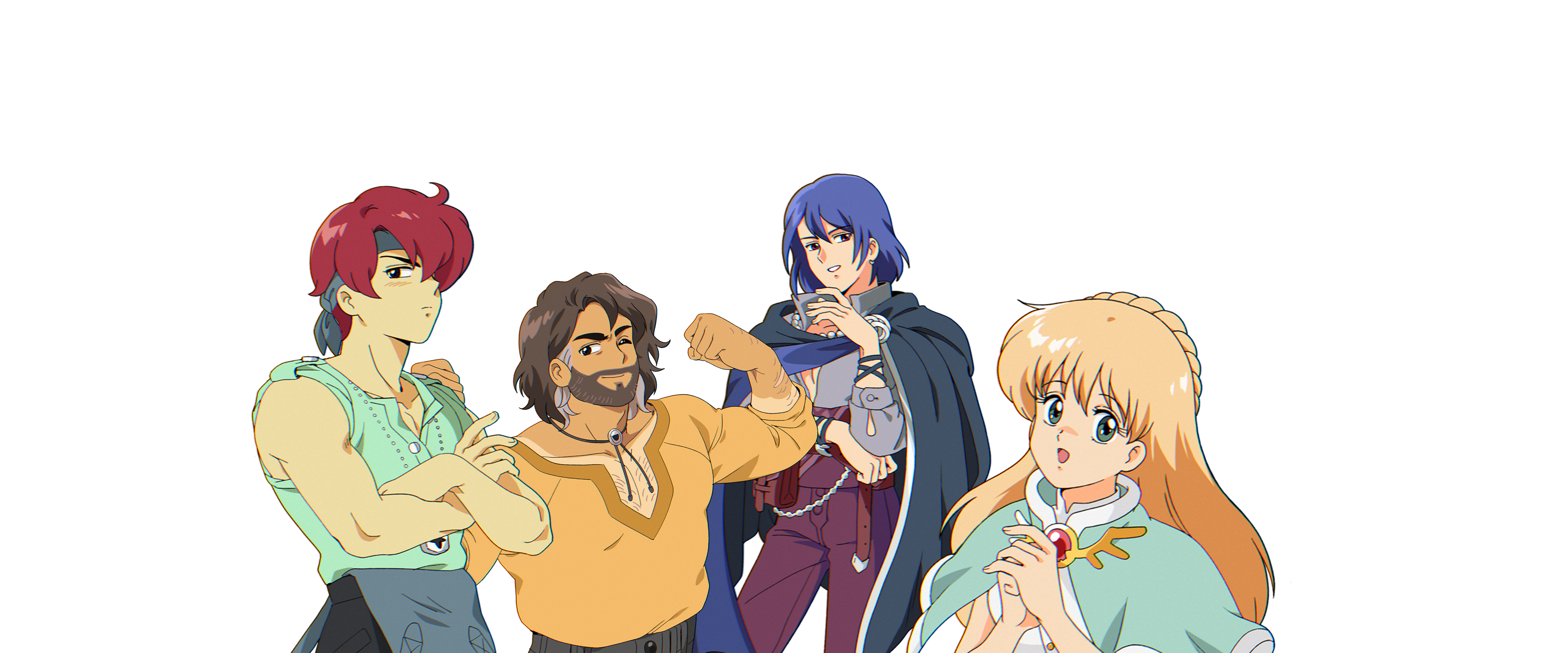
Can you guess which is which?
Maybe no other character is clearer in these archetypes than Juniper: she is the hot witch, the jerkass, the mad scientist who uses a magic cauldron.
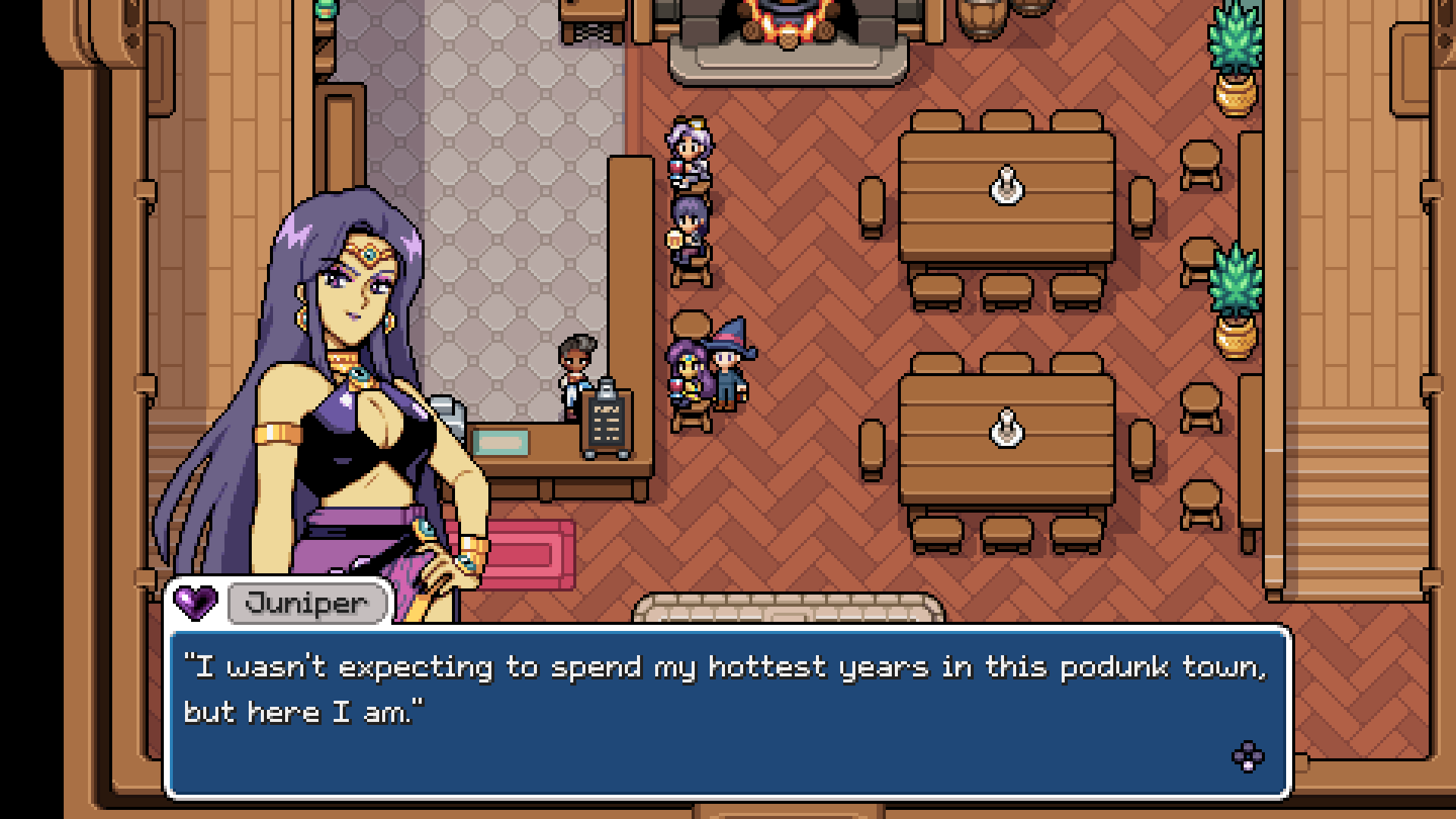
That's Juniper.
Juniper might be the game's heaviest nod to anime, with her arrogant aristocratic laugh (for reference, check this Youtube channel completely dedicated to this type of laugh only).
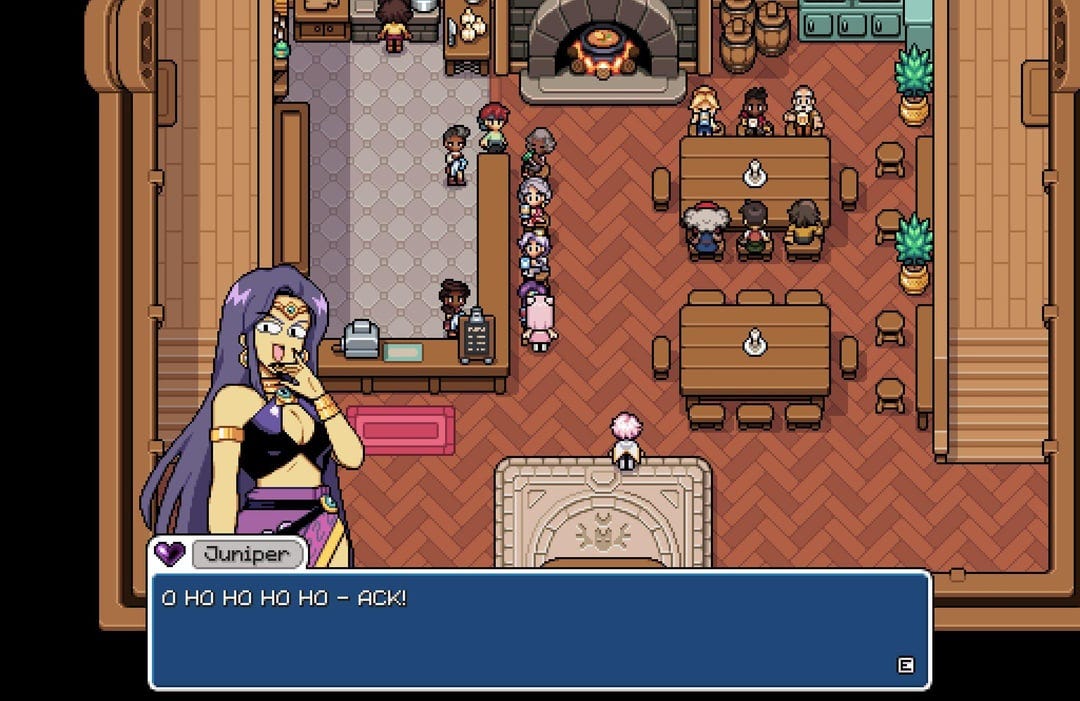
Juniper's signature laugh. O ho ho ho!
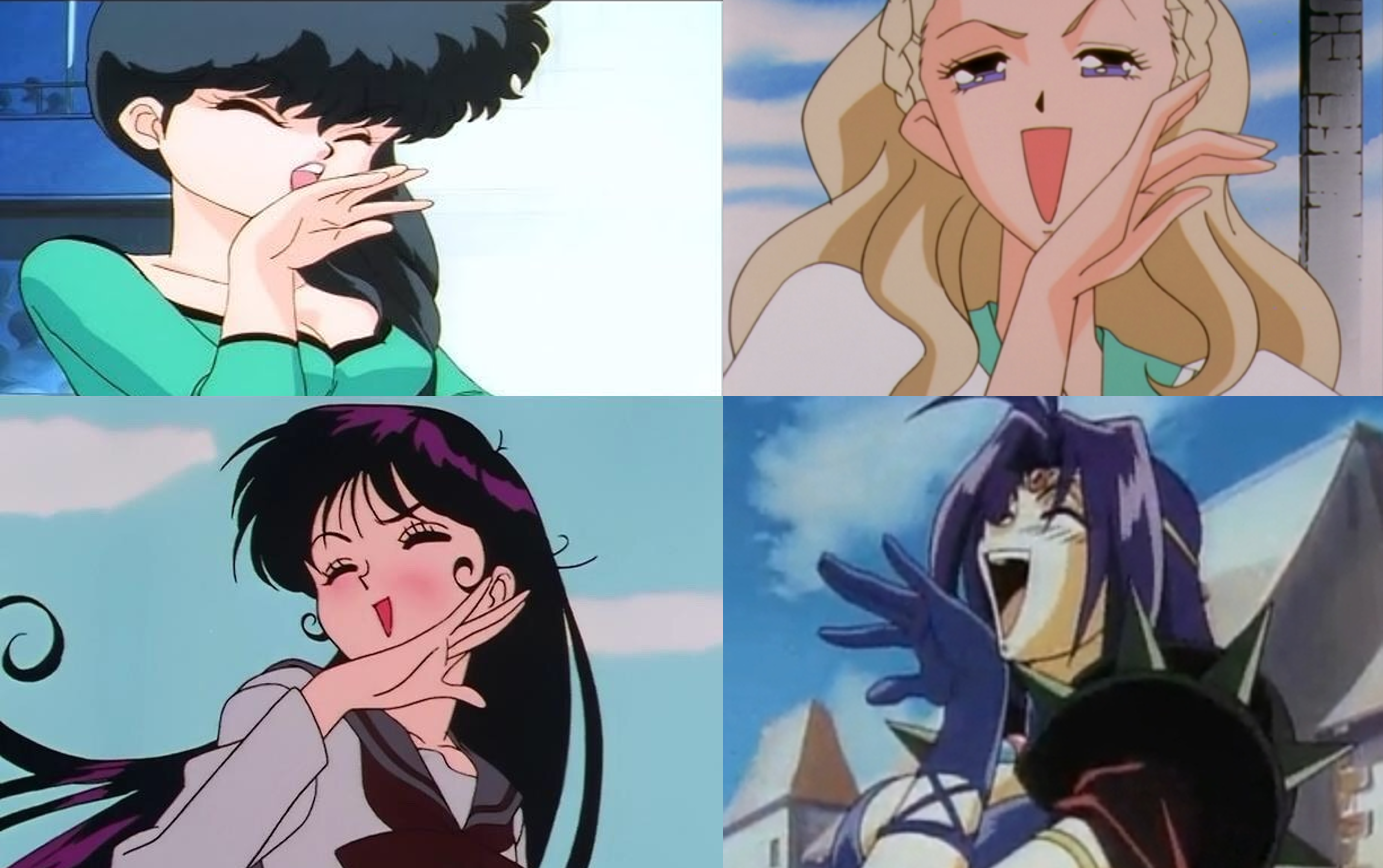
The ojousama laugh in Ranma 1/2, Revolutionary Girl Utena, Sailor Moon, and Slayers.
Juniper is clearly based on Naga the Serpent, a character in the Slayers multimedia franchise. While not a shōjo, Slayers is considered one of the most popular Japanese series of the 1990s.
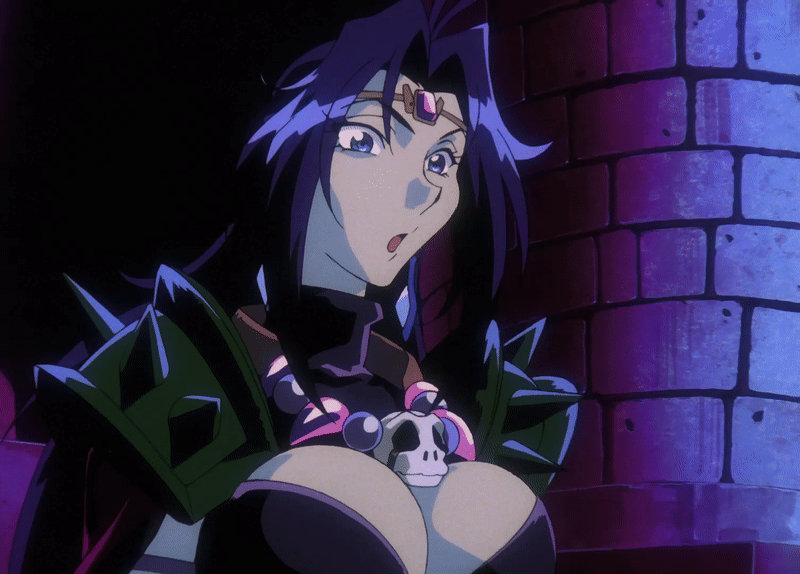
Naga The Serpent, from the Slayers anime.
But the shōjo influence isn't just about looks: it extends to the game's atmosphere. The soft lighting, carefully composed town scenery, and even the way characters interact with the environment evoke the cosy, slice-of-life feeling that defines so many beloved 90s anime.
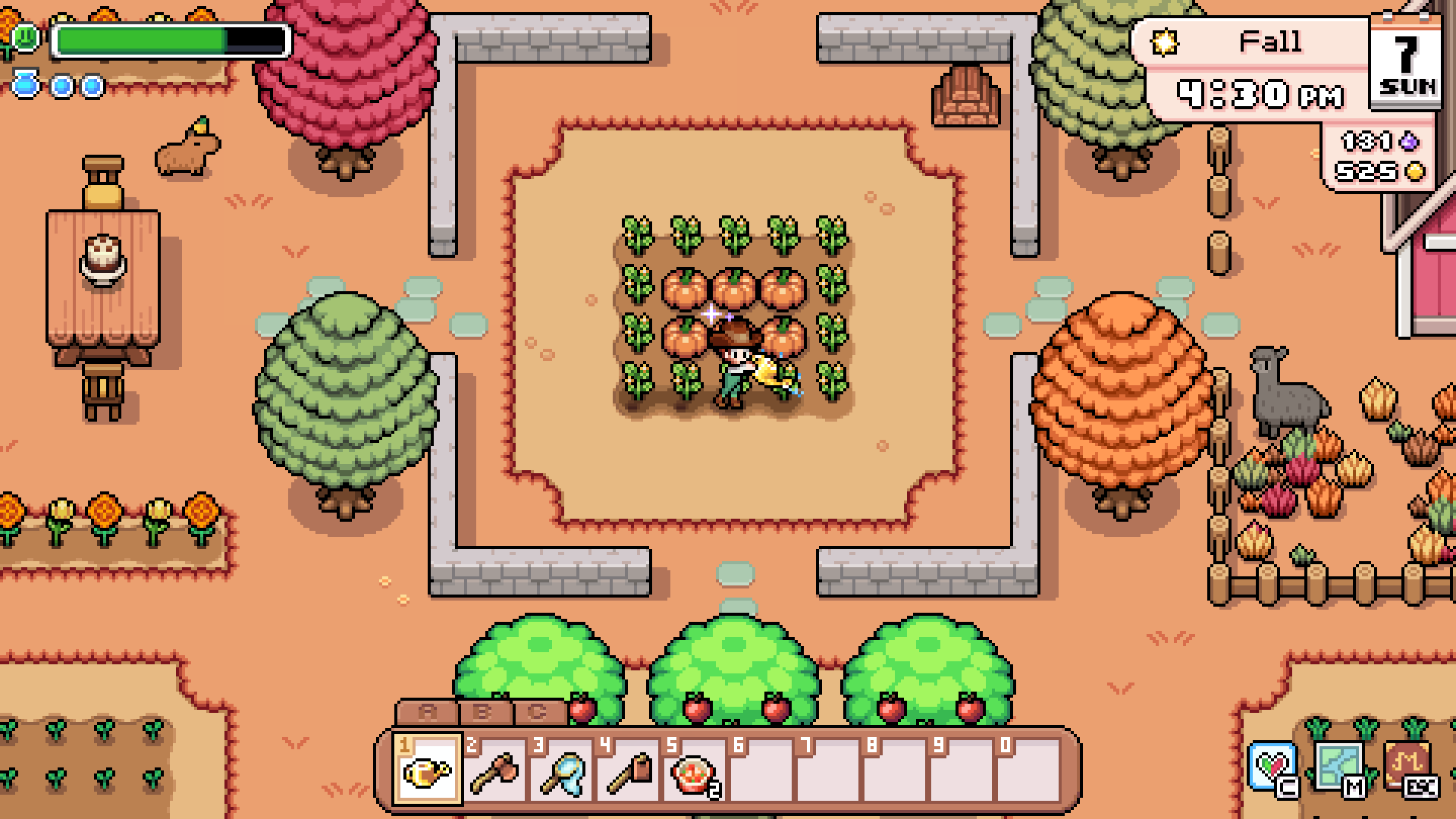
So cosy. Everything is cosy during autumn.
As the Ending Theme Plays…
Ultimately, Fields of Mistria is special not because it's just a well-made farm sim with clever mechanics, but because it's a world that breathes, a place that feels alive even when the player isn't around. By blending the best elements of its predecessors with fresh innovations and an irresistible aesthetic, the game doesn't just pay homage to the past, but pushes the genre forward.
Disclaimer: please bear in mind that as of this text (March 2025), Fields of Mistria is still in early access, and thus, new features may be released until the game can be considered a final product.
P.S.: I'd like to acknowledge Nate Hermanson and Kate Gray for their appealing and informative pieces for Video Games Are Good and Nintendo Life, respectively. These texts were an important part of my research. You rock!
— The ghost who gets too excited about digital farm life,
almoghost.exe (or André Almo if you're feeling serious) 👻