King of the Valley — Money and Private Funding in Stardew Valley
Cultural Séances #3Almo and I have been friends for a long time — maybe not that long, but over a decade, which definitely counts for something. We talk a lot, about everything from life rants to over-the-top projects, yet despite both being avid gamers, we've hardly ever played together.
In fact, across all these years, there are only two exceptions to this: Pokémon GO (during its launch era — which is a story for another time) and Stardew Valley.
Our Stardew Valley co-op adventure happened during the pandemic, a time when we all needed a little escape. We played with Almo's mom and a few others, hoping for a relaxing, cosy experience. But relaxing, it was not. And the culprit? Well… it was me.
Stardew Valley is an interesting game because it sells itself as an escape — from the grey, soul-crushing corporate grind back to the simplicity of nature.
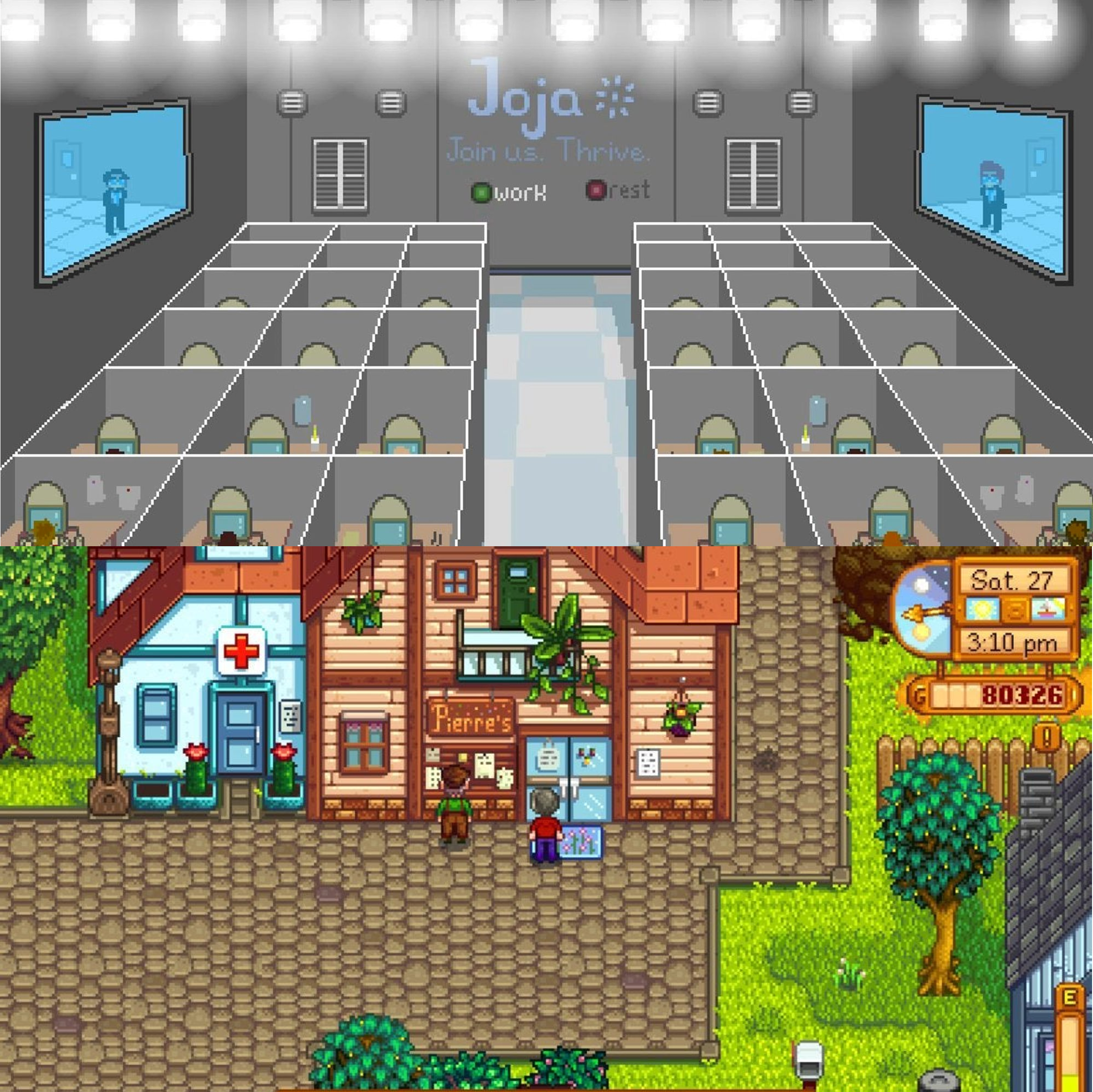
Joja's lack of colour contrasts with the vibrant Pelican Town.
But let's be real: this world is still ruled by money. Joja isn't just a supermarket, and Morris (Joja's manager in Pelican Town)? He's just another cog in the machine. Even in a pixelated utopia, capitalism lurks in the background.
Now, I've never been the kind of player to min-max with spreadsheets or hardcore optimisation, but I do like getting the most out of each day.
And so, we discovered a little trick: while playing in co-op mode, if one player goes to bed early while the others stay up, the early sleeper's energy slowly recharges — no need for food or a trip to the (still locked) spa.
With that, our empire began to rise. Especially in summer with corn.
What started as a cosy co-op farm quickly turned into a full-blown operation. The pressure to maximise efficiency crept in, and soon, the game felt just as stressful as the real-life problems we were trying to escape from. And that made me wonder…
Is money really king in Stardew Valley?
Well, in short — yes!
The game presents you with a choice: do you buy a Joja membership and embrace corporate efficiency, or do you restore the Community Centre by completing bundles? Either way, money plays a crucial role. Farming — one of the main ways to earn gold — can fund both paths.
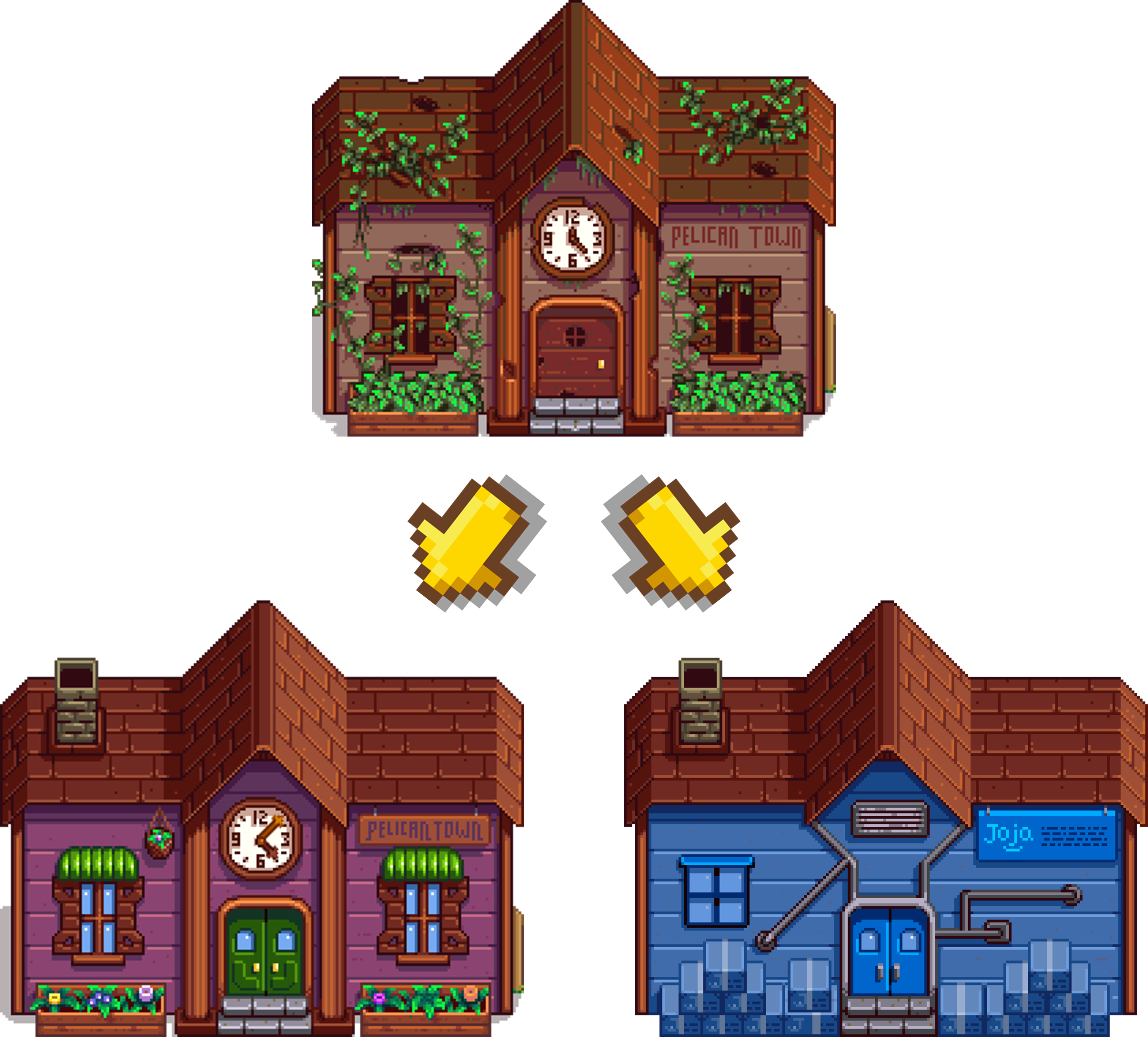
The run down Community Centre can be restored or turned into a Joja warehouse.
And if you think the Community Centre route is about hard work and self-sufficiency, think again. Aside from a few quality crops, most of the required items can simply be bought. Whether it's from Pierre, Clint, Robin, the traveling merchant, or even Joja itself, almost everything you need has a price tag.
Sure, it's more time-consuming than just throwing money at Joja for instant results, but in the end, gold can still buy your way to a "wholesome" victory.
So, let's take a step back and think about what Stardew Valley is really saying. Beneath its cosy farming aesthetic lies a world with a veiled dystopian reality — one where even a supposed escape from capitalism can't quite escape it.
First, let's compare ourselves to the one person in Stardew Valley who shares most of our back-to-nature woes: Leah!
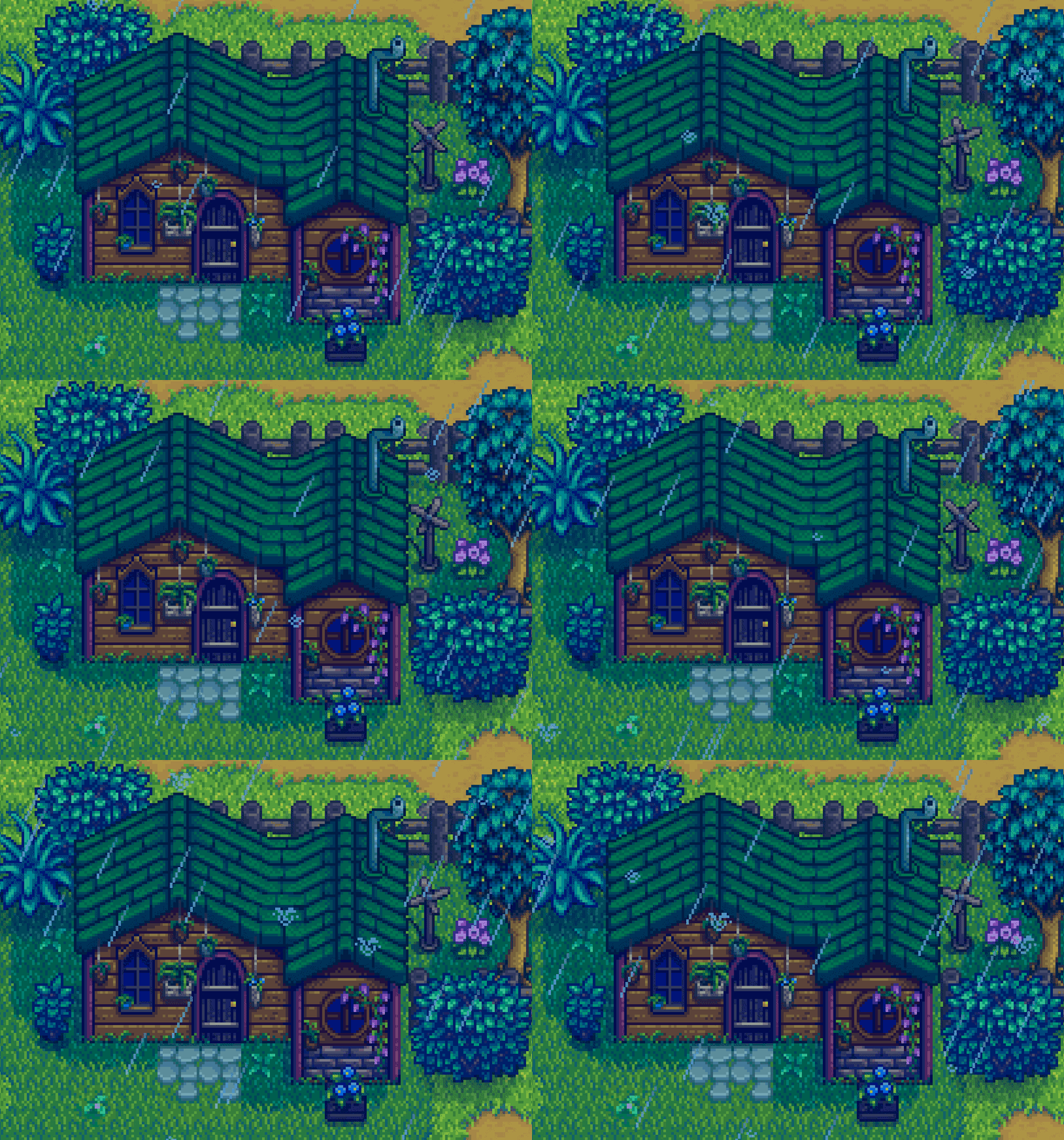
Leah's cottage in the rain.
She lives in a cosy cottage in the woods, and despite her cheerful personality and optimistic outlook, she struggles a lot — especially with money. Leah embodies the classic "starving artist" trope, foraging for food and frequently mentioning how hard it is to make ends meet.
But what's the biggest difference between you and her? Well… you're an heir.
Inheriting a rundown farm might not sound like much, but let's put things into perspective. The farmland itself — tile by tile — is almost half the size of the entire town.
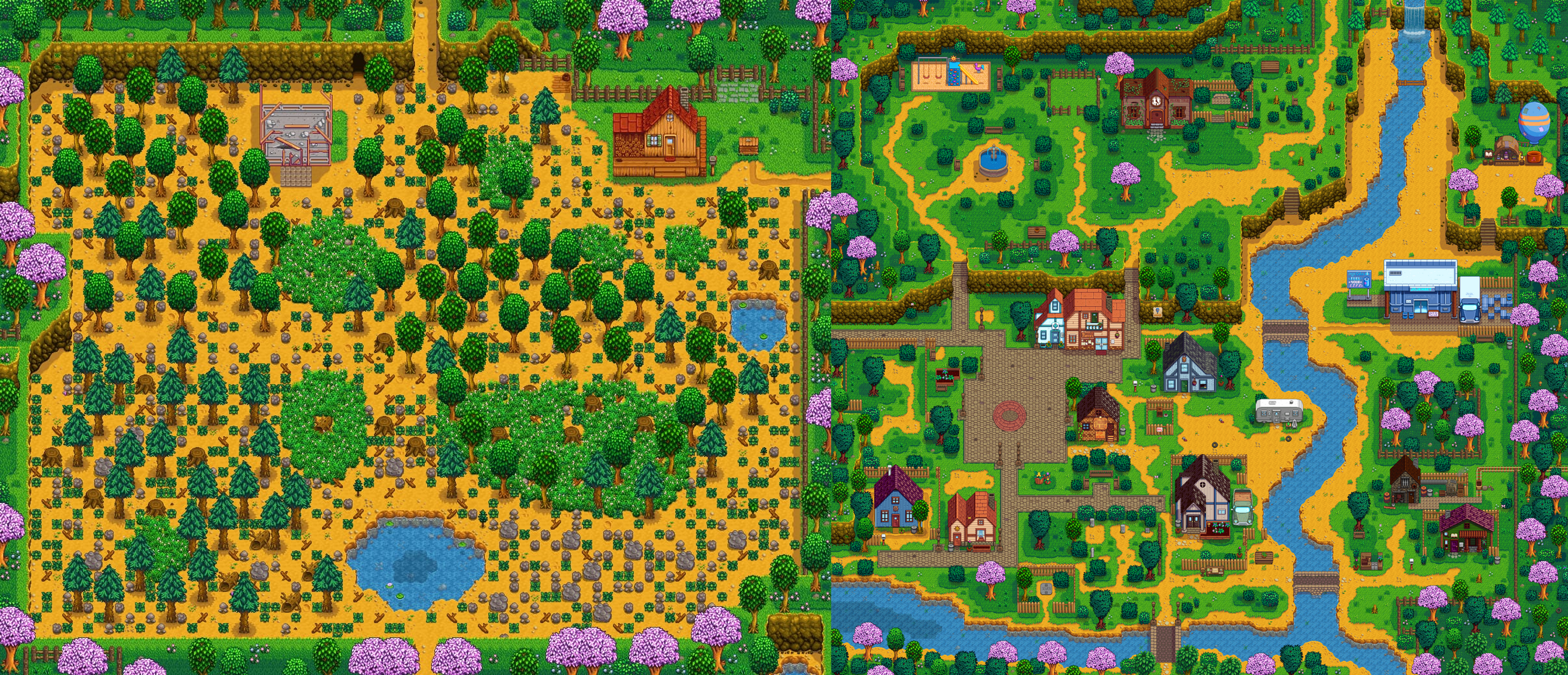
The player's standard farm (left) and Pelican Town (right). There is a difference in zoom in these images, but you can still see the farm is massive.
This is no small farm. Even if you play at a relaxed pace, you can quickly upgrade your house, cut down every tree south of your property (and nearly all others outside the town, with zero environmental consequences), and turn your inheritance into a thriving business.
And let's not forget who you inherited it from — your dear old grandpa. The same grandpa who, curiously enough, was quite friendly with both Mr. Qi (the casino boss) and Mayor Lewis (a politician who secretly stashes golden statues of himself).
So yes, money is king.
And when you step back and look at the bigger picture, Stardew Valley starts to feel a lot less like a charming countryside escape and a lot more like a failed state. Joja isn't just a small supermarket — it's a megacorporation.
The same enterprise that once had you precariously working under constant surveillance is also involved in mining, exploration, furniture manufacturing, R&D, food production… sound familiar? Because to me, it sure does.
So here's some food for thought: in the grand scheme of things, what does shutting down one JojaMart really change?
(And that's not even getting into the other ongoing crises of this world…)
Well! Morris is definitely not a good person, but does he deserve failure (yes, but stick with me for a moment)? Sure, bringing the community together through hard labour is nice and all. But even Pierre, the supposed "local store choice," isn't exactly a saint. His dream? To own multiple stores and turn himself into a retail empire. Classic capitalism.
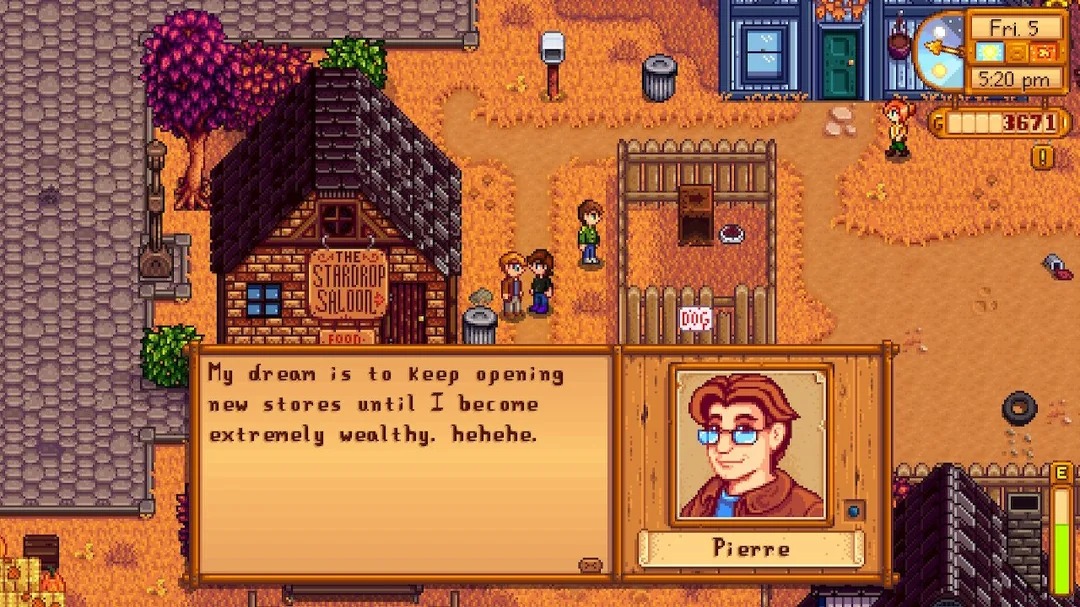
C'mon, Pierre.
Which brings us back to the question of the state.
When we think of charity and private investment in public services, they often carry an air of generosity and social responsibility. But take a step back, and you realise their very necessity is often a sign of systemic failure.
Why should essential services — healthcare, education, social welfare — depend on private donors or corporate investments instead of a well-functioning public system?
The presence of these external contributions in fundamental services doesn't just expose inefficiency; it weakens democratic accountability and deepens long-term inequalities.
Governments exist precisely to ensure their citizens' basic rights — health, education, security, social welfare. That's the foundation of the social contract: we pay taxes (which, in Stardew, seems to turn into golden statues), and in return, the state provides these essentials.
So if the burden of funding education or healthcare falls on individuals and corporations, one has to ask: is the government truly fulfilling its role? Because a well-functioning state shouldn't need charity to sustain its basic services.
Thus, Stardew Valley welcomes the player to Pelican Town not just as a farmer but as an unwitting and unaware candidate for the role of saviour. What initially seems like a charming, self-sufficient rural community gradually reveals itself as a town held together by fraying threads — poverty, corruption, neglect, and systemic failure lurking beneath the idyllic pixelated landscape.
With enough time, effort, and sheer financial success, the player can revitalise the town, building new infrastructure, funding projects, and lifting its residents out of hardship. But this transformation raises some uncomfortable questions: Why does the well-being of an entire town rest on the shoulders of one newcomer? And what does that say about the people in charge?
Economic disparity is present throughout Pelican Town, shaping the lives of many of its residents.
Pam, a struggling alcoholic, lives in a trailer with her daughter Penny, who, despite her own limited means, has taken it upon herself to educate both Vincent and Jas in the absence of a formal school. Penny's quiet resilience is admirable, but it also underscores another failure — why is there no school nor their guardians educate them?
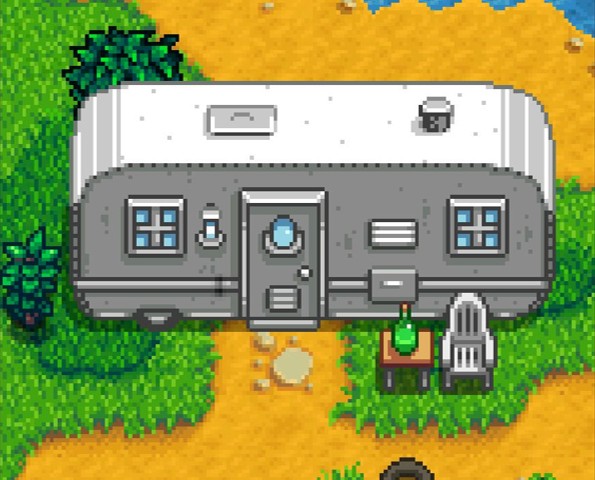
Pam and Penny live in a small trailer.
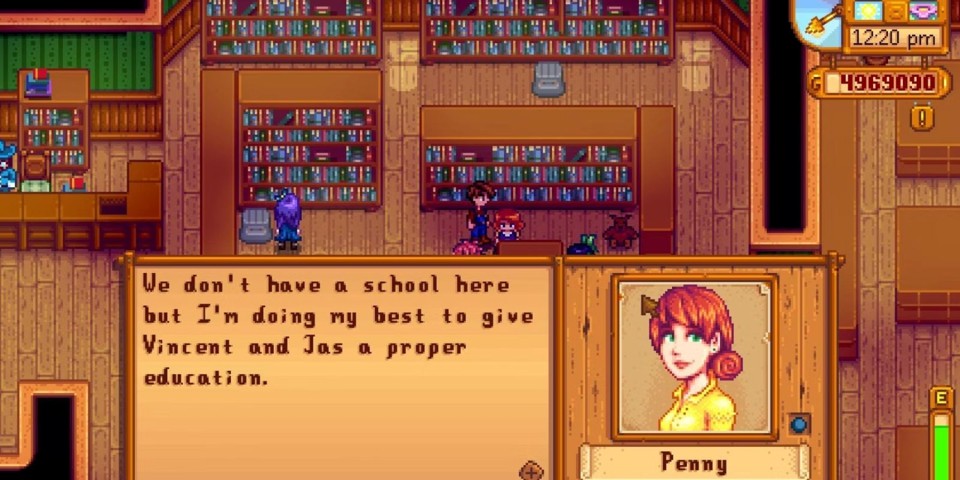
Penny is a private tutor, educating Vincent and Jas.
Linus, an older man living in a tent on the town's outskirts is treated as an outcast, even if his homelessness is self imposed, what kind of society and life made him choose isolation?
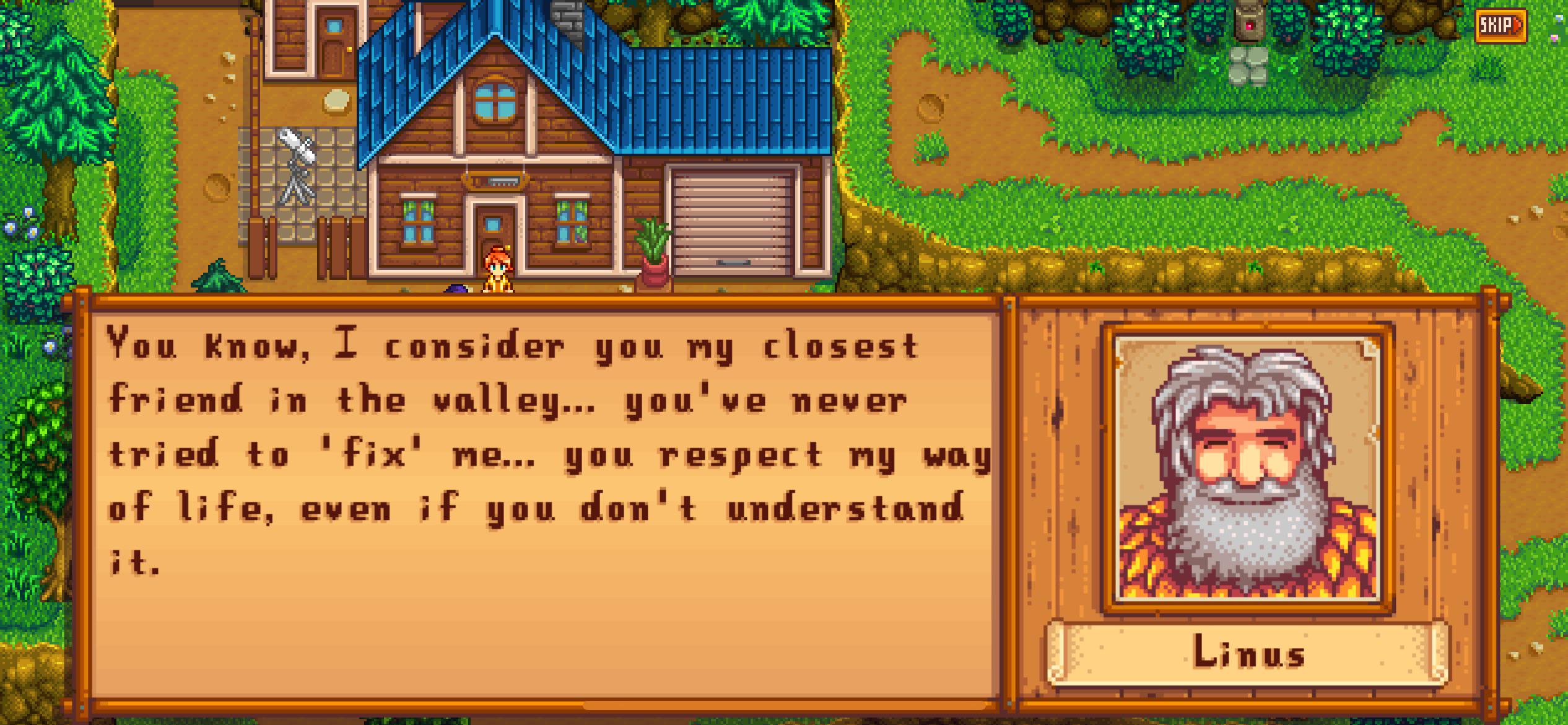
Linus chooses to live in the wild.
Meanwhile, the player character, if successful, amasses immense wealth, gradually gaining the power to shape the local economy.
At the heart of all this dysfunction is Mayor Lewis, a man who has seemingly held office for an eternity without ever making meaningful improvements to the town. His leadership is marked by complacency, secrecy, and questionable priorities.
His long-standing romance with Marnie remains a secret — not because of scandal, but because he fears it might damage his reputation, as though dating a well-liked rancher is a bigger issue than, say, a golden statue of yourself.
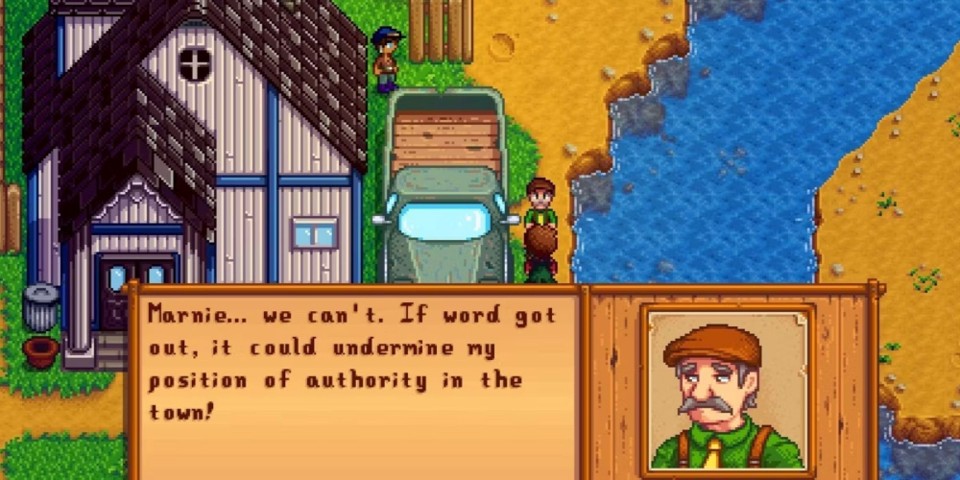
Linus believes his relationship with Marnie would undermine his authority (for some reason).
Furthermore, mental health struggles run rampant in Pelican Town, yet there is no visible support system in place.
Shane battles alcoholism and suicidal thoughts, trapped in a cycle of addiction and self-loathing, his only respite coming from the player's intervention.
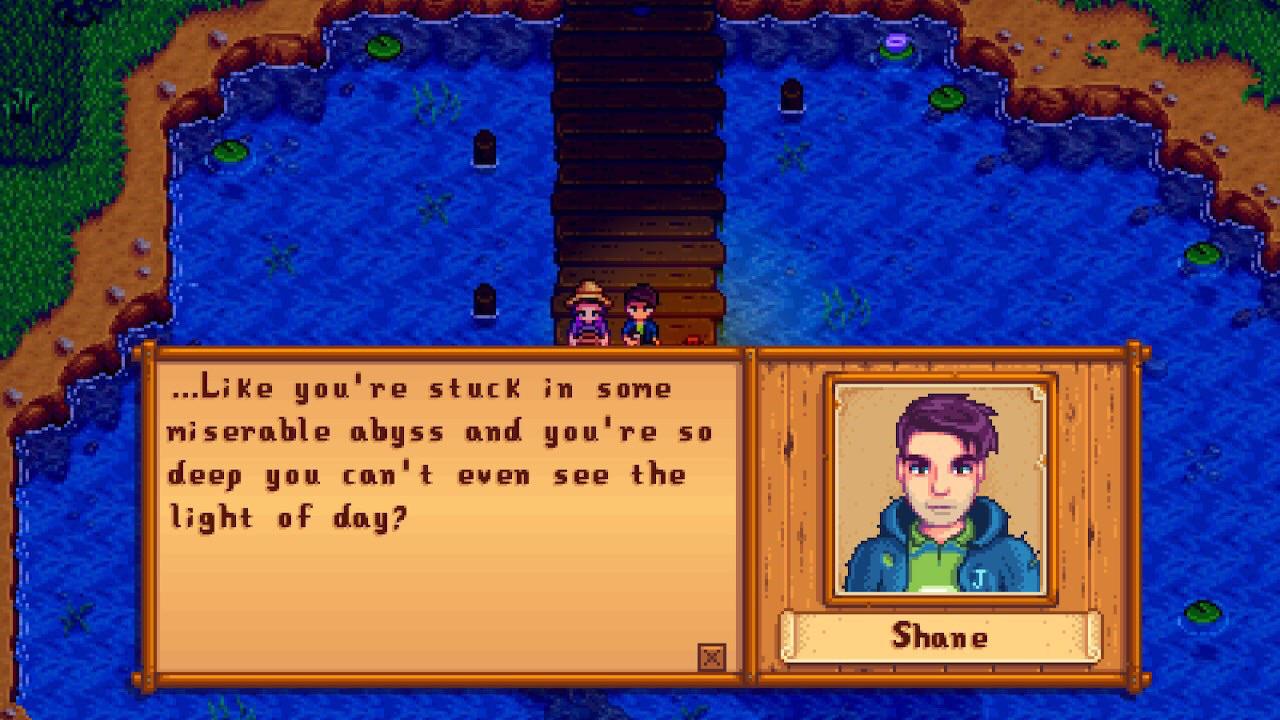
Shane discusses his depression with the player.
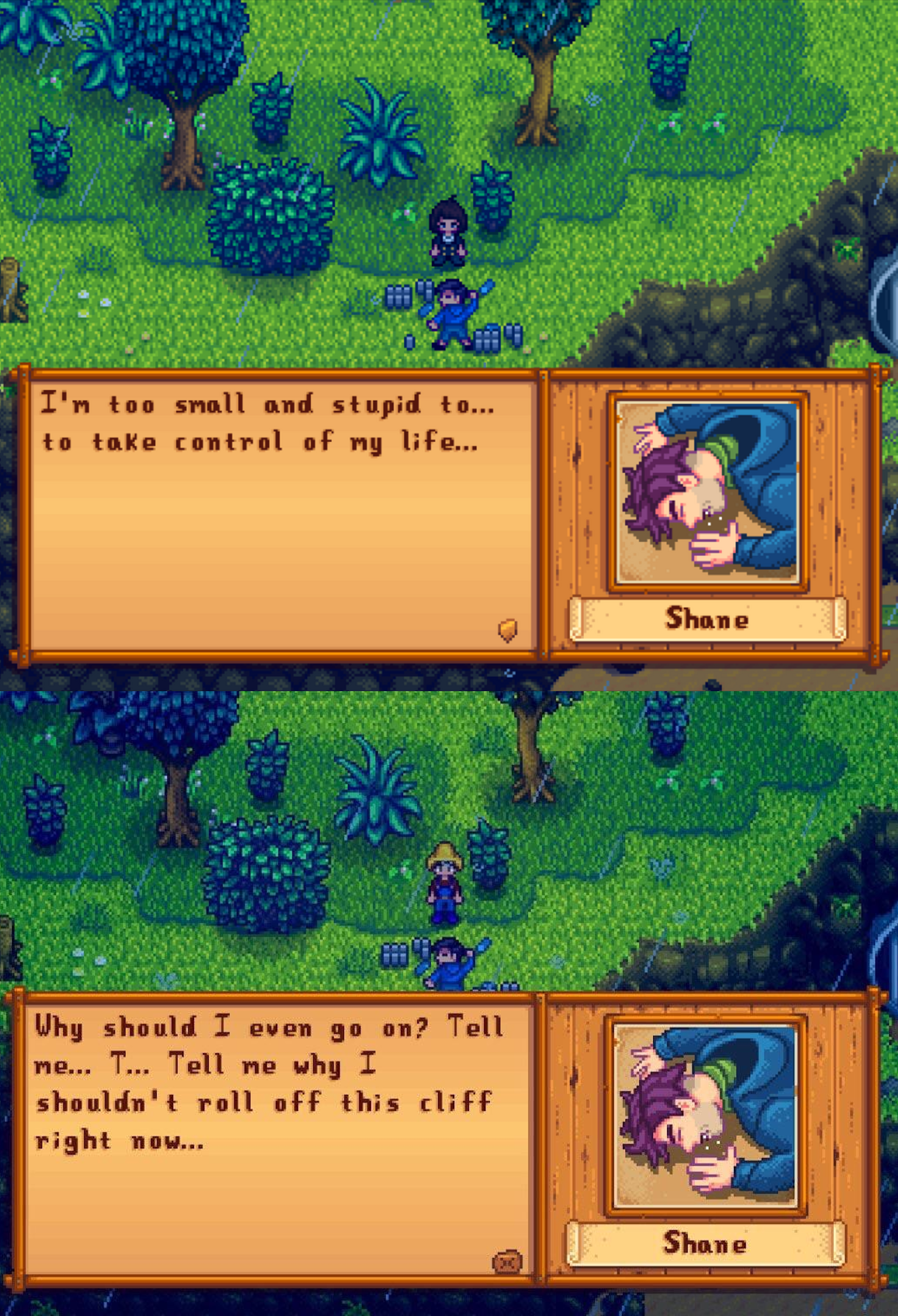
Shane drinks heavily and threatens to end his own life, only being saved by the player's intervention.
Jodi, worn down by the pressures of raising children alone while her husband is away on military service, hides her exhaustion behind polite smiles.
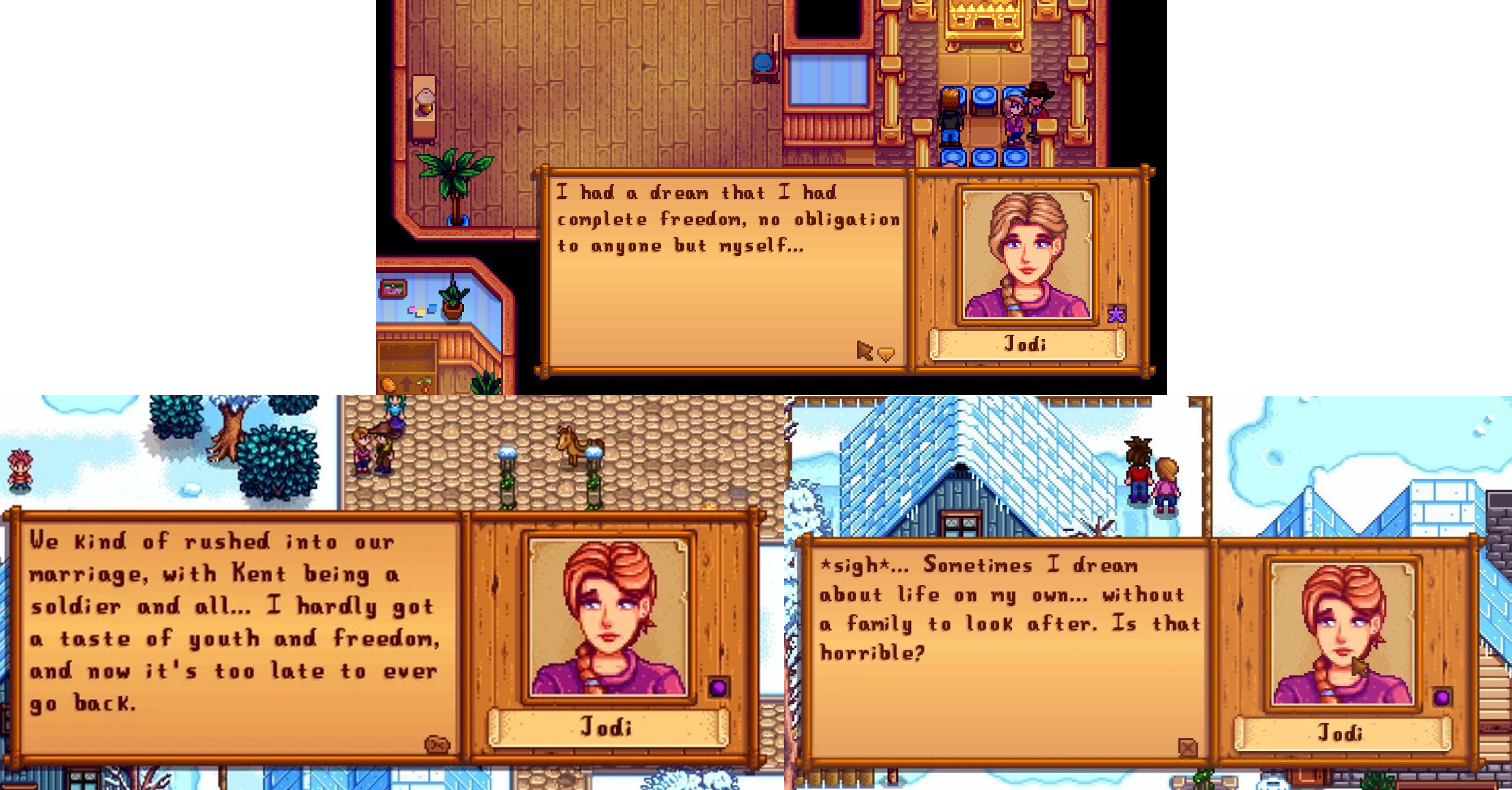
Jodi's dialogue shows her tired from her life as housewife.
Sebastian isolates himself in a basement, disconnected from his family.
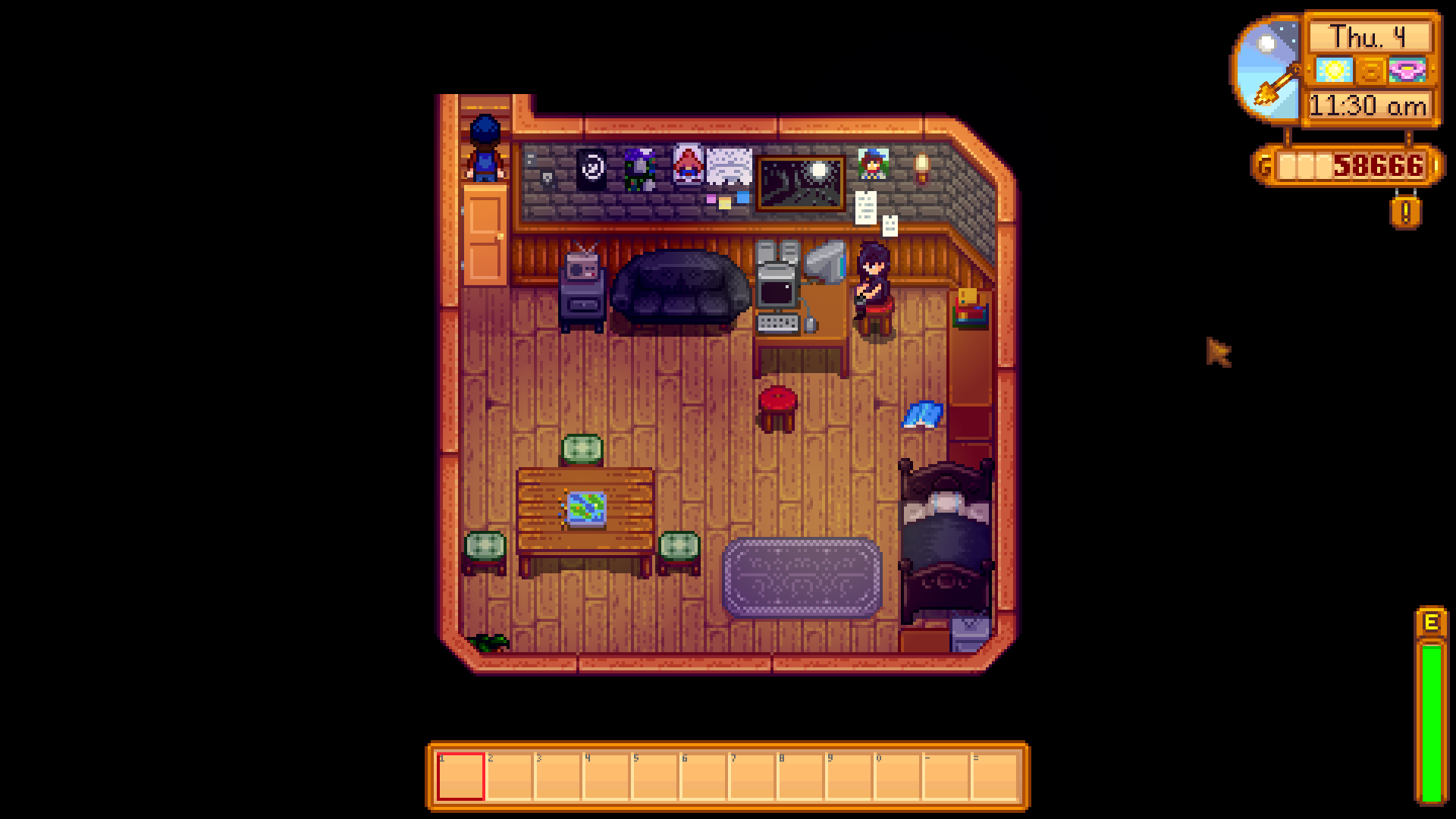
Sebastian… okay, maybe I'm a bit like that too.
Why does the town's welfare hinge on an outsider's ability to grow crops, rather than on a system designed to ensure long-term prosperity? Lewis' leadership is marked not by active governance but by secrecy, self-indulgence, and a refusal to address the town's fundamental issues.
And this is where the player's role becomes increasingly complex.
By investing in struggling businesses, fixing up Pam's house, or rebuilding the community centre, the player takes on responsibilities that should belong to the town itself. The player, not an elected official, builds infrastructure, restores public resources, and replaces failing systems with personal wealth.
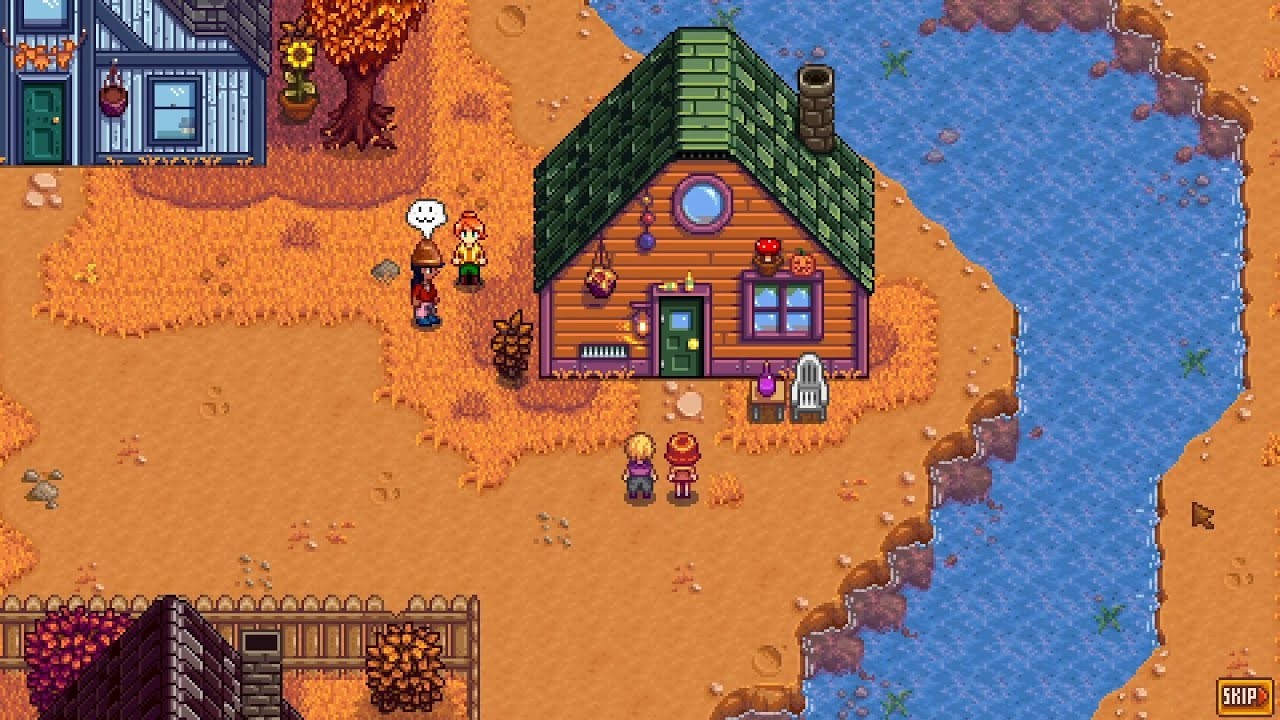
The player builds a house for Pam and Penny.
But while these acts of charity bring immediate relief, they don't address the root causes of Pelican Town's decline. What happens if the player leaves? This raises larger, more unsettling sociological and philosophical questions. Should a community's survival depend on the charity of a single individual? Does the presence of a generous benefactor justify the absence of a functioning government?
Stardew Valley subtly suggests that a system reliant on individual goodwill — whether from a benevolent farmer or a powerful corporation — is not a system that works. The town's most vulnerable citizens don't need handouts; they need security, rights, and a structure that ensures no one is left behind when a wealthy patron is no longer around.
In reality, Pelican Town's issues should be addressed through public funding, fair labour policies, and political accountability — not through the intervention of one particularly industrious farmer.
The game's mechanics emphasise this paradox. The player, despite arriving as a simple farmer, accumulates so much wealth and influence that they effectively replace the local economy.
The community centre, long abandoned and neglected, isn't revived by the town but by the player's contributions. The local cinema, a potential hub for entertainment and community bonding, isn't restored through public initiative — it reopens only if the player invests in it.
These actions improve the town, but they also reveal a troubling reality: why was no one else responsible for them? Mayor Lewis claims to care about the town's well-being, yet he remains passive, content to let a single outsider take over.
Nor the game's underlying antagonist, Joja Corporation, which is an ever-present shadow.
The game begins with the player fleeing the monotony of a soulless corporate job at no other place than Joja, seeking freedom in Pelican Town. But Joja's presence is inescapable. In a more insidious way, the player themselves is the judge of the town's future. They can restore the community centre or allow JojaMart to take over entirely (which would be ironic considering that the player went to Pelican Town to escape from Joja in the first place).
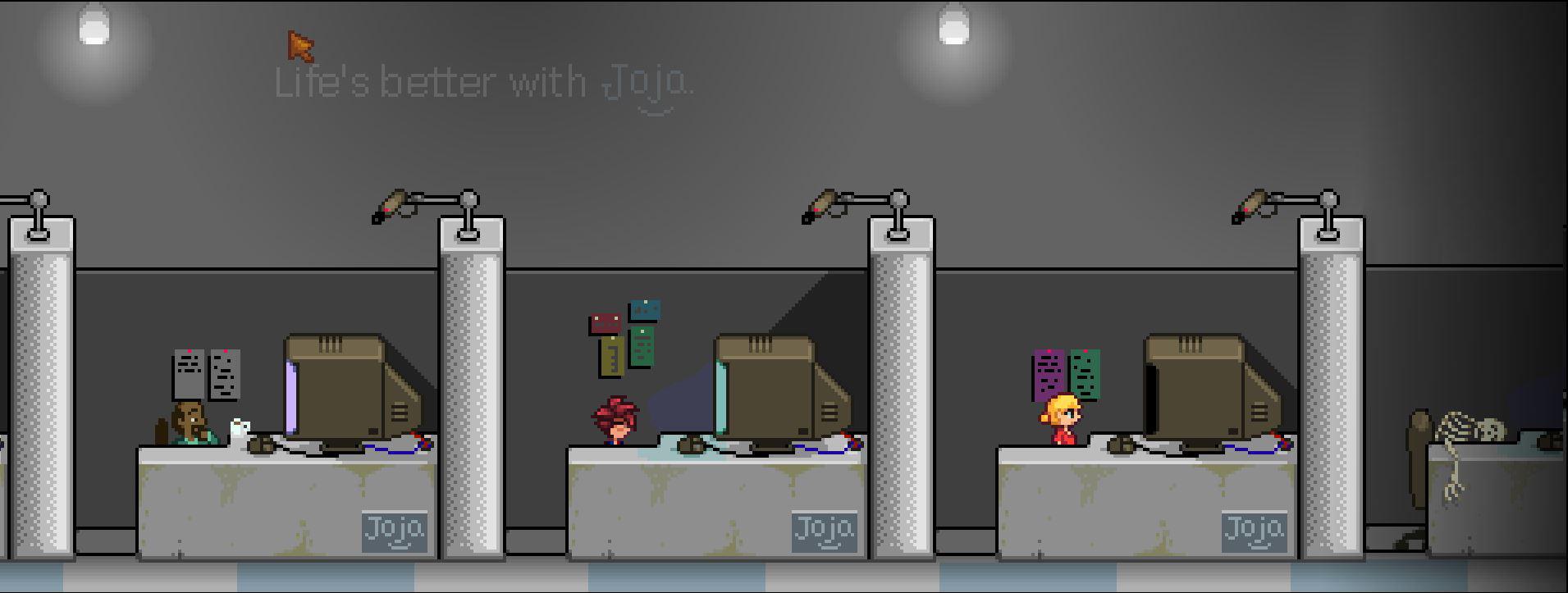
The player working for Joja at the start of the game. That coworker on the right doesn't look so good.
This is a reality we see reflected in the real world — billionaires funding public projects, private charities compensating for government neglect, entire communities dependent on the whims of the wealthy.
While philanthropy may provide relief, it is not a replacement for systemic solutions. When individuals or corporations dictate which needs are met and which are ignored, they redefine basic rights as privileges to be earned rather than guarantees.
Pelican Town, albeit all its charm, is a reminder that a society built on private wealth instead of public accountability is always at risk of collapse. The game subtly asks its players: what happens when the next farmer doesn't arrive? When the player puts down their controller, their farm continues to exist, but the fragile system they've reinforced remains.
But alas! Why this long-winded rant? Let's go back to the farm Almo and I had built.
We toiled away, sowing and reaping, waking up at the crack of dawn only to collapse into bed after a long day of backbreaking labour. We weren't just farmers — we were cogs in our own self-imposed agricultural machine, endlessly optimising, always pushing for more. The cycle was as relentless as it was profitable.
The irony wasn't lost on me. We had fled the soulless grind of corporate monotony only to break our backs on digital soil. Stardew Valley promised freedom, but in our hands, it became just another field of exploitation — except this time, we were both the workers and the overlords. Our corn empire thrived, but at what cost?
By the end, I had to ask myself: was I tending a farm or running a plantation? When the sun set on our virtual valley, were we any freer than when we started, or had we just traded one grind for another?
Perhaps the biggest joke Stardew Valley plays on us is that, no matter how far we run, we're always one harvest away from falling right back into the cycle.
— The ghoul farmer who became the Corn Emperor,
vladghoul.exe (or Vladimir Pedro if you're feeling serious) 🧟